institutional memory for AI agents: Ever feel like your AI tools are smart, but they just don't *get* your business? Like they're missing that crucial context, that deep institutional memory that makes a human expert invaluable? You're not alone. Building institutional memory for AI agents is one of the biggest challenges facing businesses today. Imagine if your AI could instantly recall every relevant document, every past project, every internal guideline, and give you an accurate, verifiable answer. That's the dream, and it's closer than you think. 🧠
This isn't about teaching AI to 'think' like a human; it's about giving it access to the collective knowledge of your organization in a way that's reliable and verifiable. We're diving into how V7's new Knowledge Hubs and their proprietary Index Knowledge technology are making this a reality, moving beyond traditional AI limitations to give your agents the context they need to truly shine. Ready to demystify how AI can remember your business? Let's go! ✨
Advertisement
The AI Memory Gap: Why Your Agents Forget 🧐
You've probably heard of Retrieval-Augmented Generation (RAG). It's a fantastic technique that helps Large Language Models (LLMs) pull in external information to answer your questions. Think of it like giving your AI a quick Google search before it responds. But for businesses, standard RAG often falls short. Why? Because enterprise knowledge isn't just a simple Google search away.
Your company's brain is scattered across PDFs, spreadsheets, internal wikis, presentations, and countless other formats. Traditional RAG can struggle to deeply understand and connect these diverse data types, leading to generic or even incorrect answers. The AI might *know* a lot, but it doesn't *understand* your company's specific context or history. This 'memory gap' means your AI agents can't truly act as informed assistants or decision-makers.
V7's Answer: Knowledge Hubs – Your Company's AI Brain 🧠
Enter V7's Knowledge Hubs. Imagine a central, super-smart library for all your company's internal documents. Not just a place to store them, but a place where they're actively understood, connected, and made instantly searchable for your AI agents. This isn't just a database; it's designed to be the long-term memory for specialized AI agents, giving them the rich context they need to operate effectively.
These Hubs act as a single source of truth, ensuring that every AI interaction is grounded in your company's actual data. No more AI making things up or giving outdated information. It's about empowering your AI to be as informed as your most seasoned employee, but with instant recall across every document you possess.
Beyond RAG: The Power of Index Knowledge 💡
So, what makes V7's Knowledge Hubs different from a standard RAG setup? It's their proprietary Index Knowledge technology. This isn't just about indexing keywords; it's about intelligently scanning, understanding, and embedding files in a way that optimizes for different document types and industries. Think of it as a super-powered librarian who doesn't just catalog books, but understands the *content* of each book and how it relates to every other book in the library.
Index Knowledge employs a multi-step analysis during retrieval. This means when an AI agent asks a question, the system doesn't just pull a few relevant snippets. It intelligently allocates context windows and finds critical information, even in complex, multi-page documents. The result? Highly accurate answers, backed by evidence. This is a game-changer for moving beyond superficial AI responses to truly insightful ones.
Verifiable AI: Trusting Your Agent's Answers ✅
One of the biggest hurdles for enterprise AI adoption is trust. How do you know the AI isn't 'hallucinating' or making an educated guess? V7 tackles this head-on with verifiable accuracy. Every answer provided by an AI agent drawing from a Knowledge Hub comes with clickable citations. This means you can instantly trace the AI's response back to its original source document, verifying the information yourself.
This level of transparency is crucial for sensitive tasks like legal review, financial analysis, or medical documentation. It builds confidence in AI-driven insights and significantly reduces the manual verification time that often bogs down human workflows. It's about making AI not just smart, but also accountable.
Visual Grounding: Seeing is Believing 👁️
Beyond text, V7 introduces the AI Visual Grounding Agent within V7 Go. This is a specialized agent that provides visual, clickable citations for extracted data. Imagine an AI analyzing an invoice or a technical diagram and not just telling you the data, but *showing* you exactly where it found that data on the original image or PDF. This creates an auditable link between the AI's output and the original source, visually.
This is particularly powerful for documents where layout and visual context are as important as the text itself. For example, in M&A due diligence, an AI could pinpoint specific clauses in a contract or data points in a financial report, with visual proof. This can reduce manual verification time by over 90%, freeing up your team for higher-value tasks.
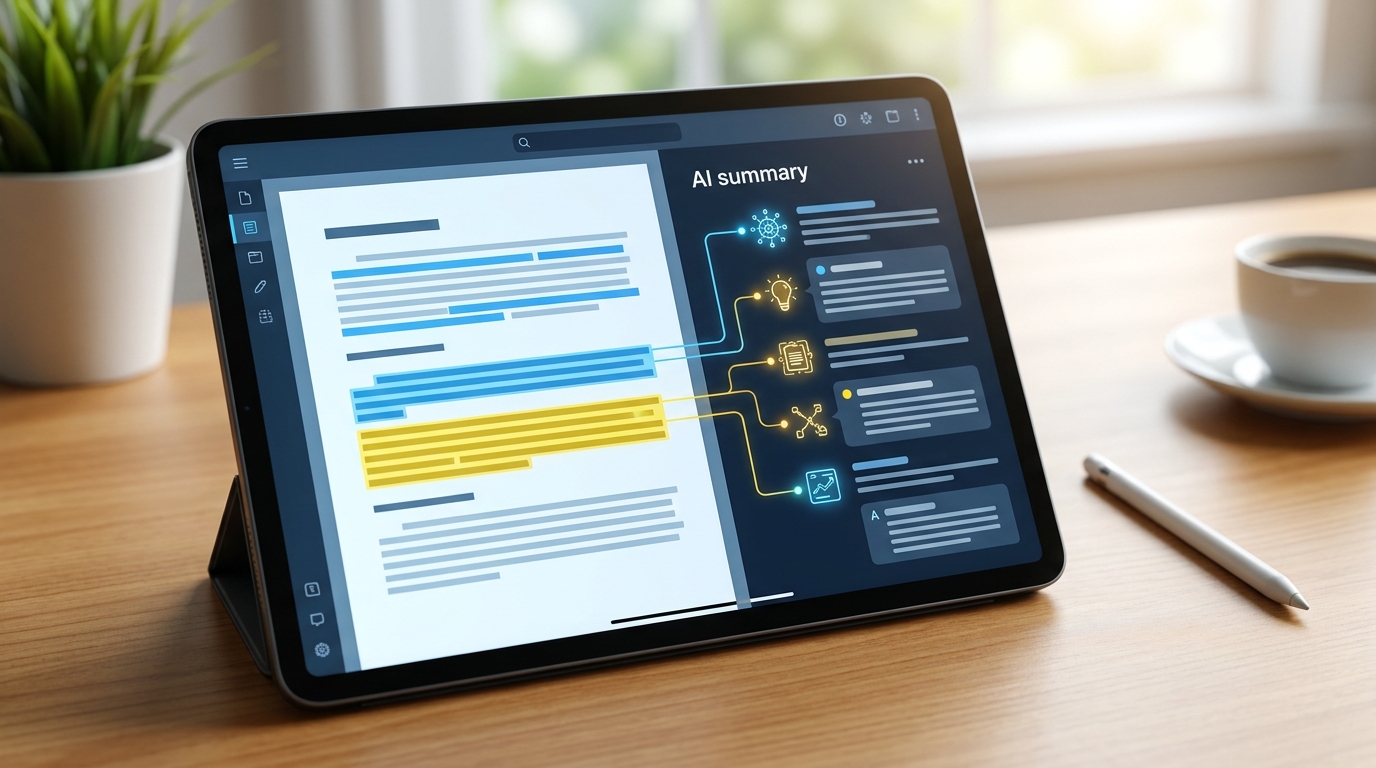
V7's Visual Grounding Agent provides clickable, visual citations, linking AI output directly to source documents.
Advertisement
Building Your Own Smart Agents with V7 Go 🛠️
V7 isn't just about storing data; it's about enabling you to build powerful, specialized AI agents that leverage that data. V7 Go allows you to construct these agents from properties, prompts, and tools. This means you can define exactly what your agent does, how it thinks, and what resources it uses. Want an agent that can summarize complex legal documents? Or one that can answer specific customer support questions based on your product manuals? You can build it.
These agents can also integrate seamlessly with your existing systems. Think SharePoint, Google Drive, or your custom API connectors. This flexibility means you can embed these intelligent agents directly into your current workflows, making them a natural extension of your team rather than a separate, siloed tool. It’s about making AI work *for* you, in your environment.
- Custom Logic: Define specific rules and workflows for your AI agents to follow, ensuring they operate exactly as your business needs.
- API Connectors: Integrate with a wide range of external services and internal databases, expanding your agents' capabilities.
- Existing System Integration: Connect with platforms like SharePoint and Google Drive to pull in data from where it already lives, making setup a breeze.
Real-World Impact: Complex Tasks Made Simple 📈
So, what can you actually *do* with this enhanced institutional memory for AI agents? The possibilities are vast. Take automated M&A due diligence, for example. Instead of teams sifting through mountains of documents, an AI agent can query entire Knowledge Hubs, synthesize information from contracts, financial statements, and operational reports, and provide cited answers.
This doesn't just speed up the process; it makes it more accurate and less prone to human error. Other applications include processing tax claims, analyzing scientific research, or even providing highly personalized customer support by instantly accessing a customer's entire interaction history and product documentation. It's about transforming complex, data-heavy tasks into efficient, verifiable AI-driven workflows.
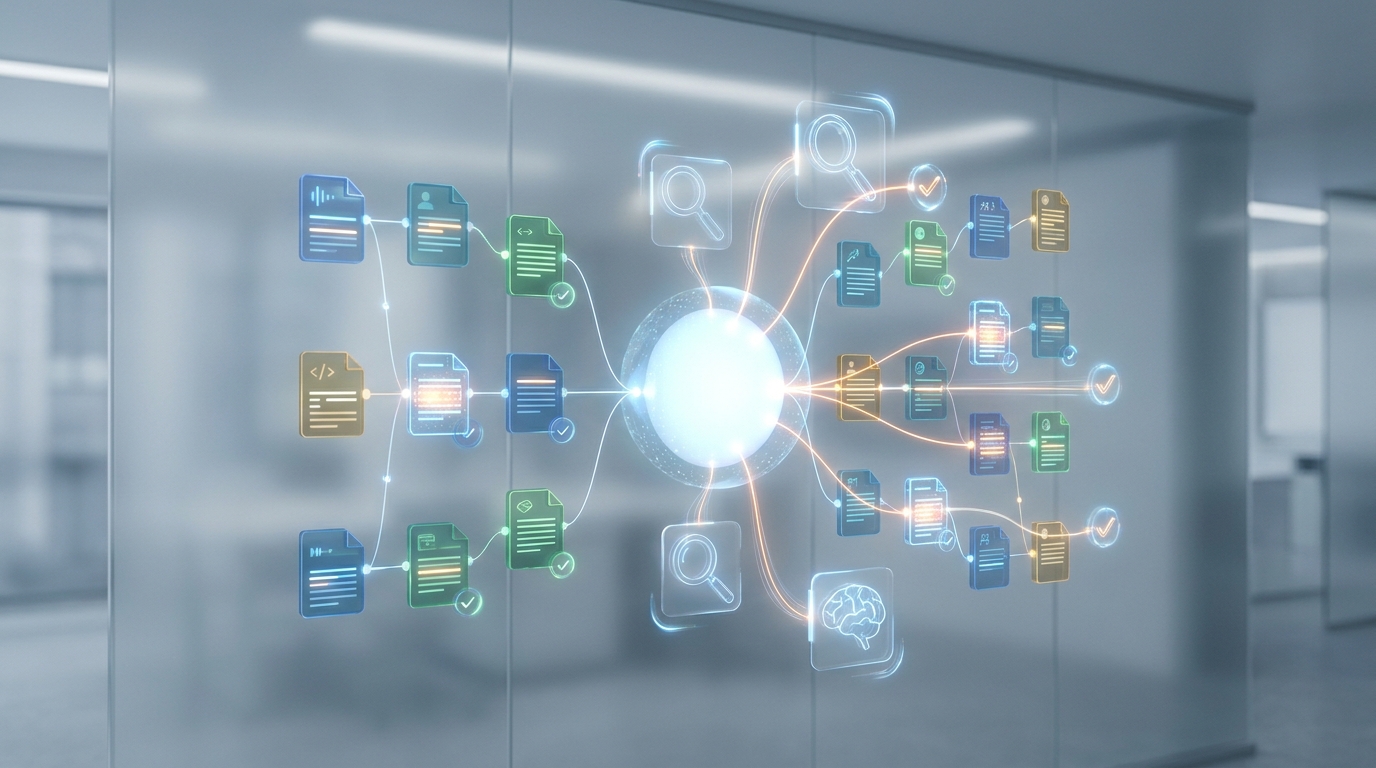
V7's Knowledge Hubs create an interconnected network of enterprise data, providing rich context for AI agents.
Getting Started: Building Your AI's Memory Bank 🚀
Ready to give your AI agents the institutional memory they deserve? The first step is to identify the core documents and data sources that hold your company's most valuable knowledge. These are the files that your human experts constantly refer to, the ones that define your processes and history. Once identified, V7's Knowledge Hubs provide the framework to ingest and index this information.
Think about starting small with a specific use case, like automating a particular customer support query or streamlining an internal reporting process. As you see the benefits of verifiable, context-rich AI, you can expand your Knowledge Hubs to encompass more of your organization's collective intelligence. It's a journey towards a more intelligent, efficient, and trustworthy AI-powered future. Learn more about V7 Knowledge Hubs here.
💡 Pro Tip: When building your Knowledge Hubs, prioritize documents that are frequently referenced, contain critical decision-making information, or are prone to misinterpretation. This ensures your AI agents tackle the most impactful problems first.
Key Takeaways
- V7's Knowledge Hubs centralize and make searchable a company's complete internal documentation, acting as long-term memory for AI agents.
- Index Knowledge goes beyond traditional RAG by intelligently scanning and embedding files, optimizing for various document types and industries.
- Verifiable accuracy is a core feature, with clickable citations linking AI answers directly back to original source documents.
- The AI Visual Grounding Agent offers visual, clickable citations, dramatically reducing manual verification time for complex documents.
- V7 Go allows for the construction of custom AI agents with tailored logic, API connectors, and integration into existing enterprise systems.
Related on Tech4SSD 🔗
- Custom AI Tools for Creative Workflows: Lessons from Google Flow (2026)
- Integrating Autonomous AI Agents into Software Engineering (2026)
- Fyxer AI Executive Assistants: Fine-Tuning & Memory for Smarter Email (2026)
📩 Want the freshest AI trends every week?
Subscribe to Tech4SSD — practical AI tools and trends, explained for everyone. Free. Subscribe →
Advertisement
Frequently Asked Questions
What's the main difference between V7's Index Knowledge and standard RAG?
Standard RAG often pulls general information, but V7's Index Knowledge intelligently scans and embeds files, optimizing for specific document types and industries. It performs a multi-step analysis at retrieval time to deeply understand context and provide highly accurate, cited answers, going beyond simple keyword matching.
How does V7 ensure the AI's answers are trustworthy and not 'hallucinated'?
V7 ensures trustworthiness through verifiable accuracy. All AI responses from Knowledge Hubs come with clickable citations that link directly to the original source documents. Additionally, the AI Visual Grounding Agent provides visual proof by highlighting the exact location of extracted data within images or PDFs.
Can I integrate V7's AI agents with my existing company software?
Absolutely! V7 Go agents are designed for flexibility. They can be constructed with custom logic, API connectors, and integrate seamlessly with existing systems like SharePoint, Google Drive, and other proprietary platforms, allowing you to embed them directly into your current workflows.
What kind of documents can V7's Knowledge Hubs handle?
V7's Knowledge Hubs are built to handle a wide variety of internal documentation, including PDFs, spreadsheets, presentations, internal wikis, and more. The Index Knowledge technology optimizes for different document types to ensure comprehensive understanding and retrieval.
Final Word
The future of enterprise AI isn't just about powerful models; it's about making those models truly intelligent within the unique context of your business. By building robust institutional memory for AI agents, platforms like V7 are bridging the gap between generic AI capabilities and specialized, verifiable business intelligence. This means less guesswork, more accuracy, and a significant boost to efficiency across the board.
So, whether you're a creator looking to streamline your content research, a student diving into complex data, or a small business owner aiming for smarter operations, understanding and leveraging these advancements is key. Empower your AI with your company's brain, and watch what you can achieve! 🚀
Sources & Further Reading
- Knowledge Hubs | Connect AI Agents to Your Company Data
- What Is RAG in AI and How to Use It? [LLM + RAG Tutorial] - V7 Labs
- AI Document Indexing Agent | Build a Searchable Knowledge Hub | V7 Go
- Virtual Data Room for AI Agents: V7 Launches Knowledge Hubs
- AI Visual Grounding Agent | Verifiable AI Document Analysis | V7 Go
- How to Create an AI Agent Without Code: A Practical Guide. - V7 Labs
- Your AI remembers chats. It still forgets the business.
- What Are AI Agents & How to Use Them [2025] - V7 Labs
- AI Enterprise Search Agent | Unified Knowledge Search | V7 Go
- Search across all your organization's data
AI tools and features change fast — verify current options before relying on them. — Tech4SSD Editorial


Discussion
Have a question or something to add?
Join the discussion on Blogger