replace video character: Ever wished you could swap out an actor in a video with a completely different character, all while keeping the original performance, camera work, and environment? Well, get ready, because Luma AI's Seedance 2.5 is here to make that dream a reality! 🚀 This powerful update brings incredible advancements in character replacement and consistency, giving you more control and efficiency in your AI-generated video projects than ever before.
In this guide, we're going to demystify the process. You'll learn exactly how to use Seedance 2.5 to upload a source video and a character image, map them correctly, and generate a brand-new version where your replacement character inherits the original performance without inheriting the original actor's wardrobe. No more fiddling with complicated edits – just straightforward, powerful AI at your fingertips!
Advertisement
Understanding Seedance 2.5's Superpowers ✨
Luma AI has really outdone themselves with Seedance 2.5. This isn't just a minor update; it's a game-changer for anyone looking to create dynamic, character-driven AI videos. The biggest leap forward? Its ability to handle complex character replacement and maintain consistency across your generations. Imagine being able to take any video, and with a few clicks, have a completely new character performing the exact same actions. That's the power we're talking about!
The platform now supports up to 50 reference inputs per generation – that’s a huge jump from the previous 12! This means you can feed it more information (images, video, audio, style) to get precisely the look and feel you want. Plus, it makes multi-person scenes much more practical, allowing you to name, map, and create centralized profiles for recurring subjects. This level of detail and control is what makes Seedance 2.5 a must-have tool for creators.
Step 1: Prep Your Source Video 🎬
First things first, you need a solid foundation. Your source video is the blueprint for all the action, camera movement, and environment. Think of it as the master recording for everything *except* the character's appearance. Choose the exact video you want to transform and trim it down to the precise duration you need. Don't include any extra footage you won't use.
It's crucial to remember that this video dictates the movement, choreography, timing, camera angles, framing, perspective, and even the scene's geometry. It's *not* the place to define your new character's look. If your source video features multiple people, decide upfront which one is your *TARGET_ACTOR*. This clarity will save you a lot of headaches later on.
Step 2: Craft Your Replacement Character Reference 🎨
This is where your new character comes to life! You'll upload either a single clear image or, even better, a detailed character sheet. A character sheet is a collection of images showing your character from different angles (front, back, side, close-ups) and in various poses. This gives Seedance 2.5 a much richer understanding of your character's full appearance.
Your replacement reference should be the absolute authority for everything about your new character: their face, hair, skin tone, body shape, clothing, footwear, accessories, and overall style. The key here is *complete* replacement. If you want a true full-character swap, do not expect Seedance to preserve the original actor’s wardrobe. Your reference image(s) should define the new outfit entirely.
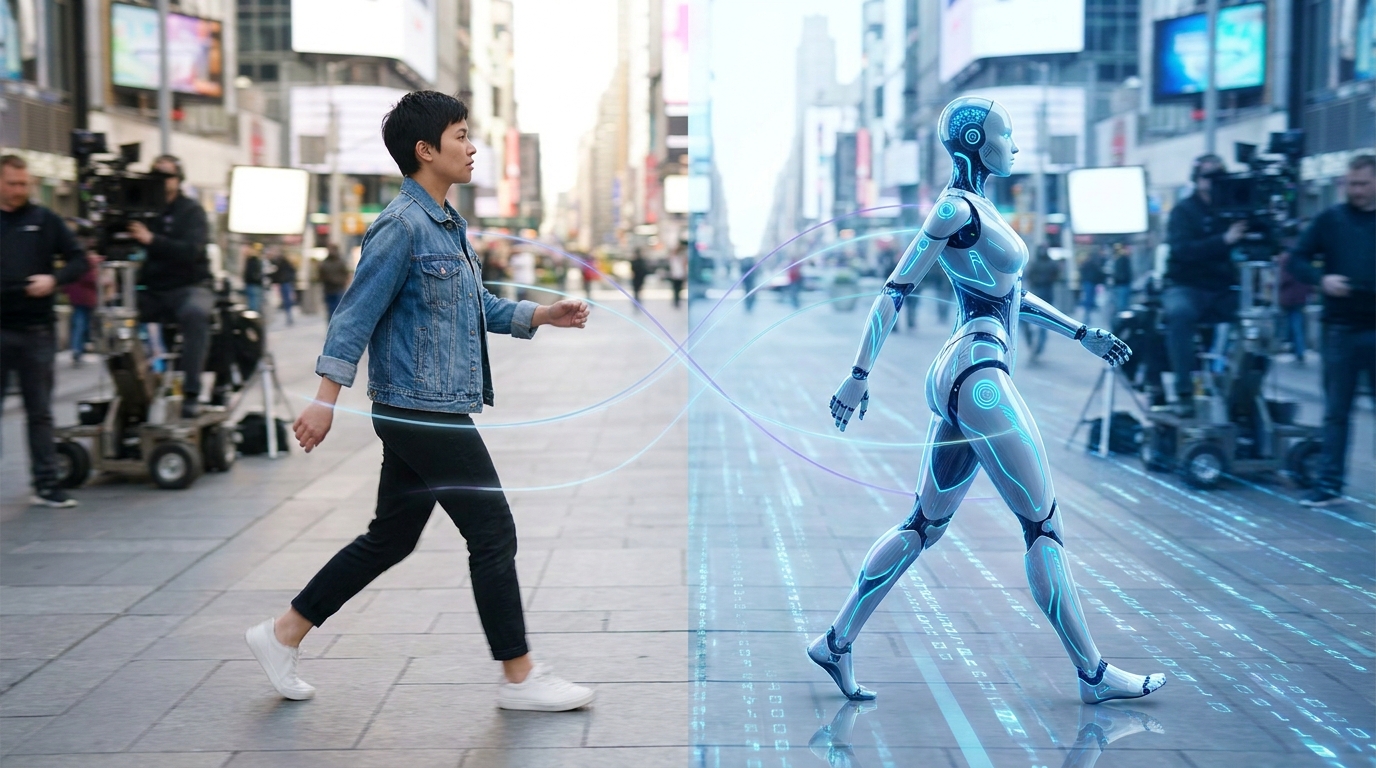
Seedance 2.5 allows you to seamlessly replace characters while maintaining the original video's motion and environment.
Step 3: Dive into Seedance 2.5 on Luma 💻
Ready to put it all together? Head over to the Luma AI platform and select Seedance 2.5 for your generation. Luma's interface is designed to make this process intuitive, especially with the explicit roles for image and video references. This is where you tell Seedance exactly what each asset is responsible for.
Keep it simple and clear: your source video (@video1) will control the performance, camera, and environment. Your character reference image(s) (@image1) will control the complete replacement character. Upload both assets *before* you paste in your prompt. This order helps Seedance understand your intent from the get-go. For more detailed guidance, check out the official Seedance 2.5 Complete Guide from Luma AI.
Optional: Analyze Complex Footage for Clarity 🧐
Sometimes, your source video might be a bit tricky – maybe it has lots of camera movement, quick cuts, or multiple performers. If you're dealing with complex scenes, a multimodal AI assistant can be your secret weapon. Feed your exact edited source video into one of these assistants and ask it to break down the action.
You can prompt it to identify the lead performer, pinpoint shot changes, trace movement paths, note turns, occlusions (when something blocks the view), camera behavior, and any important action beats. Use this detailed analysis to clarify who your *TARGET_ACTOR* is in your universal prompt. Remember, only describe the cut you're actually uploading – don't confuse the AI with details about a longer or different version.
Advertisement
Step 4: The Universal Full-Character-Replacement Prompt ✍️
This is the magic spell! The prompt is where you explicitly tell Seedance 2.5 how to interpret your references. The core principle here is *strict reference separation*. You're assigning very specific roles to your inputs to avoid common pitfalls, like the original actor's clothes stubbornly remaining.
The prompt ensures that @video1 is solely responsible for motion, timing, camera, and environment. Meanwhile, @image1 is the absolute authority for the new character's face, hair, body, clothing, shoes, and accessories. This clear division is what makes a complete character replacement possible. Without it, you might end up with a new face on an old outfit, which isn't what we're aiming for!
- Strict Separation: Clearly define @video1 for motion, timing, camera, and environment.
- Absolute Authority: Assign @image1 as the sole source for the new character's appearance, including all wardrobe details.
- Target Actor: If multiple people are present, specify the TARGET_ACTOR in the prompt to ensure only the intended character is replaced.
Step 5: Match Duration & Generate! ▶️
You're almost there! Once your assets are uploaded and your prompt is ready, the final step is to match the generation duration. Set the output duration to precisely match your edited reference clip. Seedance 2.5 is quite capable, supporting clips up to 30 seconds in a single generation, though specific controls might vary slightly depending on the interface you're using.
It's important not to ask the model to invent extra action or extend the clip beyond what your reference video provides. Stick to the script (or, in this case, the video!). Once everything is aligned, hit that generate button and watch Seedance 2.5 bring your new character to life within the original scene. You've got this!
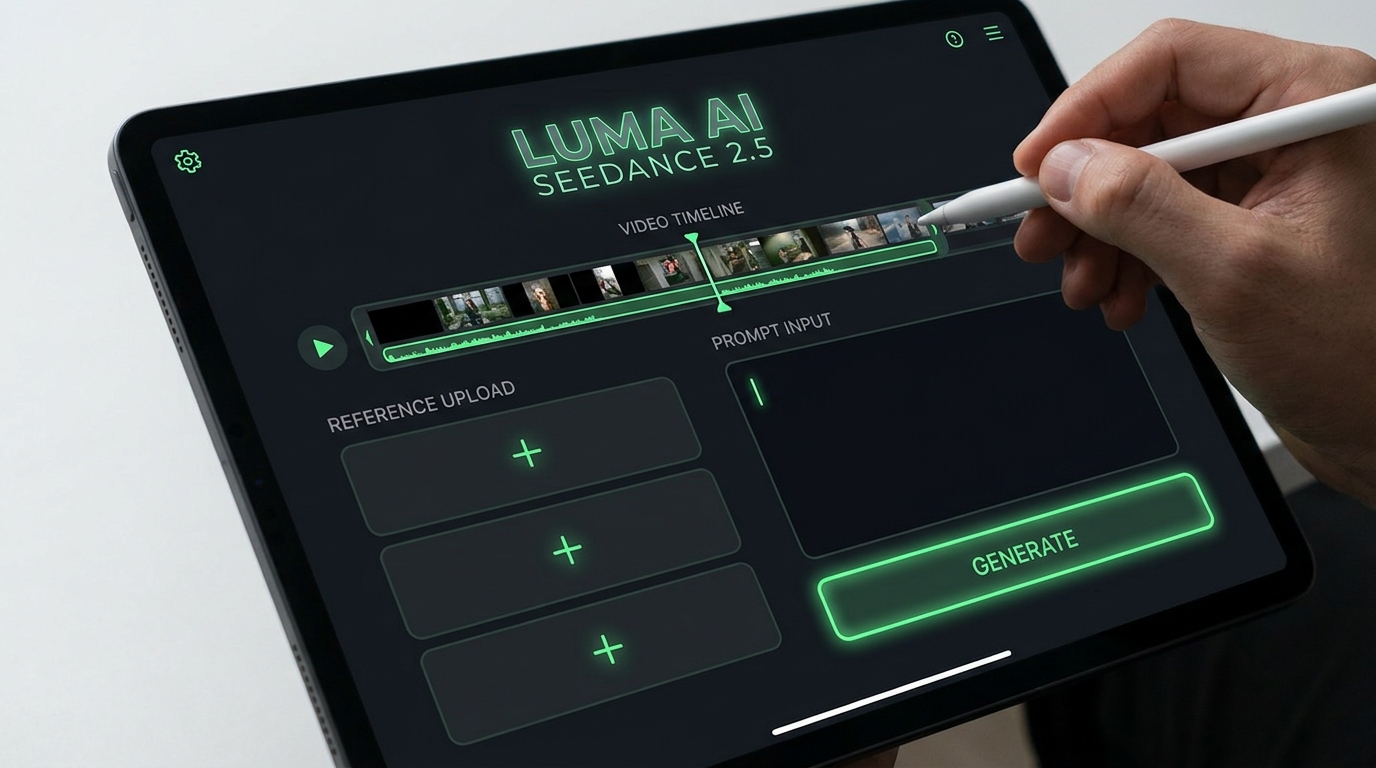
The Seedance 2.5 interface streamlines the process of uploading references and generating your AI video.
Troubleshooting: Diagnose Only What Failed 🩹
Even with the best intentions, AI generations can sometimes be a little quirky. Don't panic! The key to efficient troubleshooting with Seedance 2.5 is to diagnose only the specific part that went wrong, rather than rewriting your entire prompt or re-uploading everything. This targeted approach saves you time and frustration.
For instance, if the original actor’s clothes are still there, you need to reinforce in your prompt that @image1 is the *absolute authority* for wardrobe and that @video1 *only* supplies motion. If your new character’s face briefly reverts to the original during quick turns, strengthen the 'temporal identity lock' in your prompt and consider using a multi-angle character sheet for @image1. If other people in the scene are accidentally replaced, clarify that *TARGET_ACTOR* is the *only* person mapped to @image1. Pinpoint the problem, then apply a precise fix. You're a pro at this now!
- Wardrobe Woes? Reiterate that @image1 is the sole source for clothing and appearance.
- Face Flickering? Strengthen temporal identity lock in your prompt and provide a multi-angle character sheet.
- Wrong Character Replaced? Clearly specify the TARGET_ACTOR in your prompt, ensuring only they are mapped to @image1.
Complete step-by-step walkthrough
Original TECH4SSD tutorial and reference media
Tools
- Seedance 2.5
- Luma
- An AI assistant for optional reference-video analysis
Before you begin
- A source/reference video you are allowed to use
- One clear character image or, preferably, a multi-angle character sheet
- Access to Seedance 2.5 through Luma or another supported AI video interface
Watch the original Instagram tutorial
1. 1. Prepare the source video
Choose the exact video you want to recreate and trim it to the duration you actually want to generate. The source video should be treated as the master for movement, choreography, timing, camera, framing, perspective, environment, and scene geometry, not as the authority for the target actor’s appearance. If the source contains several people, decide which one performer is the TARGET_ACTOR before generation.
- Final reference clip is trimmed
- Target performer is identifiable
- Source motion and camera are clear
2. 2. Prepare the replacement character reference
Upload either a single clear image or a character sheet. A character sheet is preferable when the source includes rear, profile, wide, or full-body views. The replacement reference should control the complete new character: face, hair, skin tone, body appearance, clothing, footwear, accessories, and style. Do not ask the model to preserve the source actor’s wardrobe if you want a true full-character replacement.
Tip: For difficult turns, use a sheet containing face close-up, full-body front, side, three-quarter, and back views.
3. 3. Open Seedance 2.5 in Luma
Open Luma and choose Seedance 2.5 for the generation. Luma’s current Seedance 2.5 guidance supports explicit roles for image and video references, so keep the mapping simple: @video1 controls performance/camera/environment; @image1 controls the complete replacement character. Upload both assets before pasting the prompt.
Luma, Seedance 2.5 Complete Guide
4. 4. Optional: analyze complex source footage first
If the scene is complex, give the exact edited source video to a multimodal AI assistant and ask it to identify the lead performer, shot changes, movement path, turns, occlusions, camera behavior, and important action beats. Use that analysis to clarify TARGET_ACTOR in the universal prompt. Do not describe a different or longer cut than the one you actually upload.
Exact prompt
Analyze this exact reference video for a full-character replacement workflow. Identify the ONE primary performer to replace and track that same role across the entire timeline. Describe their starting position, movement path, turns, occlusions, interactions, final position, and distinctive actions. Also describe meaningful camera/framing changes. Focus on tracking the same performer across front, side, rear, wide, and close views. Do not redesign the scene.5. 5. Paste the universal full-character-replacement prompt
Use the complete prompt below. Its central rule is strict reference separation: @video1 supplies motion, timing, camera and environment; @image1 supplies face, hair, body, clothing, shoes, accessories and style. This prevents the common failure where only the face changes while the source actor’s clothing survives.
Exact prompt
UNIVERSAL FULL CHARACTER REPLACEMENT — IDENTITY + OUTFIT TRANSFER

INPUTS:
Source Video = @video1
Replacement Character Reference = @image1

GOAL:
Replace ONE specific main performer in @video1 with the complete character shown in @image1.

This is a FULL CHARACTER REPLACEMENT.

Do NOT perform a face swap only.
Do NOT preserve the original actor's clothing.
Do NOT blend the source actor with the replacement character.

REFERENCE RESPONSIBILITIES:

@video1 provides ONLY:
- movement
- choreography
- body poses
- timing
- walking path
- gestures
- interactions
- camera movement
- framing
- perspective
- scene geometry
- environment
- lighting reference

@image1 provides:
- facial identity
- hairstyle
- hair color
- skin tone
- body appearance
- body proportions
- clothing
- footwear
- accessories
- styling
- overall character design

If @image1 is a character sheet, use ALL available views to reconstruct the exact same character consistently from every camera angle.

If @image1 is a single image, infer the unseen side, back and full-body appearance consistently from that image without borrowing identity or wardrobe from the original performer.

STEP 1 — IDENTIFY THE TARGET ACTOR:

Analyze @video1 from beginning to end before generating.

Identify the ONE main performer who carries the primary action.

Track this same person temporally using:
- starting position
- movement path
- body position
- interaction with surrounding people
- role in the choreography
- turns
- gestures
- final position
- distinctive actions

Lock this performer as TARGET_ACTOR.

TARGET_ACTOR must remain the same role across:
- wide shots
- close-ups
- side views
- rear views
- camera changes
- occlusions
- crowd crossings
- turns
- different framing

Do not accidentally switch to another person after a cut or perspective change.

STEP 2 — REMOVE THE ORIGINAL CHARACTER APPEARANCE:

Use the original TARGET_ACTOR only as a motion skeleton and spatial guide.

Do NOT preserve:
- original face
- original hairstyle
- original skin
- original body appearance
- original clothing
- original shoes
- original accessories
- original character styling

The source actor's visual identity must disappear entirely.

Only their motion, pose, timing, position and performance remain.

STEP 3 — REBUILD TARGET_ACTOR FROM @image1:

Replace TARGET_ACTOR with the COMPLETE character shown in @image1.

Preserve from @image1:
- exact facial structure
- eyes
- eyebrows
- nose
- lips
- jawline
- ears
- skin tone
- hairstyle
- hairline
- body build
- visible proportions
- clothing design
- clothing colors
- footwear
- jewelry
- accessories
- hats
- glasses
- masks
- jackets
- shirts
- trousers
- dresses
- uniforms
- distinctive character details

Treat @image1 as the absolute visual authority for the replacement character.

If the character sheet contains multiple angles, use them together as ONE identity.

Do not mix clothing or facial features from @video1 into the replacement character.

STEP 4 — MOTION RETARGETING:

Transfer TARGET_ACTOR's exact performance from @video1 onto the replacement character.

Preserve:
- walking direction
- speed
- stride length
- posture
- turns
- head movement
- shoulder movement
- arm movement
- hand placement
- gestures
- leg movement
- body orientation
- sitting
- standing
- running
- dancing
- bending
- reacting
- interactions
- pauses
- choreography
- action timing

The replacement character must perform the same movement at the same moment.

Do NOT change the choreography to match the reference image pose.

Instead, animate the @image1 character naturally through the poses required by @video1.

FRONT / SIDE / BACK CONSISTENCY:

When TARGET_ACTOR faces away from camera:
generate the correct rear view of the @image1 character and outfit.

When TARGET_ACTOR is in profile:
generate the correct side view of @image1.

When TARGET_ACTOR turns toward camera:
reveal the same @image1 identity.

The same clothing, body, hair and accessories must remain consistent throughout the turn.

There must be no moment where the original actor appears before or after the turn.

CLOTHING — IMPORTANT:

The clothing from @image1 MUST replace the source actor's clothing.

Do NOT retain the source costume.

If @image1 contains:
- a jacket, preserve that jacket
- a hoodie, preserve that hoodie
- a suit, preserve that suit
- a school uniform, preserve that uniform
- jewelry, preserve that jewelry
- glasses, preserve those glasses
- hat, preserve the hat
- shoes, preserve the shoes

Adapt the @image1 outfit naturally to:
- walking
- running
- turning
- sitting
- dancing
- bending
- wind
- gravity
- camera perspective

The wardrobe must remain visually identical throughout all shots.

No wardrobe drift.
No colors changing.
No source-video clothes returning.

BODY ADAPTATION:

The body from @image1 should replace the source actor's visual body appearance.

Retarget the choreography onto the replacement body's proportions while preserving the original motion path.

If the replacement character is:
- taller
- shorter
- slimmer
- broader
- more muscular
- wearing different clothing

adapt the movement naturally while keeping the same spatial action and timing.

Do not force the source actor's exact body shape onto @image1.

OTHER PEOPLE:

Do NOT replace anyone except TARGET_ACTOR unless explicitly instructed.

All other people in @video1 should keep:
- their original identity
- original clothing
- original position
- original choreography
- original timing

Never clone @image1 into the crowd.

Never apply @image1's face or clothes to surrounding people.

TARGET_ACTOR = @image1
EVERYONE ELSE = source-video characters

CAMERA:

Use @video1 as a strict camera reference.

Preserve:
- exact shot sequence
- shot duration
- camera position
- camera height
- camera angle
- camera path
- tracking
- pull-back
- push-in
- zoom behavior
- perspective
- focal feel
- framing
- composition
- subject scale
- depth relationships

Do not invent new camera moves.

Do not reframe the replacement character differently from the source performance.

The new character must occupy the same spatial role in the frame.

ENVIRONMENT:

Preserve @video1's environment.

Maintain:
- location
- architecture
- furniture
- vehicles
- walls
- ground
- signs
- props
- crowd placement
- foreground
- background
- spatial layout

Do not redesign the environment unless explicitly requested.

Only regenerate pixels necessary to integrate the replacement character naturally.

LIGHTING:

Relight the @image1 character to match @video1.

Preserve the replacement character's identity and outfit while adapting them to:
- source light direction
- exposure
- shadow direction
- color temperature
- highlights
- reflections
- ambient light
- depth of field
- motion blur
- atmosphere

The person must look physically present in the original environment.

Do not make the character look pasted on top.

IDENTITY LOCK:

Once @image1 replaces TARGET_ACTOR, lock this identity for the full timeline.

Maintain the exact same:
- face
- skin
- hair
- body appearance
- clothing
- shoes
- accessories
- age
- styling

through every frame.

Never interpolate between the source actor and @image1.

Never temporarily restore the source actor.

Never use the source actor's appearance to fill missing angles.

ANATOMY:

Maintain realistic human anatomy.

Correct:
- face
- neck
- shoulders
- arms
- elbows
- wrists
- hands
- five fingers
- torso
- hips
- knees
- ankles
- feet

No:
- extra limbs
- missing limbs
- warped hands
- duplicated fingers
- stretched torso
- broken neck
- facial melting
- body morphing

TEMPORAL CONSISTENCY:

The replacement must remain stable across the entire video.

No frame-to-frame identity drift.

No:
- changing face
- changing hairstyle
- changing clothing
- changing skin tone
- changing body type
- disappearing accessories
- changing shoes
- source actor returning

Treat the full video as one continuous performance by the @image1 character.

STRICT NEGATIVE INSTRUCTIONS:

NO face-only replacement.
NO source actor clothing.
NO source actor hairstyle.
NO source actor body appearance.
NO identity blending.
NO face morph between both people.
NO alternating characters.
NO partial replacement.
NO original actor appearing during wide shots.
NO original actor returning during rear views.
NO original actor returning during motion blur.
NO original actor returning after camera cuts.
NO @image1 clones.
NO replacement of background people.
NO wardrobe blending.
NO source wardrobe returning.
NO wardrobe color drift.
NO hairstyle drift.
NO body drift.
NO new actions.
NO missing actions.
NO timing changes.
NO camera changes.
NO unnecessary environment changes.

FINAL RESULT:

The final video should appear as if the complete character from @image1 was physically present during the original filming of @video1.

Keep:
- the same source performance
- same movement
- same timing
- same choreography
- same interactions
- same camera
- same scene
- same environment

Change:
- the entire TARGET_ACTOR visual appearance

The final TARGET_ACTOR must be 100% derived from @image1:
FACE + HAIR + BODY + CLOTHING + SHOES + ACCESSORIES + STYLE.

Use @video1 ONLY for motion, position, timing, camera and environment.

PRIORITY ORDER:

1. Replace TARGET_ACTOR completely with @image1.
2. Preserve @image1 clothing and full appearance.
3. Preserve exact source motion and timing.
4. Never show the original TARGET_ACTOR.
5. Never apply @image1 to other people.
6. Preserve camera and framing.
7. Preserve environment.
8. Maintain photorealistic temporal consistency.
6. 6. Match duration and generate
Set the generation duration to match the edited reference clip as closely as the interface allows, then generate. Seedance 2.5 supports clips up to 30 seconds in a single generation, though available controls can vary by interface. Do not ask the model to invent extra action after the reference ends.
- @video1 uploaded
- @image1 uploaded
- Reference roles are explicit
- Duration matches source
- Universal prompt pasted
7. 7. Diagnose only the part that failed
If the original actor’s clothes remain, reinforce that @image1 is the absolute authority for wardrobe and that @video1 supplies motion only. If the original face returns during turns, strengthen temporal identity lock and use a multi-angle character sheet. If other people are replaced, reinforce that TARGET_ACTOR is the only person mapped to @image1. Avoid rewriting everything when only one failure needs correction.
Tip: Luma’s own Seedance guidance recommends giving each reference a clear role and fixing the specific failure rather than endlessly expanding the prompt.
Key Takeaways
- Seedance 2.5 significantly enhances character replacement and consistency in AI video generation.
- Use your source video for motion, timing, and environment, and a separate character image/sheet for the new character's appearance.
- Strictly separate reference roles in your prompt: @video1 for performance, @image1 for character look.
- A detailed character sheet (multiple angles) improves consistency, especially for complex movements.
- Troubleshoot by addressing specific failures rather than redoing the entire generation.
Related on Tech4SSD 🔗
- Seedance 2.5: Put Yourself Into the Viral Motion-Transfer Trend (2026)
- How to Recreate Motion-Transfer Videos With Seedance 2.5, No Higgsfield Required (2026)
- invideo MCP: Edit Real Video Timelines by Chatting With Your AI Agent (2024)
📩 Want the freshest AI trends every week?
Subscribe to Tech4SSD — practical AI tools and trends, explained for everyone. Free. Subscribe →
Advertisement
Frequently Asked Questions
Can Seedance 2.5 replace multiple characters in one video?
Yes, Seedance 2.5 supports more practical multi-person scenes by allowing you to name, map, and create centralized profiles for recurring subjects. You'll need to clearly define each TARGET_ACTOR and their corresponding reference images in your prompt.
What's the best type of image to use for the replacement character?
A character sheet is highly recommended. This includes multiple clear images of your desired character from different angles (front, back, side, close-up) and in various poses. This gives the AI a comprehensive understanding of the character's appearance, leading to better consistency.
What if the new character's clothing doesn't look right?
This is a common issue! It usually means Seedance is still trying to draw some wardrobe information from your source video. In your prompt, explicitly state that @image1 is the *absolute authority* for all aspects of the character's appearance, including clothing, footwear, and accessories. Reinforce that @video1 is *only* for motion.
How long can the generated video be?
Seedance 2.5 supports generating clips up to 30 seconds in a single generation. Always match the generation duration to your edited reference clip to ensure the best results and avoid unexpected AI-generated content.
Final Word
Luma AI's Seedance 2.5 truly empowers creators like you to push the boundaries of AI video generation. The ability to completely replace a character while maintaining the integrity of the original performance, camera work, and environment opens up a world of creative possibilities. From rapid prototyping to final production, these enhanced consistency and replacement features mean less time spent on tedious edits and more time bringing your unique visions to life.
You now have the knowledge and the tools to tackle complex character swaps with confidence. So go ahead, experiment, create, and transform your video projects with the incredible power of Seedance 2.5. The future of AI video is in your hands! 🚀
Sources & Further Reading
- Seedance 2.5 Prompting Guide | Luma
- Seedance 2.5 Complete Guide - Luma AI
- Seedance 2.5 Production Workflows - Luma AI
- Seedance 2.5: Now Live in Luma
- Seedance 2.5: How To Think In Scenes - Luma AI
- https://lumalabs.ai/learning-hub/ray3-modify-user-guide
- https://lumalabs.ai/learning-hub/luma-video-models-guide-ray3.14-veo-sora-kling-compared
- Character Consistency Techniques | Luma
- How To Use References Properly | Luma
- Character Consistency | Luma
AI tools and features change fast — verify current options before relying on them. — Tech4SSD Editorial
Discussion
Have a question or something to add?
Join the discussion on Blogger