Quick question: how many songs in your favorite playlist were actually made by a human? 🎧 You probably assume all of them. But a brand-new free tool from Deezer might surprise you — and the answer for some playlists is "way fewer than you'd think." There's now a one-click scanner that checks your Spotify or Apple Music playlist and flags the tracks it thinks were cooked up by AI.
No account. No download. No skills. You paste a link, hit scan, and seconds later you see which songs are flagged as robot-made. Let's break down what just dropped and exactly how to check your own playlist tonight.
What Just Happened 📰
On June 11, 2026, the streaming service Deezer opened up its AI music detector to the public — for free. It used to be an internal tool the company used to police its own catalog. Now anyone can use it, even if you've never touched a Deezer account in your life.
Here's what makes it genuinely useful, not just a gimmick:
- No Deezer account needed. You don't have to be a subscriber or sign up for anything.
- Works across 20 platforms. Spotify, Apple Music, YouTube Music, SoundCloud and more — not just Deezer's own library.
- Scans up to 100 playlists per check and works in 27 languages.
- Reportedly 99%+ accurate at spotting fully AI-generated tracks, and your results are shareable.
It works by detecting the tiny digital "fingerprints" that AI music software leaves behind — subtle artifacts in the audio that human-recorded songs don't have. You won't hear them, but the detector can.
Half real, half synthetic — and your ears usually can't tell the difference.
How to Scan Your Playlist 🔍
The whole thing takes under a minute. Here's the play-by-play:
Step 1: Open the Free Deezer Detector
Head to the public Deezer AI music detector web page in any browser — phone or laptop, both work. There's nothing to install and no login wall blocking you. Just the tool, ready to go.
Step 2: Grab Your Playlist Link 🔗
Open Spotify, Apple Music, YouTube Music — whatever you use. Find the playlist you want to check, tap the share button, and copy the link. That's the share URL you'll paste in.
💡 Pro Tip: Start with a chill "study," "lo-fi," "focus," or "background" playlist. Those genres are the most flooded with AI tracks right now, so you're most likely to get an eye-opening result on the first try.
Step 3: Paste, Connect & Run the Scan ⚡
Drop your link into the detector, connect the playlist, and hit scan. The tool reads through the tracks and analyzes each one for those AI audio fingerprints. A few seconds later, you get your report.
Try this: scan three playlists side by side — your personal favorites, a popular "lo-fi beats" playlist, and a Top 50 chart. Compare the AI percentages. The difference between them tells you a lot about where synthetic music is hiding.
Step 4: Review & Share Your Results 📊
The detector shows you which tracks it flagged as AI-generated. You can share that result card with friends — which is honestly half the fun. Expect a few "wait, THAT song is AI?!" moments.
One honest caveat: the tool flags, it doesn't deliver a courtroom verdict. It's a very strong signal, not 100% perfect. Treat a flag as "this is very likely AI," not absolute proof — especially for songs that blend AI with real instruments.
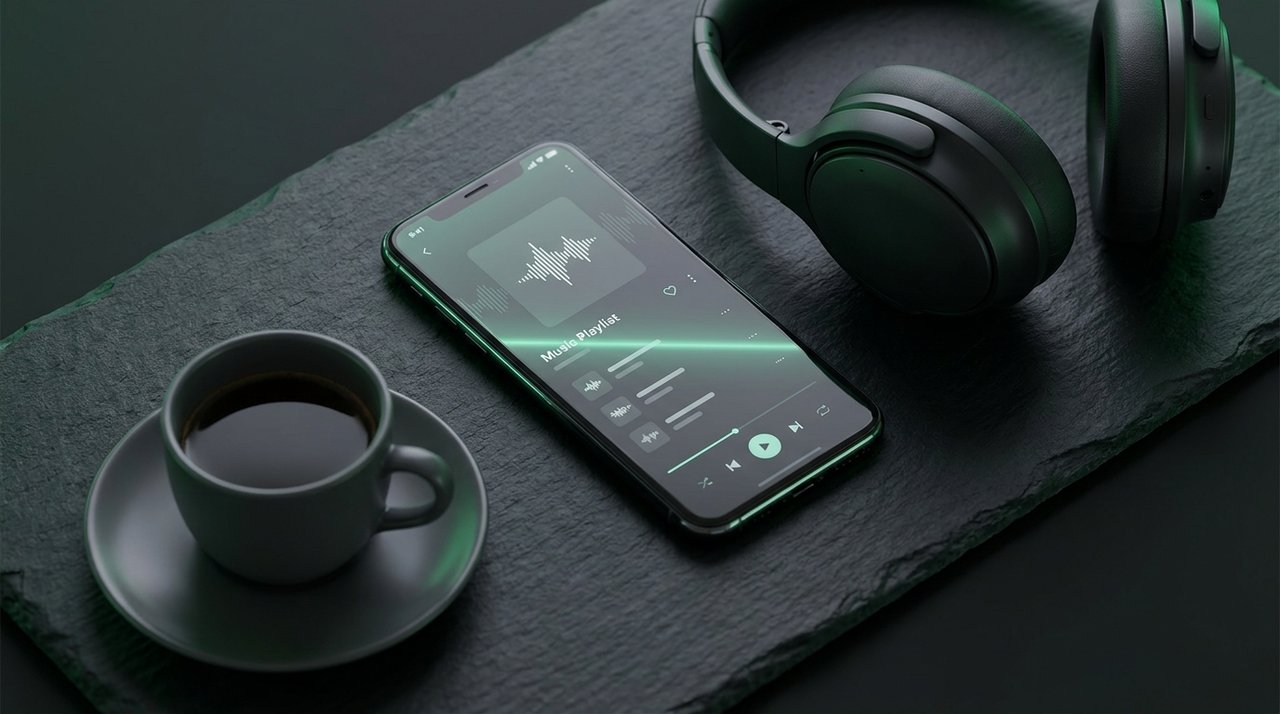
Paste a link, run the scan, and see your playlist's AI score in seconds.
Why This Actually Matters 🤔
This isn't just a fun party trick. Here's the stat that makes it land: Deezer now receives roughly 75,000 AI-generated tracks every single day — that's over 44% of all daily uploads. Back in September 2025, that number was 28%. In under a year it nearly doubled.
Why should you care? A couple of real reasons:
- Royalty dilution. Every AI track soaking up streams pulls money away from the human artists you actually want to support.
- Authenticity. If you love a "musician," it's fair to want to know whether a person or a model made the song you're hearing.
- Transparency. A free, public detector hands that power to listeners instead of leaving it locked inside streaming companies.
For everyday listeners, this is the first easy way to peek behind the curtain. And for creators, it's a heads-up: AI music is now nearly half of what's being uploaded, so standing out as a real human artist matters more than ever.
Key Takeaways
- Deezer's free AI music detector launched publicly on June 11, 2026 — no account or download required.
- It scans playlists across 20 platforms (Spotify, Apple Music, YouTube Music, SoundCloud and more) in 27 languages.
- Paste a playlist share link, run the scan, and review flagged tracks in seconds — up to 100 playlists per check.
- It's reportedly 99%+ accurate, but treat flags as a strong signal, not absolute proof.
- Context: ~75,000 AI tracks hit Deezer daily — over 44% of uploads, nearly double the September 2025 figure.
Frequently Asked Questions
Do I need a Deezer account to use it?
No. The public detector works without any Deezer account or subscription. You just open the web tool, paste a playlist link, and scan.
Does it work with Spotify and Apple Music?
Yes — it covers around 20 platforms, including Spotify, Apple Music, YouTube Music and SoundCloud. You don't have to use Deezer itself to scan your favorite playlists.
How accurate is the detector?
Deezer describes it as 99%+ accurate at spotting fully AI-generated tracks by detecting audio artifacts the software leaves behind. It's very strong, but not flawless — treat a flag as a high-confidence signal rather than final proof, especially for songs that mix AI with real recording.
Why is so much AI music being uploaded?
AI music tools have gotten cheap, fast and good. Deezer now sees roughly 75,000 AI-generated tracks a day — over 44% of uploads — because anyone can generate a "song" in minutes and push it to streaming platforms.
📩 Want the freshest AI trends every week?
Subscribe to Tech4SSD — practical AI tools and trends, explained for everyone. Free. Subscribe →
Final Word
For years, telling AI music from the real thing was basically impossible for normal listeners. Now it's a free, 30-second scan you can run from your couch. 🚀 Whether you do it for the "no way, that's AI?!" laughs or because you genuinely want to support human artists, it's worth a look.
So go on — pull up your most-played playlist, run the scan, and find out just how much of your soundtrack is secretly a robot. Then share the result and dare a friend to check theirs.
AI tools and features change fast — verify current options before relying on them. — Tech4SSD Editorial
Discussion
Have a question or something to add?
Join the discussion on Blogger