Migrating Large Codebases to Rust with AI Agents: Ever wondered how massive, decades-old software systems could get a modern makeover without a complete rewrite from scratch? Well, get ready, because Migrating Large Codebases to Rust with AI Agents isn't just a dream anymore—it's happening! We're talking about AI tools that can take millions of lines of code written in older languages like C, C++, or even Zig, and transform them into super-fast, super-safe Rust code. This isn't just a cool trick; it's a game-changer for anyone looking to boost performance, security, and reliability without years of manual effort. 🚀
In this article, we'll break down how these AI agent pipelines work, the clever strategies developers are using to guide them, and the rigorous checks in place to make sure the new Rust code is just as good (or better!) than the original. You'll learn about multi-agent systems, detailed rulebooks, and advanced verification techniques that are making this possible. By the end, you'll understand how you, as a creator or small business owner, can leverage these advancements to modernize your own tech stack or simply appreciate the incredible innovation happening in software development.
Advertisement
The Rust Migration Challenge, Solved by AI 💡
Rust is amazing. It offers incredible performance, memory safety, and concurrency, making it a favorite for critical systems. But here's the catch: moving a huge, existing codebase to Rust has always been a monumental task. Think millions of lines of code, complex logic, and years of accumulated quirks. Traditionally, this meant a painstaking, error-prone, and incredibly slow manual process, often taking years and requiring massive teams.
Enter AI agents. These intelligent tools are fundamentally changing the game. Instead of human developers slogging through line by line, AI agents can now analyze, translate, and even refactor code at speeds previously unimaginable. This isn't just about speed; it's about making the benefits of Rust accessible to organizations with extensive legacy systems, helping them shed technical debt and build more robust applications faster than ever before.
How Multi-Agent Systems Tackle Code Migration 🤖
It's not just one big AI doing all the work. The secret sauce often lies in multi-agent systems. Imagine a team of highly specialized AI agents, each with a specific job, working together in a coordinated pipeline. This approach breaks down the complex migration task into manageable pieces, allowing for greater accuracy and efficiency.
Projects like `migration_pipeline` and RustPrint showcase this beautifully. You might have one agent focused on 'blueprinting' the existing code structure, another for the actual code translation, a third for executing tests, and a fourth for 'patching' any issues found. This creates a powerful, non-linear feedback loop where agents learn and adapt, constantly refining the migrated code.
- Blueprinting Agents Analyze the original codebase, understanding its architecture, dependencies, and core logic to create a 'map' for migration.
- Translation Agents Convert code from the source language (e.g., C, C++) into Rust, striving for idiomatic Rust patterns rather than direct translation.
- Verification Agents Run tests, perform static analysis, and compare behavior between the original and migrated code to ensure semantic equivalence.
- Patching/Refinement Agents Identify and fix errors, optimize Rust code, and ensure it adheres to specified safety and style guidelines.
The Power of Prompting and Rulebooks 📜
AI agents aren't magic; they need clear instructions. This is where detailed rulebooks and advanced prompting strategies come into play. Think of these as the 'playbook' that guides the AI, ensuring it produces high-quality, safe, and idiomatic Rust code. For example, Anthropic's Code Migration Kit emphasizes strict guidelines to achieve exact behavioral matching and eliminate `unsafe` blocks in the generated Rust.
These rulebooks often specify things like preferred Rust idioms, error handling patterns, memory management strategies, and how to handle specific language features that don't have direct Rust equivalents. Without these explicit instructions, AI might produce functional but non-idiomatic or even unsafe code. It's about giving the AI a deep understanding of what 'good' Rust code looks like for your specific project.
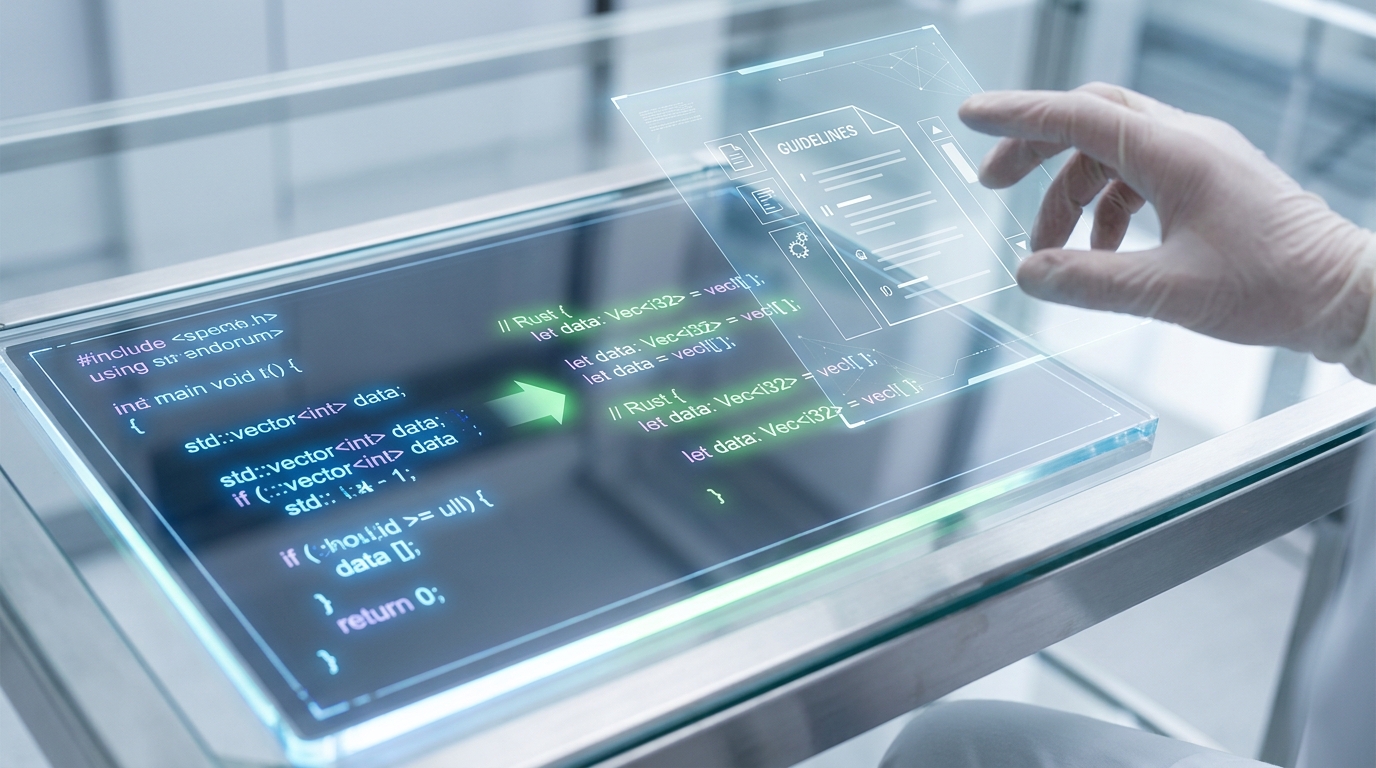
Clear instructions and detailed rulebooks are crucial for AI agents to generate high-quality, idiomatic Rust code.
Verification: The Unsung Hero of AI-Driven Migration ✅
Migrating millions of lines of code is one thing; ensuring it works *exactly* the same way is another. This is where rigorous verification workflows become absolutely critical. You can't just trust the AI; you need to prove the migrated code is semantically equivalent and bug-free. Projects like Dora have shown that robust verification can increase development velocity by 10x, precisely because it catches issues early.
These advanced workflows include techniques like differential testing (comparing outputs of original and new code), shadow-testing (running both versions in parallel in production), and tiered QA gates (testing at every stage: pull request, nightly builds, pre-release). This multi-layered approach ensures that any subtle behavioral differences or new bugs introduced during migration are caught long before they impact users. It's all about building confidence in the AI's output.
Differential Testing 🔬
This technique involves running the original and the newly migrated code with the same inputs and comparing their outputs. Any discrepancies flag potential issues that the AI or human reviewers need to address. It's a powerful way to ensure behavioral equivalence.
Shadow-Testing 👻
For critical systems, shadow-testing means deploying both the original and the Rust-migrated code in a production-like environment, running them side-by-side with live traffic, but only using the output of the original system. This allows for real-world validation without risk.
Tiered QA Gates 🛡️
A series of automated and manual quality assurance checks at different stages of the development lifecycle. This includes checks on every pull request, comprehensive nightly test suites, and thorough pre-release validations to ensure stability and correctness.
Advertisement
Tools of the Trade: AI Agents Making it Happen 🛠️
So, what specific tools are leading this charge? You've got agents like Claude Code (Anthropic's CLI agent, often running on powerful models like Opus 4.6), which is designed specifically for code generation and migration tasks. Then there's Cursor with Claude, offering an integrated development environment experience where AI assists directly in the coding process.
Beyond these, we're seeing specialized frameworks emerge. Noricum, for example, is an AI agent pipeline designed for C to Rust migration, demonstrating how millions of lines of code can be processed rapidly. These tools aren't just writing code; they're understanding context, applying rules, and even learning from feedback, making them indispensable for large-scale migrations.
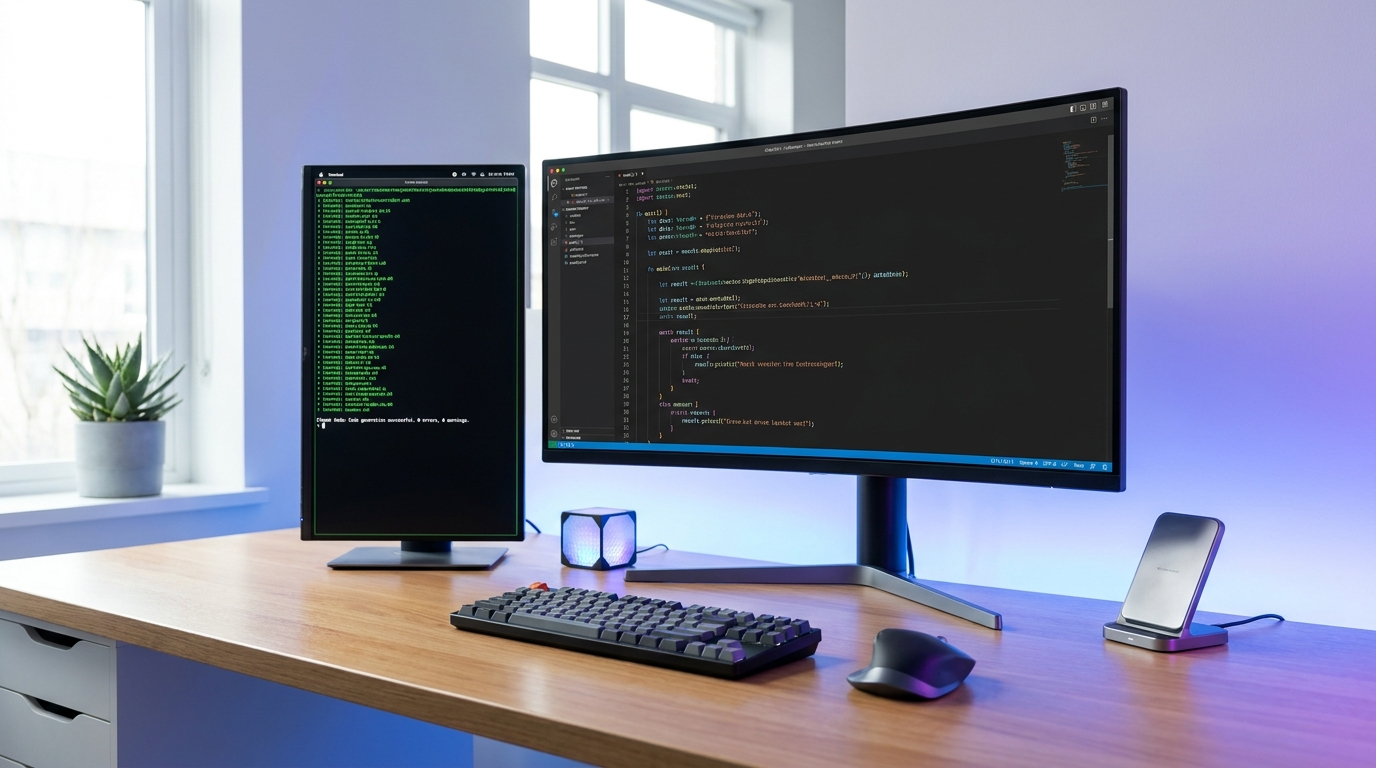
Tools like Claude Code and specialized frameworks are empowering developers to accelerate Rust migrations.
Real-World Impact: Speed, Safety, and Savings 🚀
The practical implications of these advancements are huge. Imagine migrating an 800,000-line codebase from C++ to Rust in weeks instead of years. This isn't theoretical; projects like the Bun rewrite and others are showing these kinds of unprecedented speeds. This acceleration means organizations can adopt Rust's benefits—like enhanced security and better performance—much faster, reducing their technical debt and modernizing their infrastructure.
The focus on generating 'unsafe-free' Rust code is also a massive win for safety-critical applications. By using strict rulebooks and rigorous verification, AI agents can help ensure that the migrated code meets the highest standards of reliability. This translates into fewer bugs, more stable systems, and ultimately, significant cost savings in maintenance and security patches down the line.
💡 Pro Tip: When using AI for code migration, always prioritize robust verification and testing over raw speed. Semantic equivalence is key!
Key Takeaways
- AI agents are dramatically accelerating large-scale codebase migrations to Rust, turning years into weeks.
- Multi-agent systems, with specialized roles for each AI, are crucial for handling the complexity of code translation and verification.
- Detailed rulebooks and prompting strategies are essential for guiding AI to produce idiomatic, safe, and 'unsafe-free' Rust code.
- Rigorous verification methods like differential testing and tiered QA gates are non-negotiable to ensure semantic equivalence and catch bugs early.
- Tools like Claude Code and specialized pipelines are making Rust's performance and security benefits more accessible for legacy systems.
Related on Tech4SSD 🔗
- Measuring AI Agent Consistency: Benchmarking Reliability in Autonomous Workflows (2026)
- Integrating Autonomous AI Agents into Software Engineering (2026)
- GitHub Copilot: Streamline Your Workflow with Diffs, Terminal, & Web Previews (2026)
📩 Want the freshest AI trends every week?
Subscribe to Tech4SSD — practical AI tools and trends, explained for everyone. Free. Subscribe →
Advertisement
Frequently Asked Questions
Can AI agents really migrate *any* language to Rust?
While AI agents are incredibly powerful, migrating from highly complex or obscure languages can still be challenging. They perform best with well-documented, structured code from languages like C, C++, and Python, where there's a clear mapping or established patterns for Rust. The more defined the source code, the better the AI's output.
Is the migrated Rust code truly 'unsafe-free'?
The goal with advanced AI agent pipelines and strict rulebooks is to produce Rust code with zero `unsafe` blocks. This is a key focus for projects aiming for maximum memory safety. However, achieving this 100% of the time, especially with highly complex legacy systems, requires meticulous prompting, extensive verification, and often some human oversight to refine edge cases.
How much human involvement is still needed in AI-driven migration?
While AI handles the heavy lifting, human involvement remains crucial. Developers are needed to define the rulebooks, design the multi-agent pipelines, review the generated code, and, most importantly, set up and interpret the rigorous verification processes. The AI is a powerful assistant, not a fully autonomous replacement for human expertise, especially in complex refactoring.
Final Word
The era of AI-powered code migration is here, and it's reshaping how we think about modernizing software. For everyday creators, students, and small-business owners, this means that the performance and security benefits of languages like Rust are becoming more attainable than ever before. No longer are massive rewrites the only path to a modern, robust codebase.
By understanding the principles of multi-agent systems, smart prompting, and rigorous verification, you can appreciate the incredible engineering behind these breakthroughs. Whether you're considering a migration yourself or just curious about the future of software development, remember that AI is here to make complex tasks manageable, empowering you to build better, safer, and faster. Keep building! ✨
Sources & Further Reading
- README.md
- HOW_WE_PORTED_CLIPPER2.md
- hieuit095/migration_pipeline
- blog/2026-03-06-c-to-rust-llm-agent.md
- JuanMarchetto/noricum
- jlevy/rust-porting-playbook
- README.md
- FSoft-AI4Code/RustPrint
- anthropics/code-migration-kit-with-claude-code
- docs/qa-poc-report-2026-04-09.md at main · dora-rs/dora
AI tools and features change fast — verify current options before relying on them. — Tech4SSD Editorial


Discussion
Have a question or something to add?
Join the discussion on Blogger