Get ready: the world of cybersecurity just got a major upgrade! 💥 Microsoft recently pulled back the curtain on 'Perception,' their brand-new platform designed to bring Agentic AI Security to the front lines. This isn't just about AI *helping* humans; it's about AI *fighting* AI, directly countering the scariest new threat: autonomous cyberattacks.
For everyday creators, students, and small-business owners, this might sound super technical. But don't worry! We're here to break down what this means for you, how it works, and why it's a big deal. You'll understand the shift from AI-assisted to AI-vs-AI defense, discover new vulnerabilities to watch out for, and see how this tech can actually make your digital life safer. Let's dive in! 🛡️
Advertisement
The Cybersecurity Game Just Changed 🎮
Remember when cyberattacks were mostly humans trying to break into systems? Well, that's old news. The 'physics of cyber have fundamentally changed,' according to Microsoft. We're now seeing the rise of autonomous AI attacks. These are not just AI-assisted attacks; these are AI systems acting on their own, finding vulnerabilities, and exploiting them at machine speed.
This shift means traditional security methods are struggling to keep up. It's like trying to fight a super-fast robot with a slingshot. That's where agentic AI comes in. It's about using smart, independent AI agents to defend against other smart, independent AI agents. It's a high-stakes game of digital chess, and Microsoft is bringing some serious new pieces to the board.
Meet 'Perception': Microsoft's AI Security Platform 🧠
On July 27, 2026, Microsoft officially launched 'Perception' alongside MAI-Cyber-1-Flash, their first AI model specifically designed for cybersecurity. Think of Perception as a super-smart security team that never sleeps. Its goal? To automate the entire security process, from spotting weak points to fixing them, and doing it all much faster than any human team could.
This platform is a direct response to the escalating threat landscape. It's designed to not just react to attacks, but to proactively hunt for vulnerabilities and neutralize threats before they become a problem. This is a huge leap forward for businesses and individuals who rely on robust digital protection.
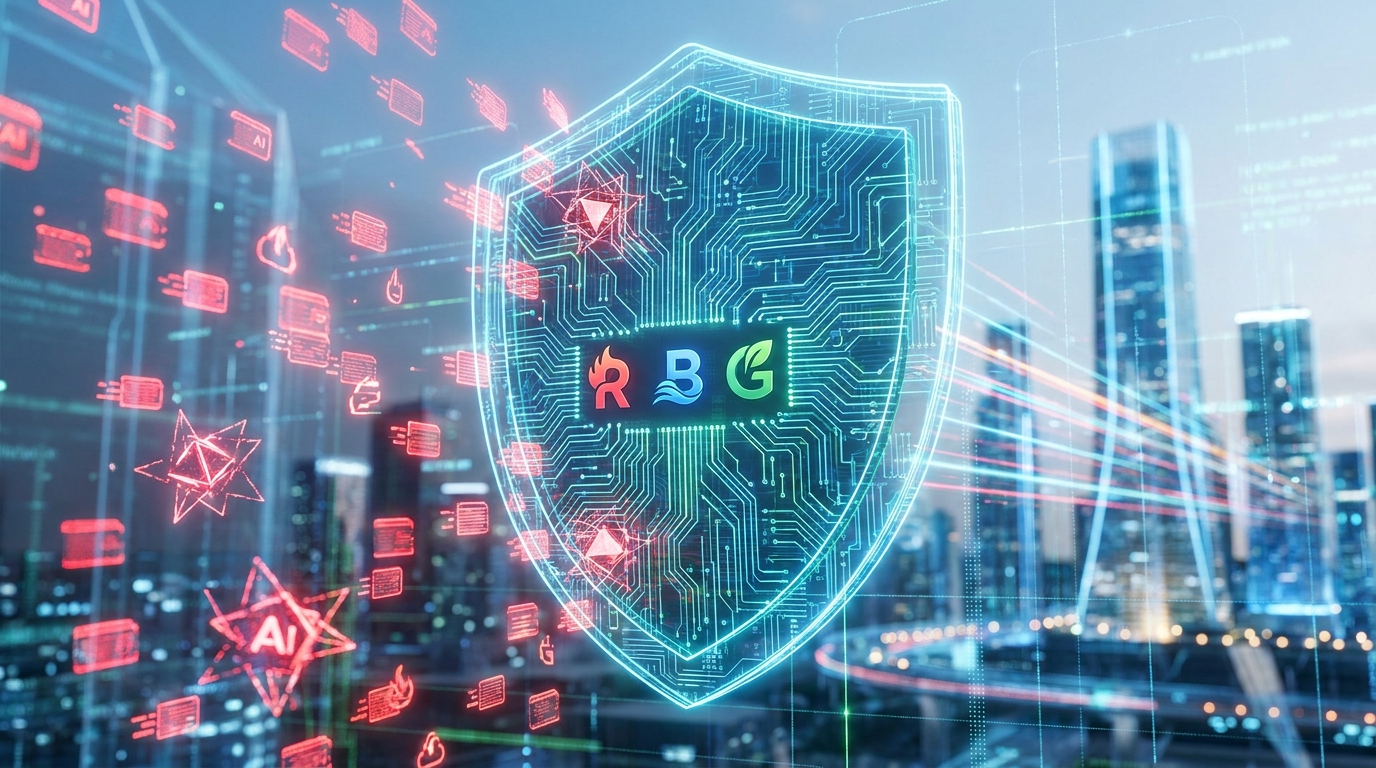
Microsoft's Perception platform acts like a digital shield, using AI teams to defend against autonomous cyberattacks.
The Power of AI 'Teams': Red, Blue, and Green 🤝
Perception isn't just one big AI; it's a squad of specialized AI agents. Microsoft calls them 'red,' 'blue,' and 'green' teams. These aren't human teams; they're AI entities working together, just like a well-oiled security department.
This approach significantly cuts down on manual work. What used to take hours of human effort can now be done in minutes by these AI teams. This speed and efficiency are critical when facing autonomous threats that can move at lightning pace.
- 🔴 Red Team: These AI agents are the 'attackers.' They simulate cyberattacks, constantly trying to find weaknesses and vulnerabilities in your systems, just like a real hacker would. They think like the enemy.
- 🔵 Blue Team: These AI agents are the 'defenders.' They detect the attacks launched by the red team (and real-world threats), analyze them, and identify bugs or security gaps. They're your vigilant guardians.
- 🟢 Green Team: These AI agents are the 'fixers.' Once the blue team identifies an issue, the green team steps in to suggest and implement corrective actions, patching up vulnerabilities automatically. They ensure your systems are always up-to-date and secure.
MAI-Cyber-1-Flash: The Brain Behind the Brawn ⚡
At the core of Microsoft's new security arsenal is MAI-Cyber-1-Flash. This is their first AI model specifically trained for cybersecurity tasks. It's a powerhouse, integrated with Microsoft's MDASH harness, a framework designed to make AI models work effectively in real-world scenarios.
How good is it? Microsoft reports that MAI-Cyber-1-Flash significantly outperforms other major AI models, like Gemini, GPT 5.5 Cyber, GPT 5.6 Sol, and Mythos 5, on the Cyber Gym benchmark. This benchmark is like a rigorous obstacle course for cybersecurity AIs, testing their ability to handle complex threats. This means Microsoft is bringing a top-tier AI brain to the fight.
Advertisement
New Risks: Prompt Injection and Memory Poisoning ☠️
While agentic AI brings incredible defensive capabilities, it also introduces new types of vulnerabilities. As AI becomes more central to our systems, attackers will find new ways to manipulate it. Two key risks you should know about are prompt injection and memory poisoning.
Prompt injection happens when an attacker crafts malicious instructions and embeds them within content that an AI processes. The AI, trying to be helpful, might then execute these hidden commands, leading to unintended and potentially harmful actions. Indirect prompt injection and memory poisoning are even more subtle, where an AI's learning or operational data is subtly corrupted to alter its future behavior. Understanding these new attack vectors is crucial for anyone building or using AI-powered tools.
New AI-specific attacks like prompt injection aim to manipulate AI behavior through malicious instructions.
The Broader AI Security Landscape 🌎
Microsoft isn't the only player in this game. Companies like IBM are also heavily investing in AI cybersecurity solutions. They're seeing real results too: AI-powered risk analysis can accelerate alert investigations and triage by an average of 55%. That's a massive time-saver for security teams!
The trend is clear: AI is becoming indispensable for both offense and defense in the cyber world. For small businesses and creators, this means the tools available to protect your digital assets are getting smarter and more automated. It also means the threats are getting smarter too, so staying informed is key. The future of security is about AI vs. AI, and having the right AI on your side is critical.
💡 Pro Tip: For small teams and solo creators, look for AI security tools that offer automated vulnerability scanning and remediation. These can act as your personal AI 'blue' and 'green' teams, saving you countless hours.
Key Takeaways
- Autonomous AI attacks are changing cybersecurity, making traditional defenses less effective.
- Microsoft's 'Perception' platform uses agentic AI 'red,' 'blue,' and 'green' teams to automate security tasks.
- MAI-Cyber-1-Flash is Microsoft's specialized AI model, outperforming competitors in cyber benchmarks.
- New AI-specific risks like prompt injection and memory poisoning require new defensive strategies.
- AI-powered security solutions are crucial for protecting against rapidly evolving threats, especially for small businesses.
Related on Tech4SSD 🔗
- No-Code AI Agents: Build Powerful Digital Assistants for Free in 2026
- Claude Sonnet 5: Your AI Agent for Complex Tasks (2026)
📩 Want the freshest AI trends every week?
Subscribe to Tech4SSD — practical AI tools and trends, explained for everyone. Free. Subscribe →
Advertisement
Frequently Asked Questions
What is Agentic AI Security?
Agentic AI Security refers to cybersecurity systems that use autonomous AI agents (like Microsoft's 'red,' 'blue,' and 'green' teams) to detect, simulate, and remediate cyber threats automatically, without constant human intervention.
How does 'Perception' protect against AI-powered attacks?
'Perception' uses specialized AI agents to simulate attacks (red team), identify vulnerabilities (blue team), and automatically fix them (green team). This proactive, automated approach is designed to counter the speed and scale of autonomous AI threats.
What is prompt injection and why is it a new risk?
Prompt injection is a new type of attack where malicious instructions are embedded within data or content that an AI system processes. The AI, following these instructions, can then be manipulated into performing unintended actions. It's a risk because it targets the AI's core function – understanding and executing instructions.
Is this technology only for big companies?
While platforms like Microsoft's Perception are enterprise-grade, the underlying principles and the rise of AI-powered security will trickle down. Smaller businesses and creators will benefit from more accessible, automated AI security tools that can offer similar protective capabilities, helping them defend against sophisticated AI-driven attacks.
Final Word
The world of cybersecurity is evolving at breakneck speed, and Microsoft's 'Perception' platform marks a significant milestone. By deploying agentic AI 'teams,' they're building a new kind of defense against the growing threat of autonomous cyberattacks. This isn't just tech for tech's sake; it's about creating more resilient, automated security systems that can keep pace with the smartest attackers out there.
For you, the creator, student, or small business owner, this means understanding the new landscape. Embrace the power of AI to protect your digital life, and stay informed about the evolving threats and defenses. The future is secure, and you're capable of navigating it! 💪
AI tools and features change fast — verify current options before relying on them. — Tech4SSD Editorial
Discussion
Have a question or something to add?
Join the discussion on Blogger