Scaling Git for AI Agent Workloads: Ever wondered how AI agents can move beyond simple demos to truly transform your development process? Today, we're diving deep into Scaling Git for AI Agent Workloads, exploring how GitHub is leading the charge with practical, real-world deployments. They're not just dreaming about AI-powered development; they're building the infrastructure to make it happen, right now. 🚀
This article will pull back the curtain on GitHub's innovative approach, including their 'Peli's Agent Factory' and groundbreaking multi-phase workflows. You'll learn how these tools are enabling AI agents to tackle complex, long-running projects, and what this means for your own CI/CD pipelines and software development practices. Get ready to feel empowered to bring these advanced concepts into your own work!
Advertisement
The Rise of Agentic Engineering at GitHub 🤖
GitHub isn't just talking about AI agents; they're actively deploying them to automate and supercharge development workflows. This isn't about theoretical concepts anymore; it's about practical, scalable AI agent deployments that are transforming how code is built and maintained. They're moving beyond simple scripts to create sophisticated AI entities that can understand, execute, and even learn from complex tasks.
This shift is known as 'agentic engineering,' and it's all about building systems where AI agents can operate autonomously, collaborate, and contribute meaningfully to the software development lifecycle. GitHub sees this as the future, providing a robust operating model for developers and enterprise leaders alike. It emphasizes shared knowledge, clear guardrails, and measuring outcomes, not just activity.
Welcome to Peli's Agent Factory: Your AI Command Center 🏭
Imagine a living library of over 100 automated agentic workflows, constantly improving and working behind the scenes. That's 'Peli's Agent Factory' at GitHub. It's a central hub where these AI workflows are developed, tested, and deployed, both internally and at scale across GitHub repositories. Think of it as the brain trust for GitHub's AI agent operations.
What makes these workflows so powerful? They're often written in natural language (like Markdown!), then converted into secure GitHub Actions. This means they operate with scoped permissions and built-in guardrails, ensuring that AI agents work safely and effectively within your existing development environment. It's about empowering AI without losing control. You can explore more about this at Welcome to Peli's Agent Factory | GitHub Agentic Workflows.
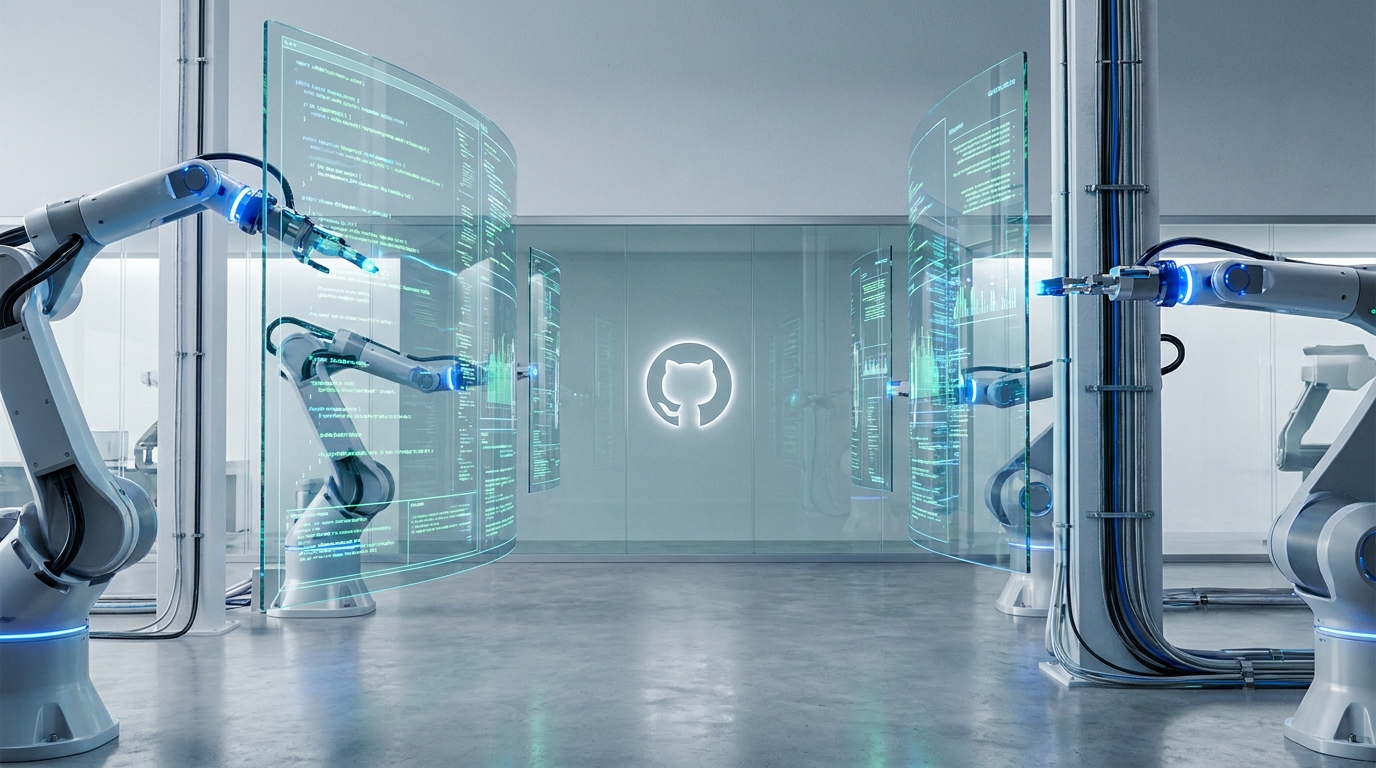
Peli's Agent Factory: Where AI agents come to life and collaborate on code.
Multi-Phase Workflows: Tackling the Toughest Tasks ⏳
One of the biggest breakthroughs in Scaling Git for AI Agent Workloads is the concept of multi-phase improver workflows. Traditional CI/CD pipelines are great for short, contained tasks. But what about projects that span days, weeks, or even months? This is where multi-phase workflows shine. They allow AI agents to maintain state and context over extended periods, tackling complex, long-running projects that were previously out of reach.
Think about tasks like burning down a daily backlog, performance optimization across multiple codebases, or even coordinating large-scale refactoring efforts. These aren't one-and-done jobs. Multi-phase workflows enable AI agents to pick up where they left off, learn from previous iterations, and continuously improve. This dramatically reduces technical debt and accelerates project completion. Learn more about these innovative workflows at Meet the Workflows: Multi-Phase Improvers | GitHub Agentic Workflows.
- Long-Term Memory AI agents can remember past actions and decisions, allowing them to maintain context over days or even weeks.
- Iterative Improvement Workflows are designed to continuously refine solutions, learning from each phase to deliver better outcomes.
- Complex Project Handling These workflows are perfect for tasks that require sustained effort and multiple stages, like large-scale refactoring or performance tuning.
GitHub Actions: The Backbone of Agentic Workflows 💪
At the core of GitHub's agentic engineering strategy are GitHub Actions. These powerful automation tools are being continuously updated to meet the demands of enterprise-level AI agent deployments. This means addressing critical areas like scalability, robust debugging capabilities, and ironclad security. As AI agents become more prevalent, the underlying infrastructure needs to be rock-solid.
GitHub is integrating AI directly into Actions, making it easier to build and deploy agentic workflows. This includes enhancements to the GitHub Copilot CLI, allowing developers to interact with and manage their AI agents more intuitively. It's all about making AI powerful yet accessible, ensuring that you can leverage these advanced capabilities without becoming an AI expert overnight.
Advertisement
Harnessing the Power of Custom Agents with Copilot 🛠️
The `awesome-harness-engineering` project gives us a peek into the future of custom AI agents. It highlights how GitHub Copilot Coding Agent is evolving to support even more sophisticated workflows. Imagine being able to define custom agent files directly within your repository, giving your AI agents specific instructions and behaviors tailored to your project's needs. This level of customization is a game-changer.
Key features include self-review capabilities, where agents can evaluate their own code for quality and adherence to standards, and built-in security scanning to catch vulnerabilities early. Plus, the seamless CLI handoff means you can easily switch between human and AI-driven development. This project showcases how GitHub is empowering developers to build truly intelligent and integrated AI assistants. You can check out the details at awesome-harness-engineering/README.md at main.

Customizing AI agents with GitHub Copilot for tailored development workflows.
Architectural Patterns for Agent-Scale Development 🏗️
Scaling Git for AI Agent Workloads isn't just about the agents themselves; it's about optimizing the underlying Git infrastructure. When AI agents are constantly reading, writing, and merging code, the demands on Git can skyrocket. GitHub is pioneering techniques to handle these high-frequency, high-write workloads, ensuring that performance doesn't become a bottleneck.
While the specific architectural optimizations are complex, the core idea is about making Git more resilient and efficient under extreme load. This involves strategies like parallel execution, worktree pooling, and intelligent caching to minimize conflicts and maximize throughput. These patterns offer valuable insights for anyone looking to scale their own Git and CI/CD pipelines to accommodate agent-driven development.
💡 Pro Tip: When integrating AI agents, start with small, well-defined tasks to build confidence and refine your workflows before tackling larger, multi-phase projects.
Key Takeaways
- GitHub's 'Peli's Agent Factory' provides a practical framework for deploying over 100 automated AI agent workflows.
- Multi-phase improver workflows enable AI agents to maintain state and work on complex, long-running projects over days, a significant leap for CI/CD.
- GitHub Actions are being enhanced for enterprise scalability, security, and debugging to support agentic engineering.
- Custom AI agents, integrated with GitHub Copilot, offer self-review, security scanning, and CLI handoff for tailored development.
- Scaling Git infrastructure for AI agent workloads involves optimizing for high-frequency writes and parallel execution to maintain performance.
Related on Tech4SSD 🔗
- Microsoft's ThinkingBox: Verifying AI Agent Actions Against Real State (2026)
- OpenAI Dots: How to Use Proactive AI Agents for Complex Project Management (2026)
- Building Custom Workflows in GitHub Copilot Workspace Using Canvases (2026)
📩 Want the freshest AI trends every week?
Subscribe to Tech4SSD — practical AI tools and trends, explained for everyone. Free. Subscribe →
Advertisement
Frequently Asked Questions
What is 'Peli's Agent Factory'?
'Peli's Agent Factory' is GitHub's internal living library of over 100 automated agentic workflows. It's where GitHub develops, tests, and deploys AI agents to automate and enhance development tasks at scale.
How do multi-phase workflows help AI agents?
Multi-phase workflows allow AI agents to maintain state and context over extended periods (days, weeks). This enables them to tackle complex, long-running projects that require continuous effort and learning, going beyond what traditional CI/CD can handle.
Can I use these agentic engineering concepts in my own projects?
Absolutely! GitHub's focus on observable, auditable processes, shared knowledge, and guardrails provides a blueprint. You can start by integrating AI into your GitHub Actions, exploring custom agents with Copilot, and thinking about how to structure long-running, iterative tasks for AI assistance.
What role does GitHub Copilot play in agentic engineering?
GitHub Copilot is evolving to support custom AI agents, offering features like self-review, built-in security scanning, and seamless CLI handoff. It acts as a powerful interface and execution environment for developers to interact with and deploy their specialized AI agents.
Final Word
GitHub is not just passively observing the AI revolution; they're actively building the infrastructure to power it. By focusing on practical, scalable solutions like 'Peli's Agent Factory' and multi-phase workflows, they're demystifying agentic engineering and making it a tangible reality for developers everywhere. This isn't just about automating simple tasks; it's about empowering AI to handle the truly complex, long-running challenges that have historically plagued software development.
For creators, students, and small-business owners, this means a future where your development processes are more efficient, less prone to technical debt, and capable of achieving more with less manual effort. The blueprint for Scaling Git for AI Agent Workloads is here, and it's exciting to see how you'll build upon it! ✨
Sources & Further Reading
- Welcome to Peli's Agent Factory | GitHub Agentic Workflows
- October ‘26 enterprise roundup · GitHub
- fullsend-ai/fullsend
- Meet the Workflows: Multi-Phase Improvers | GitHub Agentic Workflows
- Meet the Workflows: Continuous Improvement | GitHub Agentic Workflows
- awesome-harness-engineering/README.md at main
- Meet the Workflows: Project Coordination | GitHub Agentic Workflows
- Weekly Update – June 22, 2026 | GitHub Agentic Workflows
- iliazlobin/agentic-enterprise
- spec/rfcs/RFC-0010-parallel-execution-worktree-pooling.md at main · ai-sdlc-framework/ai-sdlc
AI tools and features change fast — verify current options before relying on them. — Tech4SSD Editorial
Discussion
Have a question or something to add?
Join the discussion on Blogger