Fine-Tuning Nemotron: Ever wondered if AI could truly think like a human problem-solver, especially in tough challenges like competitive math and coding? Well, get ready to be amazed! NVIDIA's Nemotron models are not just thinking; they're achieving *gold-level* performance in the International Olympiad in Informatics (IOI) and the International Mathematical Olympiad (IMO). This isn't just a cool demo; it's a massive leap in AI's ability to tackle complex reasoning tasks, all thanks to some seriously smart fine-tuning Nemotron models. 🚀
In this article, we're going to demystify how NVIDIA pulled this off. We'll break down the specific Nemotron models, the ingenious fine-tuning techniques they used, and why this matters for you, the everyday creator, student, or small-business owner. You'll walk away understanding the cutting edge of AI reasoning and how these advancements could shape your future tools.
Advertisement
The Gold Standard: What Nemotron Achieved 🏆
NVIDIA's Nemotron models have truly raised the bar. We're talking about AI systems performing at a level that puts them among the world's best human competitors in highly challenging olympiads. This isn't about memorizing answers; it's about deep, complex reasoning.
Specifically, Nemotron 3 Ultra, after some special training, hit a gold-medal score of 30 out of 42 points in the IMO 2026. That's a math competition where problems require creative, multi-step solutions. For coding, models like Nemotron-3-Nano-CC and Nemotron-3-Ultra-CC achieved gold in IOI 2025 and 2026. Ultra-CC even scored 535.4 out of 600 in IOI 2026, *exceeding* the top human score! Imagine an AI outperforming the best human coders in a global competition. That's a game-changer.
And it's not just the big models. Nemotron-Cascade-2-30B-A3B, an open-source 30B Mixture-of-Experts (MoE) model, also secured gold in both the 2025 IOI and IMO. This shows that these advanced reasoning capabilities aren't limited to massive, proprietary models, which is fantastic news for developers and researchers.
The Secret Sauce: Fine-Tuning Techniques 🧪
So, how did they do it? It wasn't magic, but a combination of sophisticated fine-tuning strategies. Think of fine-tuning as taking a brilliant general-purpose AI and teaching it to become a specialized expert in a very specific, challenging field. NVIDIA used a multi-pronged approach to make Nemotron shine.
The core techniques involved supervised fine-tuning (SFT) and reinforcement learning (RL). SFT is like giving the AI a massive textbook of solved problems and showing it step-by-step how to arrive at the solution. RL, on the other hand, is like letting the AI try to solve problems, then giving it a 'reward' when it gets closer to the right answer, helping it learn through trial and error. This combination is incredibly powerful for complex tasks.
- Supervised Fine-Tuning (SFT) Training on carefully selected problem sets and 'synthetic reasoning traces.' These traces are like detailed thought processes, showing the AI not just the answer, but *how* a human might logically break down and solve a problem. This is crucial for building strong foundational reasoning.
- Reinforcement Learning (RL) Using feedback from external tools. For coding, this means running the AI's generated code through a compiler and test cases. If the code works, great! If not, the AI learns from its mistakes. For math, it involves verifying steps and proofs. This iterative feedback loop is essential for refining problem-solving skills.
Iterative Refinement: The Polish That Wins Gold ✨
Beyond the initial fine-tuning, NVIDIA employed clever iterative refinement strategies during the 'test-time' – when the AI is actually solving a problem. This is where Nemotron truly differentiates itself, showing a remarkable ability to self-correct and improve its solutions.
For competitive programming, they used a technique called 🟦 GenCorrect. Imagine an AI writing a piece of code, then automatically testing it, finding bugs, and rewriting parts of it until it passes all tests. That's GenCorrect in action. It's a feedback-driven loop that mimics how a human programmer debugs their own code.
For mathematics, the approach was an iterative verification and refinement process. The AI generates a proof or solution, then critically examines its own work, identifies potential flaws, and attempts to correct them. This is akin to a mathematician reviewing their own proof for logical consistency and correctness. This ability to generate, verify, and refine solutions without human intervention is a huge step forward in AI reasoning. You can read more about this in their paper, An Open Recipe for IMO Gold.
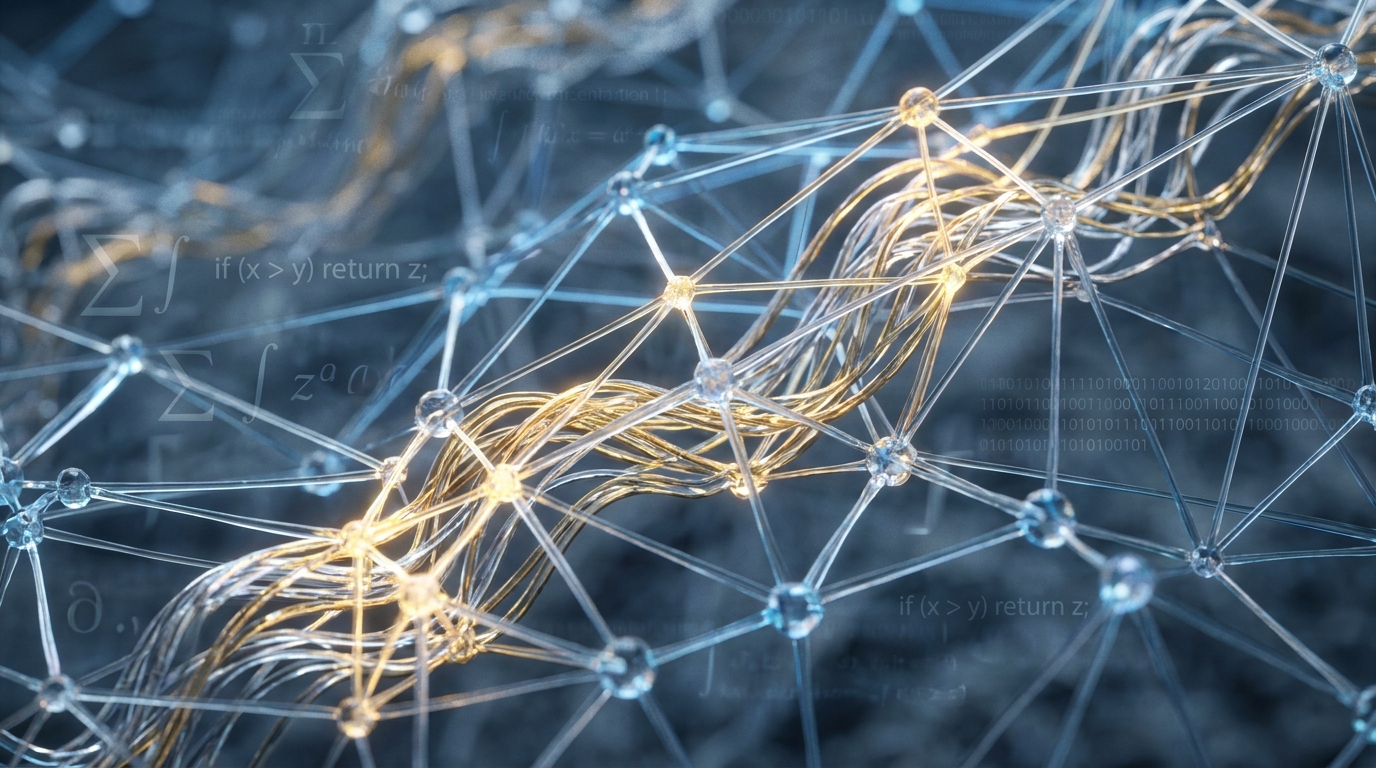
The intricate 'brain' of Nemotron, where fine-tuning creates pathways to gold-level reasoning.
Why No External Tools? The Pure Reasoning Power 🧠
One of the most impressive aspects of Nemotron's performance is that these systems operate *entirely in natural language* for mathematics and use *feedback-driven methods* for coding. What does this mean for you? It means the AI isn't just searching the internet or using external calculators during the competition.
Instead, it's relying on its *internalized reasoning capabilities*, developed through all that intensive fine-tuning. This demonstrates a true understanding and ability to generate solutions from first principles, rather than just retrieving information. This 'pure reasoning' ability is what makes these achievements so significant and opens doors for truly autonomous AI agents.
Advertisement
Models in the Spotlight: Nemotron's Family 👨👩👧👦
Let's take a closer look at the specific Nemotron models that are making waves:
The NVIDIA Nemotron family is designed for high performance and efficiency, with different models tailored for various scales and tasks. For example, Nemotron 3 Ultra is a powerful model that formed the basis for the IMO gold-medal achievement. Then there's the 'Cascade' series, like Nemotron-Cascade-2-30B-A3B, which are open Mixture-of-Experts (MoE) models. MoE models are super efficient because they can activate only the parts of the model most relevant to a specific task, saving computational power.
These models are not just large; they are architected to learn and adapt efficiently, making them ideal candidates for advanced fine-tuning techniques like those used for the olympiads. The availability of open models like Nemotron-Cascade-2-30B-A3B is particularly exciting for developers, as it allows for experimentation and building upon NVIDIA's foundational research.
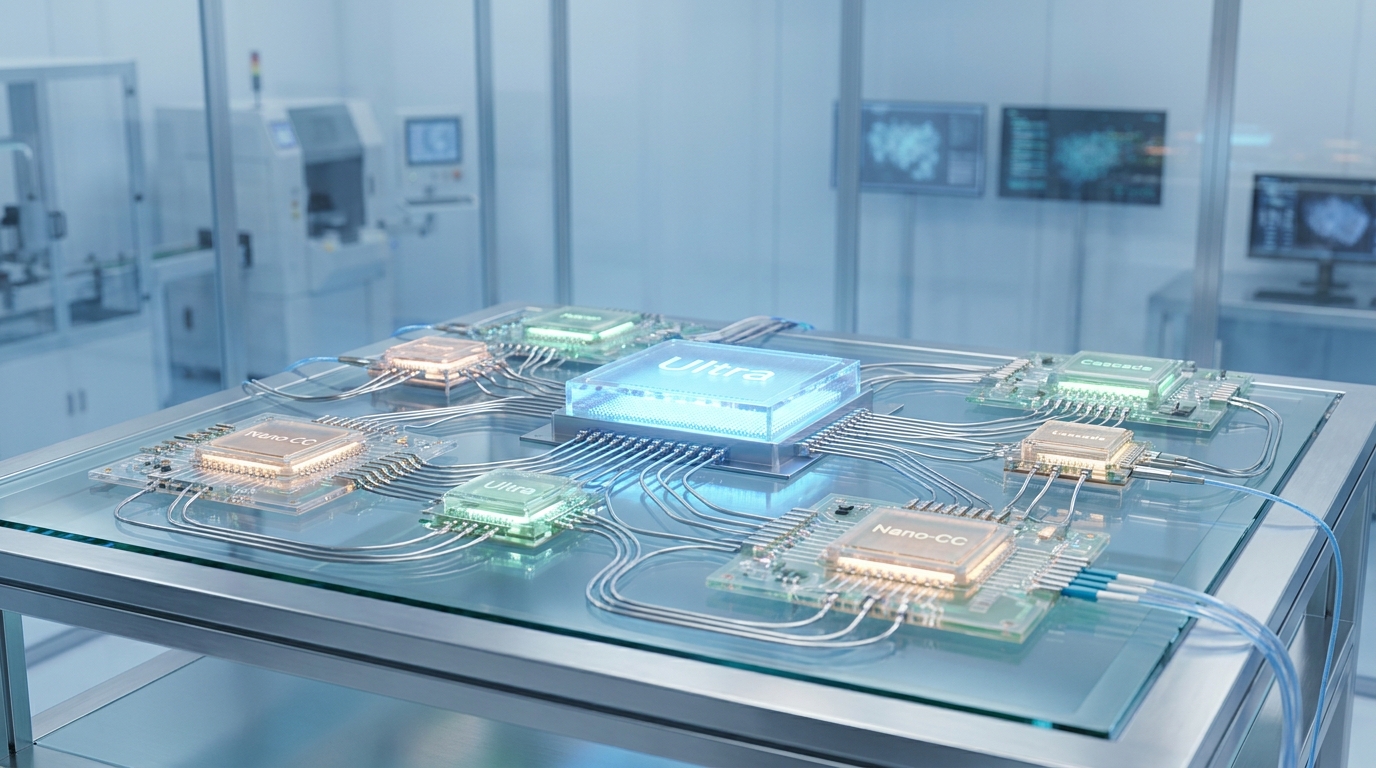
The Nemotron family: diverse models, unified in their pursuit of AI excellence.
What This Means for You, the Creator & Builder 🛠️
Okay, so AI can solve math and code — that's cool, but how does it impact *your* world? A lot, actually! These breakthroughs in AI reasoning have massive implications for future tools and applications you'll use or even build yourself.
Imagine AI assistants that can not only generate code but *debug it autonomously*, or help you solve complex architectural problems in your software projects. Think about intelligent tutors that can explain advanced mathematical concepts by generating step-by-step proofs tailored to your learning style. This is the future these Nemotron achievements are paving the way for.
For small business owners, this could mean more robust, self-correcting AI tools for data analysis, predictive modeling, or even automating complex operational tasks that currently require human expertise. The ability of AI to reason and refine its own solutions means more reliable and powerful AI at your fingertips. It's about making AI a true partner in problem-solving, not just a data processor.
💡 Pro Tip: When exploring AI models for complex reasoning, always look for evidence of iterative refinement and self-correction capabilities. This is often a stronger indicator of true 'intelligence' than raw parameter count.
Key Takeaways
- NVIDIA's Nemotron models achieved gold-level performance in competitive programming (IOI) and mathematics (IMO), showcasing advanced AI reasoning.
- Key fine-tuning Nemotron techniques include Supervised Fine-Tuning (SFT) on curated data and Reinforcement Learning (RL) with compiler/test-based verification.
- Iterative test-time refinement strategies like GenCorrect for coding and proof generation for math were crucial for self-correction and high performance.
- The AI systems operate without external tools, demonstrating internalized reasoning abilities rather than just information retrieval.
- These advancements promise more autonomous and intelligent AI tools for software development, research, and complex problem-solving across various fields.
Related on Tech4SSD 🔗
- OpenAI's Lean 4 Proof Formalizations: Making Math Research Accessible (2026)
- ReviewBench: Benchmarking AI Code Review Agents on Real-World GitHub PRs (2026)
- Olmo-Core 3: Scalable Open Infrastructure for Training Large MoE Models (2026)
📩 Want the freshest AI trends every week?
Subscribe to Tech4SSD — practical AI tools and trends, explained for everyone. Free. Subscribe →
Advertisement
Frequently Asked Questions
What is the International Olympiad in Informatics (IOI) and International Mathematical Olympiad (IMO)?
These are prestigious global competitions for high school students in competitive programming (IOI) and advanced mathematics (IMO). They require deep problem-solving skills, creativity, and rigorous logical reasoning.
Can I use Nemotron models for my own projects?
Some Nemotron models, like Nemotron-Cascade-2-30B-A3B, are open-source and available on platforms like Hugging Face (nvidia/Nemotron-Cascade-2-30B-A3B). This means you can potentially access and experiment with them for your own AI development, especially for reasoning tasks.
What's the difference between Supervised Fine-Tuning (SFT) and Reinforcement Learning (RL) in this context?
SFT teaches the AI by showing it correct examples and solutions step-by-step. RL teaches the AI by letting it try to solve problems and then giving it feedback (rewards or penalties) based on the success of its attempts, allowing it to learn through iterative improvement.
Does this mean AI will replace human programmers and mathematicians soon?
While Nemotron's achievements are incredible, they highlight AI's ability to augment and accelerate human capabilities, not necessarily replace them. These tools can become powerful assistants, automating tedious tasks and helping humans tackle even more complex challenges. Human creativity, intuition, and ethical judgment remain indispensable.
Final Word
The journey of AI from simple pattern recognition to gold-medal-winning reasoning is truly inspiring. NVIDIA's Nemotron models, through their meticulous fine-tuning and iterative refinement, are showing us a glimpse of a future where AI can tackle problems with a level of intelligence once thought exclusive to humans.
For you, this means more powerful, more reliable, and more autonomous AI tools are on the horizon. Keep experimenting, keep learning, and get ready to build amazing things with these new capabilities! The future of AI is bright, and you're a part of it. ✨
Sources & Further Reading
- Paper page - An Open Recipe for IMO Gold: Training Nemotron for Olympiad Mathematics
- Nemotron 3 Ultra: Open, Efficient Mixture-of-Experts Hybrid ...
- Paper page - Post-Training Language Models for Gold-Medal Performance in Coding Competitions
- Nemotron-Cascade 2
- NEMOTRON-CC-MATH: A 133
- Nemotron 3 Super Training Recipe — Nemotron
- Nemotron-Cascade: Scaling Cascaded Reinforcement Learning for General-Purpose Reasoning Models - NVIDIA Nemotron
- nvidia/Nemotron-Cascade-2-30B-A3B · Hugging Face
- nvidia/NVIDIA-Nemotron-Labs-Teacher-Competition-Coding · Hugging Face
- nvidia/Nemotron-3-Labs-Ultra-Math-RL · Hugging Face
AI tools and features change fast — verify current options before relying on them. — Tech4SSD Editorial
Discussion
Have a question or something to add?
Join the discussion on Blogger