Falcon3-Audio: Hey creators and small business owners! Ever wished for a powerful speech recognition tool that doesn't demand a supercomputer or mountains of data? Well, get ready to meet Falcon3-Audio. This new family of open-source Audio-Language Models (ALMs) is shaking things up by proving you don't need massive proprietary datasets to achieve top-tier performance. It's all about smart design and efficient training. 🚀
In this deep dive, we'll break down what Falcon3-Audio is, how it works, and why its data-efficient approach is a game-changer for anyone looking to integrate advanced audio understanding into their projects without breaking the bank or needing a data science degree. You'll walk away understanding its specs, architecture, and what it means for your next big idea.
Advertisement
What is Falcon3-Audio, Anyway? 🤔
Think of Falcon3-Audio as a new breed of AI that understands both spoken words and the context around them. It's not just transcribing; it's interpreting. This isn't a single model, but a family of models, giving you options depending on your needs. We're talking 1 billion, 3 billion, and 7 billion parameter versions.
What makes it special? It’s an Audio-Language Model (ALM). That means it bridges the gap between raw audio and the kind of language understanding you get from Large Language Models (LLMs). This opens up possibilities for more natural interactions with AI, like asking questions about an audio recording and getting smart, contextual answers.
The Big Deal: Data Efficiency 📉
Here's where Falcon3-Audio really shines: it achieves competitive results using *way less* training data than many of its peers. We're talking under 30,000 hours of public audio data. To put that in perspective, some models gobble up hundreds of thousands, even millions, of hours of audio. This is a huge win for accessibility and reproducibility in AI.
Why does this matter to you? Less data means less computational power needed for training, which translates to a more sustainable and potentially more accessible development path. It challenges the idea that you need an army of data scientists and a supercomputer to build powerful audio AI. This is about working smarter, not just harder.
Under the Hood: A Simple, Smart Architecture 🛠️
Falcon3-Audio isn't trying to reinvent the wheel with a super-complex design. Instead, it cleverly combines existing, proven technologies. It uses Whisper audio encoders – specifically, Whisper Medium for the larger 7B and 3B models, and Whisper Small for the 1B version. You might already know Whisper as a fantastic open-source speech-to-text model from OpenAI.
These Whisper encoders then feed into instruction-tuned LLMs through a lightweight 'projection module.' Think of this module as a translator, efficiently converting the audio information into a format the LLM can understand. This simple, transparent setup is key to its efficiency and makes it easier for developers to work with.
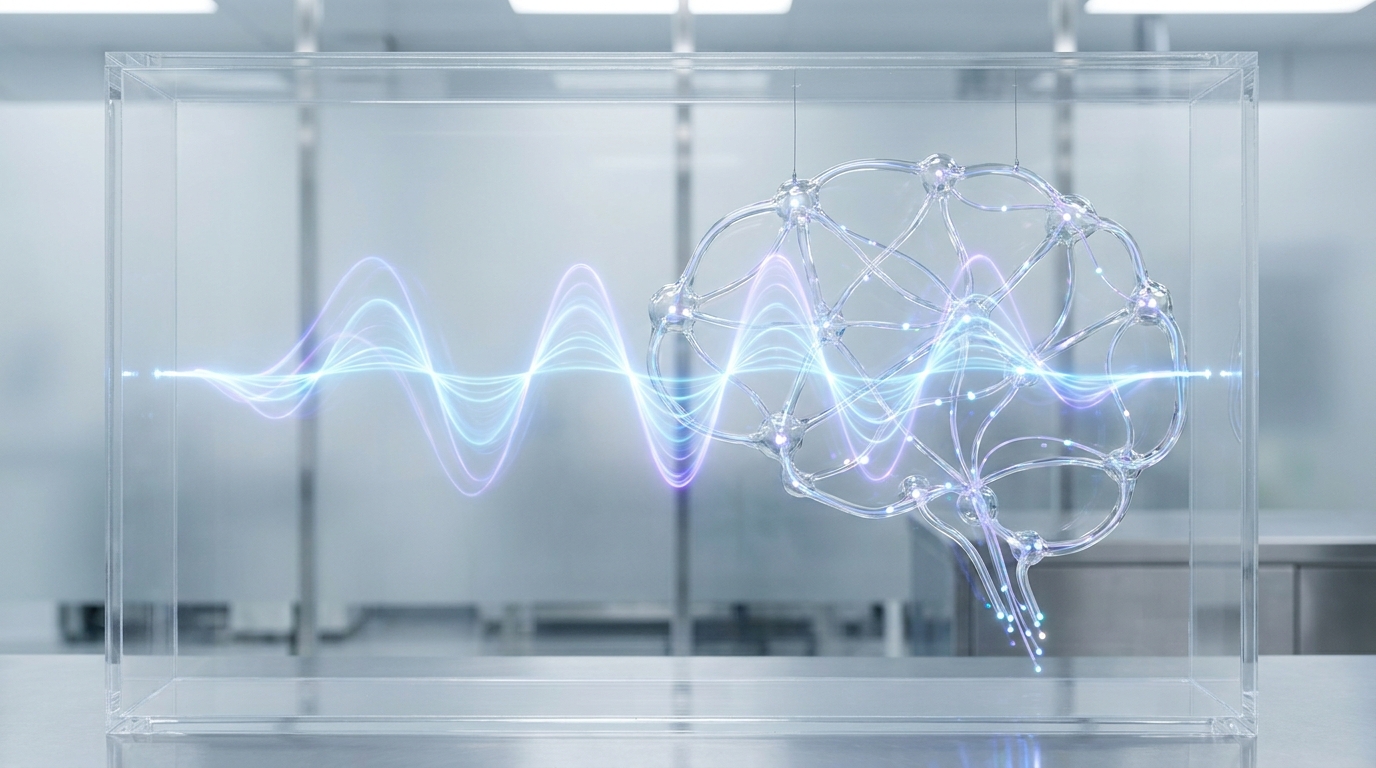
Falcon3-Audio's streamlined architecture connects audio to language models with surprising efficiency.
Performance That Packs a Punch 🏆
So, does this minimalist approach actually work? Absolutely! The 7B parameter Falcon3-Audio model has achieved state-of-the-art performance among open-weight models on the MMAU benchmark, scoring an impressive 64.14. This puts it right up there with models like R1-AQA, proving that efficiency doesn't mean sacrificing capability.
For creators and small businesses, this means you're getting a powerful tool that can accurately understand and process audio, without the overhead of proprietary, resource-heavy alternatives. It's a strong contender for tasks ranging from advanced transcription to voice command interpretation and even audio content summarization.
- Competitive Benchmarks: The 7B model hits 64.14 on MMAU, matching top open-weight performers.
- Single-Stage Training: Trained end-to-end in one go, simplifying the process and improving efficiency.
- Public Data Focus: Relies on publicly available datasets, promoting transparency and reproducibility.
Advertisement
Real-World Impact for You 🌍
Why should you care about Falcon3-Audio? If you're building applications that need to understand spoken language, this model offers a compelling open-source alternative. Imagine creating voice assistants, transcribing meetings, analyzing customer service calls, or even building interactive audio experiences – all with a model that's more accessible.
Its efficiency in data usage and simplified architecture means lower barriers to entry. You might be able to run these models on more modest hardware or with fewer cloud resources, making advanced audio-language applications more feasible for independent developers and small teams. This is about democratizing powerful AI tools.
Falcon3-Audio makes advanced audio processing more accessible for everyday creators and small businesses.
Comparing Open-Source Audio Models 📊
While Falcon3-Audio is making waves, it's good to know what else is out there. The open-source AI landscape for audio is rich and constantly evolving. Here's a quick look at how Falcon3-Audio stacks up against some other notable open-source players in the speech recognition and audio-language space. Each has its strengths, but Falcon3-Audio's efficiency is a standout.
When choosing a model, consider your specific needs: do you prioritize raw accuracy, speed, multilingual support, or the ability to run on limited hardware? Falcon3-Audio offers a great balance, especially if data and computational efficiency are high on your list.
| Model | Key Feature | Data Efficiency (Training) | Typical Use Case |
|---|---|---|---|
| Falcon3-Audio | Data-efficient ALM, simple architecture | Very High (<30K hours public) | Contextual audio understanding, advanced ASR |
| Whisper (OpenAI) | Robust ASR, multilingual, general-purpose | Medium (680K hours public) | High-quality transcription, language identification |
| NVIDIA Parakeet | Fast, streaming ASR | High (various models) | Real-time transcription, voice assistants |
| IBM Granite Speech | Enterprise-grade ASR, customizable | Medium (proprietary/public mix) | Business transcription, call centers |
💡 Pro Tip: For local deployment, start with the 1B or 3B Falcon3-Audio models. Their smaller size makes them easier to experiment with on consumer-grade hardware, giving you a feel for their capabilities before scaling up.
Key Takeaways
- Falcon3-Audio is a new family of Audio-Language Models (ALMs) available in 1B, 3B, and 7B sizes.
- It achieves competitive performance on benchmarks like MMAU (7B model scores 64.14) using less than 30,000 hours of public audio data.
- Its architecture is simple: Whisper audio encoders connected to instruction-tuned LLMs via a lightweight projection module.
- This data- and parameter-efficient approach makes advanced audio-language understanding more accessible for developers and creators.
- Falcon3-Audio is an excellent open-source option for integrating sophisticated audio processing into applications with limited resources.
Related on Tech4SSD 🔗
- Falcon OCR Arabic: Powerful 270M Model for Document Processing (2026)
- Falcon-Emirati-7B: Bridging the Gap in Arabic Dialect LLMs (2026)
📩 Want the freshest AI trends every week?
Subscribe to Tech4SSD — practical AI tools and trends, explained for everyone. Free. Subscribe →
Advertisement
Frequently Asked Questions
What's the main difference between Falcon3-Audio and OpenAI's Whisper?
While both are excellent for speech recognition, Falcon3-Audio is an Audio-Language Model (ALM) designed for deeper contextual understanding beyond just transcription, and it achieves its performance with significantly less training data. Whisper is primarily a robust ASR (Automatic Speech Recognition) model.
Can I run Falcon3-Audio on my local computer?
Yes, especially the 1B and 3B parameter versions. Their efficient design and smaller footprint make them more suitable for local deployment on consumer-grade hardware compared to much larger, more complex models. The 7B model will require more substantial resources.
Is Falcon3-Audio truly open-source?
Yes, Falcon3-Audio is part of a growing trend of open-weight models, meaning its architecture and weights are publicly available, fostering transparency and allowing developers to inspect, modify, and build upon it.
Final Word
Falcon3-Audio represents an exciting shift in the world of AI. It proves that you don't always need to throw massive amounts of proprietary data and complex architectures at a problem to achieve impressive results. Its smart integration of existing technologies and focus on efficiency make it a powerful, accessible tool for anyone looking to tap into the potential of audio-language understanding.
For creators, students, and small business owners, this means more opportunities to innovate. You now have a robust, open-source option that can help you build smarter applications, analyze audio more effectively, and push the boundaries of what's possible with AI. Go on, give it a try and see what you can create! ✨
Sources & Further Reading
- Paper page - Competitive Audio-Language Models with Data-Efficient Single-Stage Training on Public Data
- Tomhn/Qwen3-ASR-1.7B · Hugging Face
- FermionResearch/Phonon-2 · Hugging Face
- lowdown-labs/fela-streaming-asr · Hugging Face
- nvidia/parakeet-unified-en-0.6b · Hugging Face
- ibm-granite/granite-speech-5.0-470m-turboctc · Hugging Face
- nvidia/parakeet-tdt-0.6b-v2 · Hugging Face
- csukuangfj2/sherpa-onnx-omnilingual-asr-1600-languages-1B-ctc-v2-2026-02-05 · Hugging Face
- GlmAsr · Hugging Face
- nvidia/stt_en_fastconformer_hybrid_medium_streaming_80ms · Hugging Face
AI tools and features change fast — verify current options before relying on them. — Tech4SSD Editorial
Discussion
Have a question or something to add?
Join the discussion on Blogger