Ever wished you could build out complex AI systems without needing a whole lab full of expensive robots? Good news! The world of AI prototyping is undergoing a massive transformation. New AI-powered tools are letting creators, students, and small business owners design and develop cutting-edge AI workflows, even complex 'agentic' systems and 3D models, all from your desk. No physical robots required! 🤖
This isn't just a small upgrade; it's a game-changer. We're talking about moving from a cool concept to a working prototype in days, not months. You'll learn how these tools accelerate development, democratize access to advanced AI, and unlock rapid experimentation. Get ready to build bigger, faster, and smarter!
Advertisement
The Need for Speed: Why Rapid AI Prototyping Matters ⚡
In the fast-paced AI world, speed is everything. Waiting for physical hardware, assembling components, or coding every single interaction from scratch can slow you down big time. Traditional prototyping often involves significant time, cost, and specialized equipment.
But what if you could skip all that? Modern AI prototyping tools let you simulate and test complex AI behaviors in a virtual environment. This means you can iterate, experiment, and refine your AI concepts much faster, reducing development cycles from weeks to mere days. It's like having a digital sandbox for your biggest AI ideas.
Agentic AI: From Idea to Intelligent System, Virtually 🧠
'Agentic AI' sounds super sci-fi, right? It just means AI systems that can plan, reason, and execute multi-step tasks autonomously. Think of an AI that doesn't just answer questions, but actually breaks down a complex goal into smaller steps and then goes about achieving them.
Prototyping these complex agents used to be a huge undertaking. Now, specialized tools let you design and test these intelligent workflows in a virtual space. You can define goals, set parameters, and watch how your AI agents interact, learn, and adapt – all before writing a single line of production code or deploying to a physical robot.
Spec-Driven Development: Kiro Leads the Way 🚀
Imagine telling an AI what you want, and it helps design the AI system for you. That's the magic of spec-driven development, and platforms like Kiro are making it real. Kiro enables what they call 'agentic engineering' by converting your natural language prompts into detailed requirements and architectural designs.
Instead of you painstakingly outlining every function, Kiro helps translate your high-level vision into concrete steps. It even sequences tasks and allows parallel agents to implement them. This dramatically speeds up the initial design phase, letting you move from a simple idea to a structured, actionable plan in record time. Check out more on Kiro's approach to agentic engineering.
- Prompt-to-Plan Turn your natural language descriptions into detailed requirements and architectural designs.
- Parallel Agents Kiro orchestrates multiple AI agents to collaboratively implement the sequenced tasks.

Kiro visualizes complex AI workflows, turning your prompts into actionable blueprints.
AI for 3D Modeling: Product Prototyping Supercharged 📐
For product designers and manufacturers, 3D modeling is essential. But creating initial product models can be slow. Enter AI 3D modeling tools! These tools can generate early product models from simple inputs like sketches, concept images, or even written prompts. This is a huge leap for product prototyping.
Imagine sketching an idea on a napkin, feeding it to an AI, and getting a basic 3D model back in minutes. This allows for rapid visualization and iteration, helping teams identify design flaws or improvements much earlier in the process. It's not just about speed; it's about making product innovation more accessible. Learn more about how AI 3D tools speed up manufacturing prototyping.
Advertisement
Design Agents: UX/UI Flows Made Easy 🎨
User experience (UX) and user interface (UI) design are critical for any successful product. AI design agents like Figr are now stepping in to help. These tools can ingest existing content – perhaps your current website or app – and then generate high-fidelity UX flows, screen designs, and even interactive prototypes.
This means you can quickly visualize how users will interact with your AI product or service. No more starting from a blank canvas every time! It automates the tedious parts of design, freeing you up to focus on the creative problem-solving. It's a game-changer for anyone building digital experiences.
Browser-Based Brilliance: Google AI Studio and Beyond 💻
You don't always need complex software to start prototyping. Web-based tools are making AI experimentation incredibly accessible. Platforms like Google AI Studio let you prototype and run prompts directly in your browser using powerful models like Gemini. This means no downloads, no installations, just pure AI exploration.
These tools are fantastic for rapid experimentation. You can quickly test different prompts, adjust parameters, and see immediate results. It's perfect for students, creators, and small business owners who want to dip their toes into AI development without a huge upfront investment or technical hurdle. Many of these tools are also free, making AI accessible to everyone. See a list of free AI tools from Google Cloud.
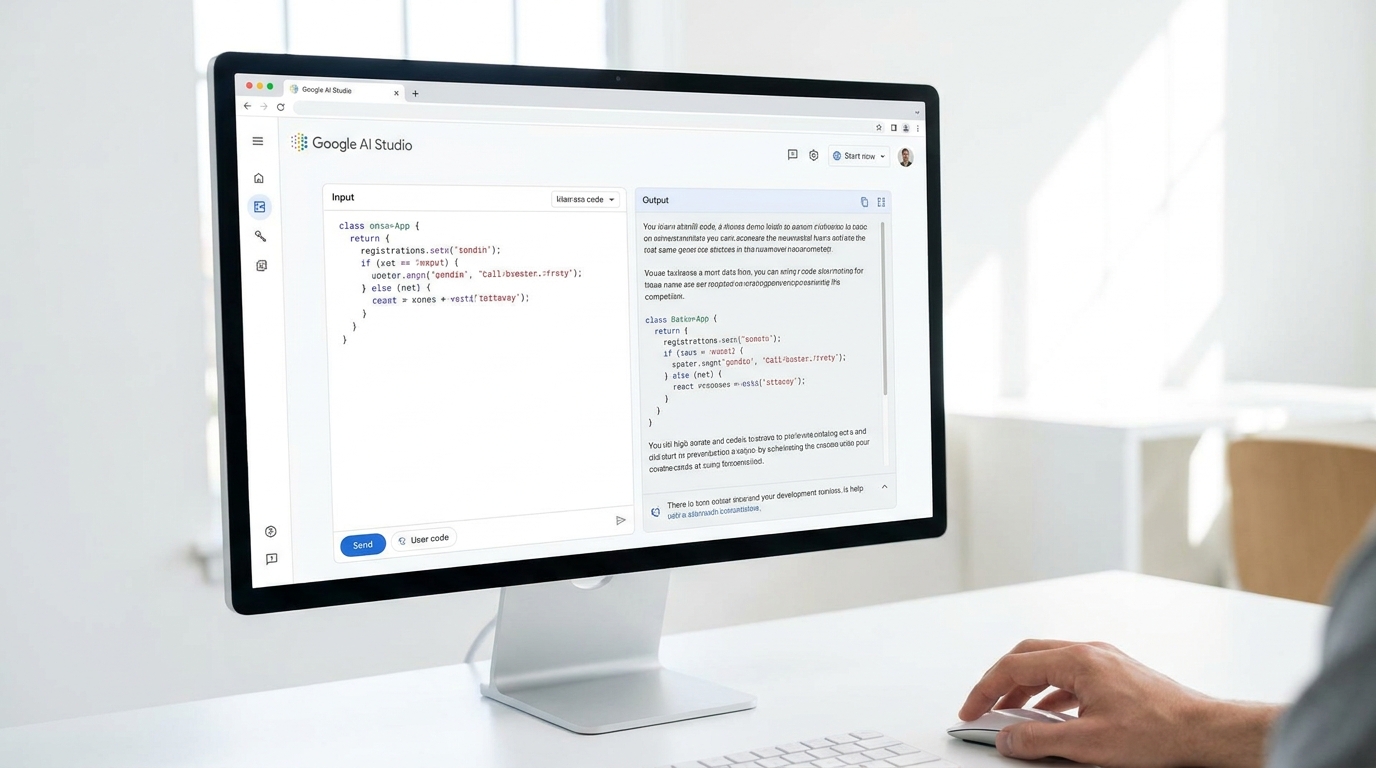
Google AI Studio makes AI prototyping accessible directly from your browser.
The Democratization of AI Development 🌍
This shift towards virtual, rapid AI prototyping has a profound impact: it democratizes access to advanced AI development. You no longer need a massive budget or a specialized engineering team to start building and experimenting with sophisticated AI concepts.
For builders, developers, and tech enthusiasts, these advancements mean significantly faster iteration and development cycles. It allows for more rapid experimentation and deployment of innovative solutions, pushing the boundaries of what's possible with AI. This is truly an exciting time to be an AI builder!
💡 Pro Tip: When prototyping agentic AI, start with a clear, single goal for your agent. Then, iteratively add complexity and sub-tasks. This 'bottom-up' approach often leads to more robust designs.
Key Takeaways
- New AI tools enable rapid prototyping of complex AI systems without physical robots, saving time and money.
- Platforms like Kiro convert natural language prompts into architectural designs for 'agentic engineering'.
- AI 3D modeling tools generate initial product models from sketches or prompts, accelerating product design.
- AI design agents (e.g., Figr) create high-fidelity UX flows and prototypes from existing content.
- Web-based tools like Google AI Studio make AI prototyping accessible and free for quick experimentation.
Related on Tech4SSD 🔗
- No-Code AI Agents: Build Powerful Digital Assistants for Free in 2026
- Beyond Chatbots: Building Your Specialized AI Productivity Stack for 2026
📩 Want the freshest AI trends every week?
Subscribe to Tech4SSD — practical AI tools and trends, explained for everyone. Free. Subscribe →
Advertisement
Frequently Asked Questions
What is 'agentic AI' in simple terms?
Agentic AI refers to AI systems that can understand a high-level goal, break it down into smaller steps, and then execute those steps autonomously to achieve the goal. Think of it as an AI that can plan and act on its own.
Do I need coding skills to use these new AI prototyping tools?
Not necessarily! Many of these new tools, especially those for AI design and web-based prompt testing, are designed to be user-friendly with low-code or even no-code interfaces. This makes AI prototyping accessible to a much broader audience.
How quickly can I go from concept to prototype with these tools?
The speed is incredible! Depending on the complexity, you can often move from a concept to a working prototype in a matter of days, or even a single weekend for simpler projects. This is a massive improvement over traditional methods.
Are these tools expensive or free?
It varies. Many powerful web-based tools like Google AI Studio offer free tiers for experimentation. Other specialized platforms may have subscription models. The good news is, there are excellent free options to get started with AI prototyping, as highlighted by many free prototyping tool recommendations.
Final Word
The world of AI development is evolving at lightning speed, and these new AI prototyping tools are at the forefront of that change. They're making it easier, faster, and more affordable to bring complex AI ideas to life. Whether you're building a new product, designing a workflow, or just experimenting with AI's potential, these tools are your new best friends.
So, stop dreaming about what AI can do and start building! With these powerful, accessible tools, your next big AI innovation is closer than you think. Go forth and create! ✨
AI tools and features change fast — verify current options before relying on them. — Tech4SSD Editorial
Discussion
Have a question or something to add?
Join the discussion on Blogger