AI image authenticity: here is what the official release means in practice. Ever wonder if that stunning image or viral video you saw online is real, or if AI had a hand in creating it? In 2026, understanding AI image authenticity isn't just for tech gurus; it's becoming crucial for everyone. Major players like Adobe and Google are stepping up, integrating powerful tools to help you know exactly what you're looking at and where it came from. This isn't about stifling creativity; it's about building trust in our digital world. 🌍
We're diving deep into the world of Content Credentials, C2PA standards, and AI disclosure tools. You'll learn how these innovations work, why they matter to you as a creator or consumer, and how they're shaping the future of digital content. Get ready to feel empowered, not overwhelmed, by the tech that's making our online experiences more transparent.
Advertisement
The Big Picture: Why Authenticity Matters Now More Than Ever 🌐
In a world overflowing with AI-generated content, from hyper-realistic images to deepfake videos, it's getting harder to tell what's real and what's not. This isn't just a fun parlor trick; it has serious implications for misinformation, trust, and even our perception of reality. That's where content provenance comes in – it's like a digital birth certificate for your media, telling you its story from creation to consumption.
The good news? Tech giants aren't sitting idly by. They're actively working to build a more transparent digital ecosystem. This isn't about censoring content; it's about giving *you* the power to make informed decisions. Imagine knowing instantly if an image was captured by a camera, edited by a human, or generated entirely by an AI. That's the future we're heading towards, and it's a big deal for creators, students, and small businesses alike.
Unpacking C2PA: The Standard Behind the Trust 🛠️
At the heart of this movement is the Coalition for Content Provenance and Authenticity, or C2PA. Think of C2PA as the rulebook for digital authenticity. They've developed a technical specification (which, by the way, has a creation date of January 5, 2026) that outlines exactly how information about digital content should be recorded and shared. This isn't some secret handshake; it's an open standard designed for widespread adoption.
What does this specification do? It defines a framework for tamper-evident metadata. This means any information attached to your digital content is encrypted and designed to show if it's been altered. It's like a digital fingerprint that can't be easily faked or removed without leaving a trace. This foundational work by C2PA is what allows companies like Adobe and Google to build their authenticity tools on a common, reliable ground.
- Open Standard C2PA is a collaborative, open specification, meaning anyone can use it to build tools that promote content authenticity.
- Tamper-Evident The metadata defined by C2PA is designed to reveal if content has been modified, giving you confidence in its history.
Content Credentials: Your Digital Storyteller 📜
So, how does C2PA translate into something you can actually use? Enter Content Credentials. These are the encrypted, tamper-evident pieces of metadata that travel with your digital assets. They're like a detailed resume for your image or video, telling you who created it, when, and how. Adobe, through its Content Authenticity Initiative (CAI), has been a major driving force in integrating these credentials into its ecosystem.
What kind of juicy details can Content Credentials hold? A lot! We're talking about the issuer (who made it), the issue date, any credits, usage rights, the process used (e.g., 'edited in Photoshop'), device details (like the camera model), and crucially, if AI tools were involved. For instance, if you used Adobe Firefly to generate an image, that information can be embedded right into the file. This means you get a clear, verifiable history of the content you encounter online.

Content Credentials provide a transparent history for digital assets.
Adobe's Commitment: Integrating Credentials into Your Workflow ✨
Adobe is all-in on Content Credentials. They're not just talking about it; they're building it into their core products. For creators and businesses using Adobe tools, this is fantastic news. Imagine managing your digital assets in Adobe Experience Manager Assets. Now, you can directly view the Content Credentials for images, seeing all those important manifest details right there in the UI. This includes images created or edited with generative AI services.
This integration means that as you create and manage your content, the provenance data is automatically captured and attached. It's a seamless way to ensure that your work carries its authentic history with it, wherever it goes. This makes it easier for others to trust your content and for you to maintain control over its narrative. It's a game-changer for anyone serious about their digital footprint.
Advertisement
Google's Approach: AI Labels and SynthID Watermarks 🏷️
Google is also making significant strides in AI disclosure and content authenticity. They're tackling this from a few angles, especially within their advertising platforms. When Google's AI tools generate assets for Google Ads, they apply machine-readable metadata. This includes C2PA open-standard markup, aligning with the broader industry effort, and their own SynthID digital watermarks.
But it's not just behind-the-scenes tech. Google provides clear AI content label settings for advertisers. This means if you're using AI to create your ad creatives, you can (and often must) disclose it. These disclosures can appear as visible overlays in certain regions like the European Union, India, and New York, giving consumers a heads-up. In some cases, these labels are even non-overwritable, ensuring that the AI origin remains clear. It's about empowering consumers and maintaining transparency in a rapidly evolving digital landscape.
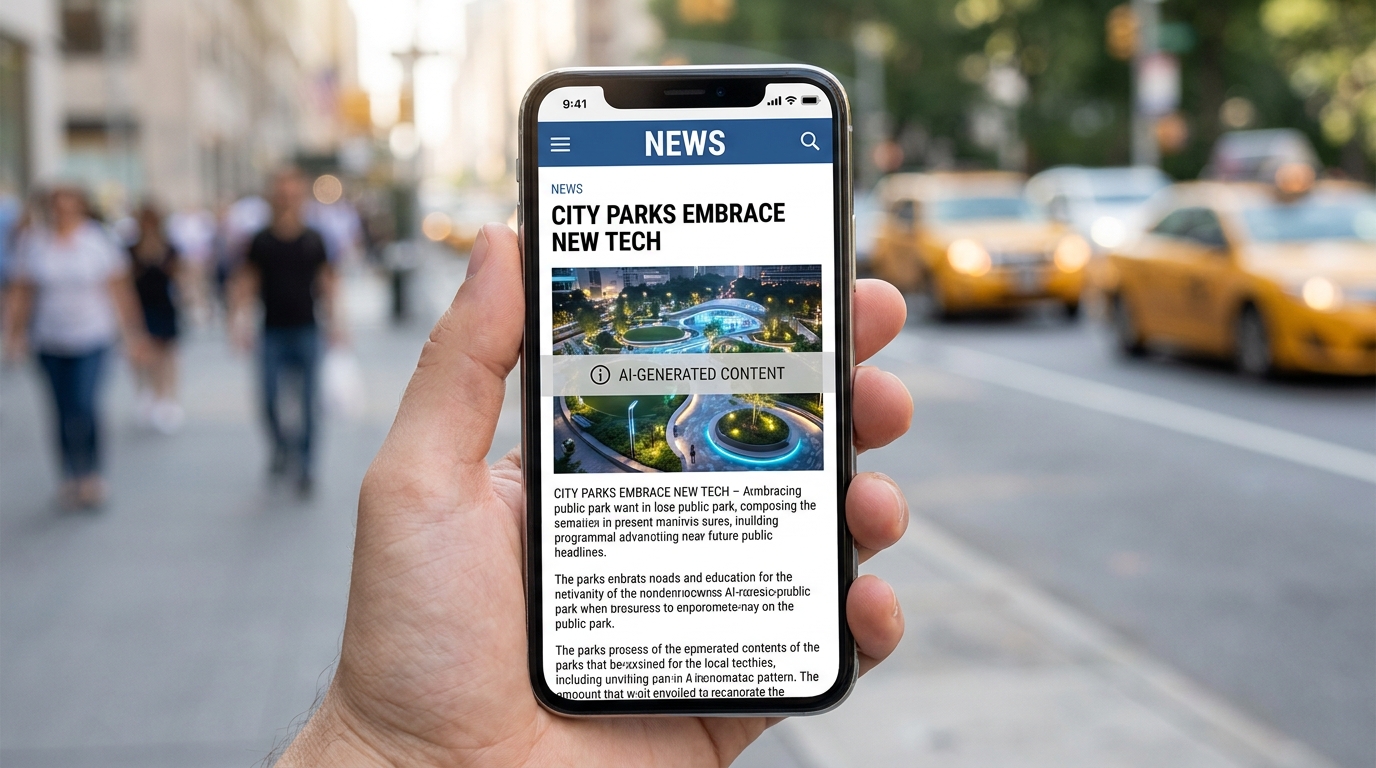
Google's AI labels provide clear disclosure for AI-generated content.
What This Means for You: Creators, Students, and Small Businesses 🚀
So, why should you care about all this technical talk? Because it directly impacts *you*. For creators, Content Credentials offer a new layer of protection and attribution for your work. You can prove its origin, which is huge for copyright and reputation. For students, it means learning to critically evaluate digital content, understanding that not everything you see online is what it seems. And for small business owners, it's about building trust with your audience. Using verifiable content can enhance your brand's credibility.
This shift also means new opportunities. Developers building AI tools will need to consider how to integrate provenance data. Software development will increasingly involve C2PA compliance. And for users, it means a more transparent and trustworthy digital experience. It’s a foundational step in combating deepfakes and misinformation, ensuring the integrity of AI-generated content, and ultimately, making the internet a safer, more reliable place for everyone.
💡 Pro Tip: Always look for Content Credentials or AI disclosure labels on digital content, especially when consuming news or making important decisions. When creating, use tools that embed provenance data!
Key Takeaways
- C2PA is the technical standard enabling verifiable content provenance, crucial for AI image authenticity.
- Adobe integrates Content Credentials (based on C2PA) into tools like Adobe Experience Manager Assets, providing tamper-evident metadata for digital assets.
- Google uses C2PA markup and SynthID watermarks for AI-generated content in Google Ads, with visible AI disclosure labels in key regions.
- Content Credentials include details like issuer, creation date, process, device, and AI tools used (e.g., Adobe Firefly).
- These initiatives enhance transparency, combat misinformation, and build trust in AI-generated and edited digital content for all users.
Related on Tech4SSD 🔗
- Navigating AI Bias: Challenges & Solutions for Creators in 2026
- Midjourney V8.1: Your New Default for Stunning AI Art (2026)
📩 Want the freshest AI trends every week?
Subscribe to Tech4SSD — practical AI tools and trends, explained for everyone. Free. Subscribe →
Advertisement
Frequently Asked Questions
What exactly are Content Credentials?
Content Credentials are encrypted, tamper-evident metadata attached to digital assets. They provide a verifiable history, including who created or edited the content, when, with what tools (including AI), and on what device. Think of them as a digital nutrition label for your media.
How do C2PA standards help combat deepfakes?
C2PA standards enable the embedding of provenance data that shows the origin and any modifications made to digital content. If a deepfake is created, the absence of proper credentials or evidence of tampering would be visible, helping users identify potentially manipulated content and increasing AI image authenticity.
Will all my images automatically have Content Credentials?
Not yet, but the goal is widespread adoption. As more software and platforms (like Adobe products and Google's AI tools) integrate C2PA standards, more content will carry these credentials. For now, it often depends on the tools used for creation and editing.
As a small business, how can I use this to my advantage?
By using tools that support Content Credentials, you can add a layer of trust to your marketing materials. Showing that your images are authentic and transparent about their creation (even if AI-assisted) can build stronger credibility with your audience, especially in an era of digital skepticism.
Final Word
The journey towards a more transparent digital world is well underway, and the efforts by Adobe, Google, and the C2PA are foundational. By empowering you with tools and information about AI image authenticity, they're not just solving a technical problem; they're fostering a healthier, more trustworthy online environment.
So, as you create, share, and consume digital content, remember that you have a role to play. Embrace these new standards, ask questions, and champion transparency. The future of digital trust is being built right now, and you're a part of it! 🌟
Sources & Further Reading
- Content Credentials C2PA Technical Specification 2.3, 2026-01-05:
- Content Credentials integration | Adobe Experience Manager
- Use AI content label settings and disclosures - Google Ads Help
- Content Credentials integration | Adobe Experience Manager as a Cloud Service
AI tools and features change fast — verify current options before relying on them. — Tech4SSD Editorial
Discussion
Have a question or something to add?
Join the discussion on Blogger