
Big news from OpenAI! They've just unveiled a dynamic duo set to reshape the AI landscape: the new GPT-5.6 models and their very first custom AI chip, code-named Jalapeño. This isn't just another update; it's a bold move that promises to supercharge AI performance, slash costs, and give OpenAI more control over its future. Think faster, smarter, and more accessible AI for everyone. 🚀
In this article, we'll break down what GPT-5.6 and the Jalapeño chip actually mean for you, the everyday creator, student, or small business owner. We'll demystify the tech, explain the benefits, and give you a clear picture of how these advancements could impact your AI journey. You'll walk away understanding why this is such a big deal and feeling capable of navigating the exciting changes ahead.
Advertisement
The Power Duo: GPT-5.6 & Jalapeño 🌶️
OpenAI is playing a strategic game, attacking AI limitations from two angles: smarter software and better hardware. On one side, you have the new GPT-5.6 family of models. These are the brains of the operation, designed to be more efficient and powerful than anything before. On the other side, there's Jalapeño, OpenAI's custom-built AI chip. This chip is the muscle, built specifically to run those new models lightning-fast and super-efficiently.
Why does this dual approach matter? Well, for years, AI companies relied on general-purpose hardware, mostly GPUs from companies like Nvidia. But as AI models get bigger and more complex, that off-the-shelf hardware becomes a bottleneck. OpenAI's move to custom silicon with Jalapeño, paired with advanced models like GPT-5.6, is about taking control of their destiny. It's about optimizing every single step of the AI process, from thought to execution.
Meet the GPT-5.6 Family: Sol, Terra, Luna 🌙
The GPT-5.6 family isn't just one model; it's a trio, each designed for different tasks and needs. Think of them as specialized tools in your AI toolkit. They're all about improving cost-efficiency and handling those tricky, long-context tasks that stump older models. This means more complex prompts, longer conversations, and better understanding of nuanced requests.
Currently, access to these new models is pretty exclusive. OpenAI is rolling them out to trusted partners and their internal 'red-teaming' units first. This allows them to rigorously test for safety and reliability, especially given the national-security review process. But don't worry, broader availability is promised 'in the coming weeks.' So, your turn is coming!
🟦 Sol: The Flagship Performer
Sol is the heavyweight champion of the GPT-5.6 family. It's designed for maximum performance, setting new benchmarks in challenging areas like coding, biology, and cybersecurity. If you need the absolute best in AI problem-solving, Sol is the one to watch. Imagine an AI that can debug your code with fewer errors or help you analyze complex biological data with unprecedented accuracy.
🟪 Terra: The Balanced Powerhouse
Terra strikes a perfect balance between performance and cost. It's engineered to match the capabilities of the previous generation, GPT-5.5, but at roughly half the price. This is huge for budget-conscious creators and small businesses. You get top-tier AI power without breaking the bank, making advanced AI more accessible for everyday tasks.
🟥 Luna: Fast & Frugal
Luna is the speed demon and the budget hero. It's built for high-volume tasks where speed and low cost are paramount. Think quick content generation, summarization, or rapid data processing. Luna will be your go-to for getting a lot done quickly and affordably, without sacrificing too much quality. It's perfect for scaling your AI-powered workflows.
Jalapeño: OpenAI's Custom AI Chip 🌶️
This is where OpenAI gets serious about hardware. Jalapeño is their first custom AI inference chip, co-developed with semiconductor giant Broadcom. An 'inference chip' is specialized hardware designed to efficiently run AI models once they've been trained. Think of it as the engine that powers your AI applications, making them respond instantly.
What's truly impressive is the speed of its development. From initial design to 'tape-out' (ready for manufacturing), it took only nine months! That's incredibly fast in the chip world. A big part of this rapid development? OpenAI used its own AI models to help design and optimize the chip. Talk about eating your own dog food! This full-stack acceleration approach is a game-changer.
Jalapeño is purpose-built for Large Language Model (LLM) inference. Its goal is high throughput (handling lots of requests at once) and low latency (responding super fast). Engineering samples are already running real workloads, like GPT-5.3-Codex-Spark, at production-level speeds and power. This means smoother, quicker, and more reliable AI experiences for you.
- Rapid Development: Nine months from design to manufacturing readiness, partly thanks to AI-assisted design.
- LLM Focused: Optimized specifically for running large language models with high efficiency.
- Proven Performance: Engineering samples are already powering complex AI workloads at target speeds.
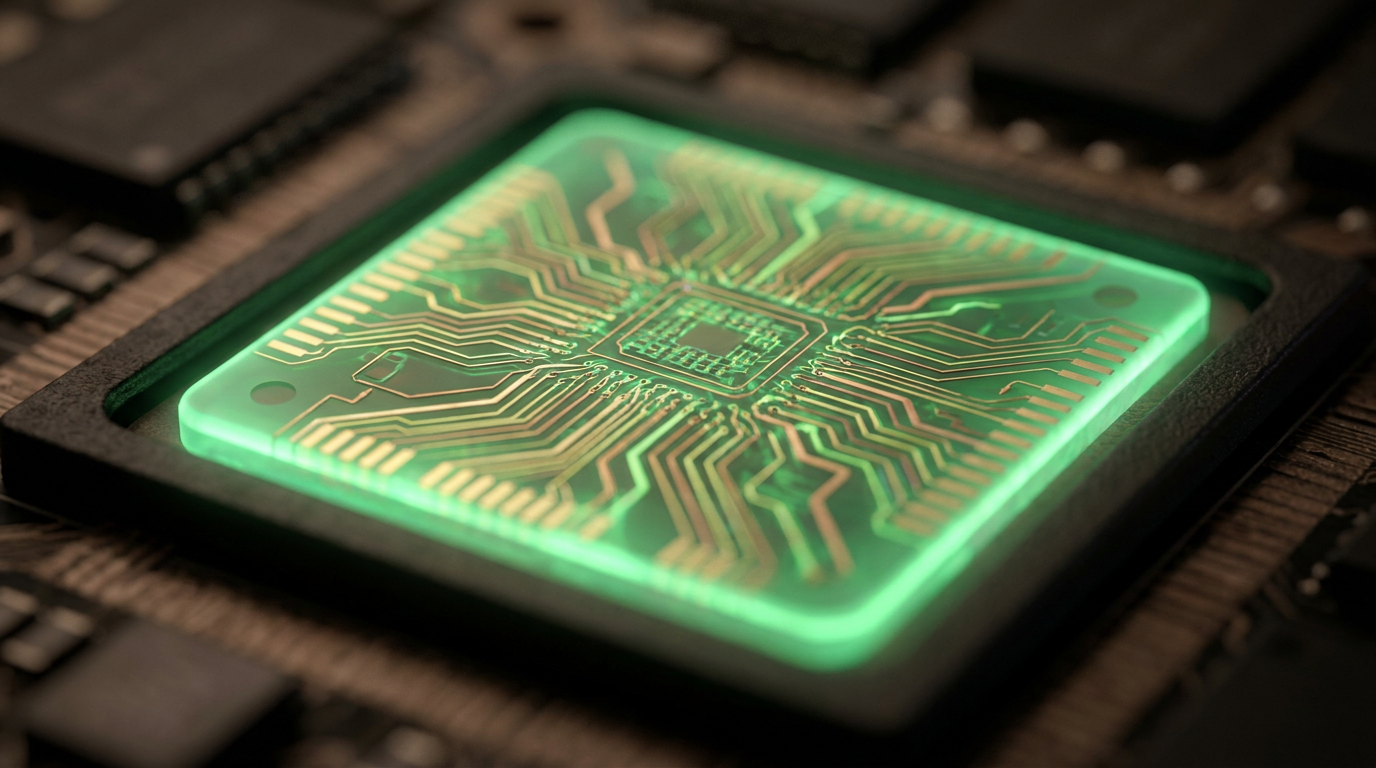
The Jalapeño chip is designed to bring unprecedented speed and efficiency to AI inference.
Why Custom Chips are a Big Deal for AI 💡
For a long time, AI companies relied heavily on general-purpose GPUs. These are fantastic for training AI models (the 'learning' part), but they aren't always the most efficient or cost-effective for 'inference' (the 'using' part, where the AI actually generates output). This is where custom chips like Jalapeño come in to shake things up.
By designing their own silicon, OpenAI can tailor every aspect of the chip to their specific AI models. This means less wasted energy, faster processing, and ultimately, lower costs per AI query. Imagine running your AI tools faster and more affordably – that's the promise of custom silicon. It's part of a broader trend beyond generic GPUs.
This shift also gives OpenAI more control over its infrastructure, reducing reliance on external hardware suppliers. It's about building a robust, end-to-end AI ecosystem. For you, this could translate to more stable, higher-performing, and potentially cheaper access to OpenAI's powerful models through their APIs.

Optimized data flow is key to the efficiency gains of custom AI chips.
Advertisement
What This Means for You: Creator, Student, Small Biz Owner 🚀
You might be thinking, 'Okay, fancy chips and new models, but how does this help *me*?' Great question! The core benefit is better AI, more affordably. As OpenAI optimizes its infrastructure, you're likely to see improvements in the AI tools you use every day, whether it's through ChatGPT, API integrations, or other applications built on their tech.
The GPT-5.6 models promise enhanced capabilities. Sol's advancements in coding could mean better AI assistants for developers. Terra's cost-efficiency could make advanced AI more accessible for small businesses looking to automate tasks. Luna's speed could power even faster content generation for creators. This means you can do more with AI, more reliably, and potentially for less money.
Even if you don't directly use OpenAI's APIs, these advancements ripple through the entire AI ecosystem. Other AI providers will push their own tech to compete, leading to overall improvements in AI tools across the board. So, whether you're using AI for research like with NotebookLM, generating content, or streamlining your workflow, these foundational shifts will benefit you.
The Road Ahead: Broader Access & New Possibilities 🌟
While GPT-5.6 access is currently limited, OpenAI's promise of 'in the coming weeks' general availability is exciting. This staggered rollout allows for crucial safety testing and refinement. Once widely available, these models, powered by chips like Jalapeño, will unlock new possibilities for AI applications.
Imagine AI assistants that understand context even better, generate more nuanced and creative content, or perform complex analytical tasks with greater accuracy and speed. Developers will have more powerful tools to build innovative applications, and creators will have more sophisticated AI partners to bring their ideas to life. Keep an eye on OpenAI's announcements for when these models drop for general use.
This full-stack approach – from custom hardware to advanced models – signals OpenAI's long-term ambition for deep control over AI development. It’s not just about building better models; it’s about building the entire infrastructure to support the next generation of AI. This full-stack ambition is truly a big deal for the future of AI.
💡 Pro Tip: When GPT-5.6 models become available, start with Terra for cost-effective, high-performance tasks, then explore Sol for specialized, high-demand projects.
Key Takeaways
- OpenAI's GPT-5.6 models (Sol, Terra, Luna) offer improved performance and cost-efficiency for various AI tasks.
- Jalapeño is OpenAI's first custom AI inference chip, designed for high-speed, low-latency LLM processing.
- The chip's rapid development was partly thanks to OpenAI's own AI models, demonstrating a full-stack approach.
- This dual strategy aims to reduce reliance on generic GPUs, leading to more cost-effective and performant AI access.
- Broader access to GPT-5.6 is expected 'in the coming weeks,' promising new capabilities for creators and businesses.
Related on Tech4SSD 🔗
- NotebookLM in 2026: Your Ultimate AI Research Assistant Just Got a Major Upgrade (2026)
- AI Tools for Students in 2026: Your Ultimate Guide to Smarter Learning
📩 Want the freshest AI trends every week?
Subscribe to Tech4SSD — practical AI tools and trends, explained for everyone. Free. Subscribe →
Advertisement
Frequently Asked Questions
What are the main benefits of GPT-5.6 over previous models?
GPT-5.6 models offer significant improvements in cost-efficiency and performance, especially for complex and long-context tasks. They are more specialized, with Sol for high-performance, Terra for balanced value, and Luna for speed and affordability.
What is the Jalapeño chip, and why is it important?
Jalapeño is OpenAI's first custom AI inference chip, co-developed with Broadcom. It's crucial because it's specifically designed to run large language models (like GPT-5.6) with extremely high speed (throughput) and low delay (latency), making AI applications faster and more cost-effective than using general-purpose hardware.
When can I use GPT-5.6?
Currently, GPT-5.6 access is limited to trusted partners and red-teaming units for thorough testing. OpenAI has stated that broader availability will be 'in the coming weeks,' so keep an eye on their official announcements.
Will custom chips make AI cheaper for me?
Yes, potentially! By optimizing hardware specifically for their AI models, OpenAI can reduce the operational costs of running their AI. This efficiency gain could translate into more affordable API access and lower costs for AI services built on their technology, benefiting you directly.
Final Word
OpenAI's dual announcement of GPT-5.6 and the Jalapeño chip isn't just about faster AI; it's about a fundamental shift in how AI is built and delivered. By taking control of both the software and the hardware, OpenAI is paving the way for a new era of AI that is more powerful, more efficient, and ultimately, more accessible.
This full-stack strategy will likely set new industry standards and accelerate innovation across the board. For you, this means an exciting future where AI tools are even more capable, integrated, and ready to help you achieve your goals. Get ready to experience the next level of AI! ✨
AI tools and features change fast — verify current options before relying on them. — Tech4SSD Editorial
Discussion
Have a question or something to add?
Join the discussion on Blogger