Alright, creators, students, and small business owners! If you're using AI for research, you know the landscape changes faster than your Wi-Fi signal. In 2026, the world of AI research tools is more competitive than ever, but one thing is crystal clear: accuracy is king. Gone are the days of just getting *any* answer; now, it's about getting the *right* answer, with reliable sources to back it up. We're talking about tools that can truly supercharge your information gathering, not just spit out educated guesses. 🚀
This deep dive will show you exactly which tools are leading the charge, why accuracy and citation reliability are non-negotiable, and how you can use these advanced AI assistants to level up your projects. We'll break down the pros and cons, highlight the specialized options, and give you the confidence to navigate this high-tech research maze. Ready to become an AI-powered research pro? Let's go!
Advertisement
Perplexity Pro: Your New Go-To Research Assistant 👑
In mid-2026, if you're looking for the best general-purpose AI research tool, look no further than Perplexity Pro. It's fast, it's smart, and most importantly, it's surprisingly accurate. Think of it as your super-powered intern, capable of sifting through mountains of data in minutes.
Perplexity Pro stands out for a few key reasons: it delivers cited reports in a blazing 2-4 minutes, and subscribers get 20 'Deep Research' runs daily. But here's the kicker: a Columbia University audit found it had the lowest citation-failure rate among AI search engines, coming in at 37%. While not perfect (more on that later!), that's a significant lead over its competitors. For day-to-day research, it’s a clear winner. (Source: Second Talent)
So, whether you're brainstorming a new blog post, planning a product launch, or just trying to understand a complex topic, Perplexity Pro gives you reliable, cited information quickly. It’s making serious waves in how everyday creators approach research.
- Speed Demon: Get comprehensive, cited reports in just 2-4 minutes. No more endless Google tabs!
- Deep Research Daily: Perplexity Pro users enjoy 20 'Deep Research' runs, perfect for those complex, multi-layered inquiries.
- Accuracy Leader: With a 37% citation-failure rate, it's the most reliable AI search engine out there for general research. Still needs checking, but it’s a huge step forward.
The Deep Research Revolution: Everyone’s Playing Catch-Up 🌐
Deep Research isn't just a Perplexity thing anymore. This capability, where AI delves into multiple sources to synthesize information, has become a standard feature across basically every major AI assistant. We’re talking about the big guns here: ChatGPT (with GPT-5.5), Claude (Opus 4.8), Gemini (3.5 Pro), and even Grok (4.3) are all in on the action. Perplexity itself uses its powerful Sonar stack for this.
What does this mean for you? It means no matter which top-tier AI you prefer, you can expect advanced information gathering. The real difference-makers now are speed, the quality of sources the AI prioritizes, and ultimately, its accuracy. Everyone has 'Deep Research,' but not everyone does it equally well. (Source: The AI Rankings)
This push towards more thorough, AI-driven research changes the game. You're not just getting a quick answer; you're getting an AI-curated report. But remember, 'curated' doesn't always mean 'perfect.' Verification is still your superpower!
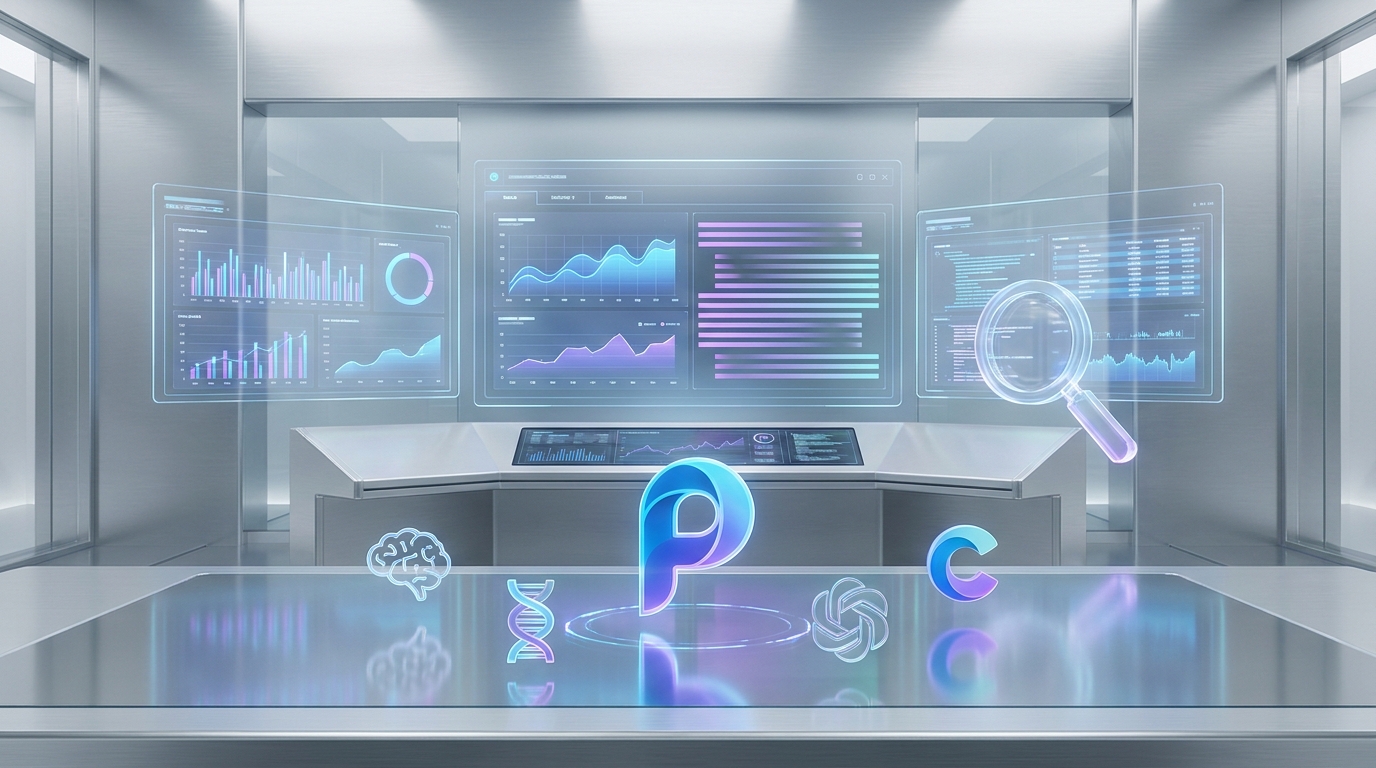
The evolving landscape of AI research tools, with Perplexity AI at the forefront.
The Elephant in the Room: Citation Fabrication 🤥
Here's where we get real: AI isn't perfect, and a major headache is citation fabrication. This isn't just a minor glitch; it's a growing problem. From 2023 to early 2026, there's been a shocking sixfold jump in fabricated citations found in published papers. That's a huge leap, and it's a red flag for anyone relying solely on AI for their sources.
Even more concerning for us everyday users: AI search engines incorrectly cite news over 60% of the time. Think about that for a second. If you're building a business case, writing an article, or even just researching a new hobby, getting inaccurate news citations can lead you down the wrong path entirely. This statistic alone should tell you why verification isn't just good practice—it's essential.
This isn't to scare you away from AI; it's to arm you with knowledge. These tools are incredibly powerful, but they require a human in the loop. Always, always, always double-check those sources before you hit publish or make a big decision. Your credibility depends on it!
Specialized Tools for Serious Scholars 🧑🎓
While Perplexity Pro is fantastic for general research, if your work demands academic rigor, peer-reviewed sources, and deep dives into scholarly literature, you need specialized tools. General AI assistants, even with Deep Research, can sometimes stray into web-sourced hallucinations. For serious academic work, you need AI that speaks the language of journals and studies.
Tools like 🟦 Elicit, 🟥 Consensus, and 🟪 Semantic Scholar are designed specifically for this. They don't trawl the entire web; instead, they directly search vast databases of scholarly articles, research papers, and peer-reviewed journals. This targeted approach dramatically reduces the risk of incorrect or fabricated citations, especially when dealing with complex scientific or academic topics. (Source: Paper Guide AI)
If you're a student, a researcher, or just someone who needs to cite a scientific study accurately, these specialized tools are your best friends. They provide a layer of reliability that general AI simply can't match for this specific use case.
Advertisement
Source-Grounded Research: The Future is Here 📖
One of the most exciting developments is the mainstream adoption of source-grounded research. What does that mean? It means AI tools are getting smarter about *where* they pull information from, often sticking to documents *you* provide. This dramatically cuts down on the 'hallucination' problem.
Think about Google NotebookLM. This brilliant tool only answers questions based on the documents you upload. Have a pile of PDFs for a project? Upload them, and NotebookLM becomes an expert on *your* specific content, answering questions and summarizing only from those trusted sources. It’s like having a hyper-intelligent assistant who’s read everything you have and nothing else.
Perplexity is also pushing this forward with its 'Comet' browser. Imagine browsing a webpage and asking Perplexity to run a Deep Research query specifically over the content you're currently viewing. That's Comet. This level of source-grounded interaction means you have more control and can trust the AI's output even more because you know its exact context. This is a game-changer for critical analysis and focused research.

Source-grounded AI tools like NotebookLM are transforming how we interact with our own documents.
Perplexity Max: The Council of Models 🧠
Perplexity isn't just resting on its laurels. Their 'Max' offering takes accuracy to another level with what they call 'multi-model councils.' Instead of relying on a single AI model to generate answers, Perplexity Max queries *three* frontier models simultaneously: GPT-5.4, Claude Opus 4.8, and Gemini 3.1 Pro. This is a big deal.
Why? Because each model has its strengths and weaknesses, its own 'blind spots.' By cross-referencing, Perplexity Max can identify areas of agreement, giving you higher confidence in the answer. More importantly, it can flag areas of divergence, showing you where the models disagree. This hedging against single-model bias is a powerful way to get a more balanced and reliable perspective.
This strategy is a glimpse into the future of AI. It’s not about finding the *one* perfect model, but about intelligently combining the strengths of many. For critical research, this multi-model approach offers a significant boost in reliability and nuanced understanding, reducing the chance of a single model's error leading you astray.
Comparing the Top AI Research Tools (Mid-2026) 📊
So, how do the top general-purpose AI research tools stack up in the face of these developments? While specialized tools are best for academic deep dives, for everyday use, clarity, speed, and accuracy are paramount. Here's a quick look at the major players you'll encounter and their current strengths.
| Feature/Tool | Perplexity Pro | ChatGPT (GPT-5.5) | Claude (Opus 4.8) | Gemini (3.5 Pro) |
|---|---|---|---|---|
| Primary Strength | Speed & Citation Accuracy | Broad Task Versatility | Long Context & Nuance | Integration & Multimodality |
| Deep Research Time | 2-4 minutes | Variable (often longer) | Variable | Variable |
| Citation Failure Rate | 37% (Lowest) | Higher (specific data varies) | Higher (specific data varies) | Higher (specific data varies) |
| Unique Feature | Multi-model 'councils', Comet browser | Advanced Plugins/Agents | Exceptional for creative writing | Google Ecosystem Integration |
| Best For | General daily research, quick reports | Content creation, coding help | Complex text analysis, writing | Cross-app workflows, data analysis |
💡 Pro Tip: Always, always, always manually verify at least 2-3 key citations from any AI-generated research report, especially for critical information. Your reputation depends on it!
Key Takeaways
- Perplexity Pro is your best default: For general AI research, its speed and lower citation-failure rate (37%) make it the leading choice.
- Deep Research is everywhere: Major AI models like ChatGPT, Claude, and Gemini now offer advanced research capabilities, but quality varies.
- Citation fabrication is a real threat: Be aware of the sixfold jump in fabricated citations and AI's 60%+ error rate with news sources. Verification is crucial.
- Specialized tools are vital for academics: Elicit, Consensus, and Semantic Scholar are superior for peer-reviewed work, directly searching scholarly literature.
- Source-grounded AI is a game-changer: Tools like Google NotebookLM and Perplexity's Comet browser offer more controlled and reliable research from user-provided or in-page sources.
Related on Tech4SSD 🔗
- AI Trend Drop (June 2026): The Updates That Just Changed the Game
- Turn Your Boring PDF Into a Narrated Hollywood-Style Explainer With NotebookLM
- Claude Opus 4.8 vs GPT-5.5 vs Gemini 3.5: Which AI Should You Actually Use? (June 2026)
📩 Want the freshest AI trends every week?
Subscribe to Tech4SSD — practical AI tools and trends, explained for everyone. Free. Subscribe →
Advertisement
Frequently Asked Questions
Is Perplexity Pro free to use?
Perplexity offers a free tier with limited features, but the 'Pro' version, which includes 20 daily Deep Research runs and access to multi-model 'councils,' is a paid subscription. It's often worth the investment for serious users.
What's the biggest risk when using AI for research?
The biggest risk is 'hallucination' or citation fabrication. AI can confidently present incorrect or entirely made-up information and sources. Always verify critical facts and citations, especially for academic or professional use.
Should I still use traditional search engines like Google for research?
Absolutely! AI research tools are powerful complements, not replacements. Use traditional search for quick fact-checking, discovering new sources, and diving deeper into topics where AI might generalize. A balanced approach is best.
Can AI tools analyze my own documents?
Yes! Tools like Google NotebookLM are designed specifically for this. You upload your documents (PDFs, text files, etc.), and the AI will only answer questions or summarize information based on those specific sources, making it incredibly precise for your own data.
Final Word
The world of AI research tools in 2026 is a thrilling place. We’re seeing incredible advancements in speed, depth, and specialized applications. Perplexity Pro is clearly leading the general-purpose charge, making daily research faster and more reliable for creators, students, and small business owners alike. But the underlying message remains: these tools are powerful assistants, not infallible oracles.
Your critical thinking, verification skills, and understanding of each tool's strengths are still your most valuable assets. Embrace the power of AI, but wield it wisely. Stay curious, stay sharp, and keep creating amazing things with the best tech at your fingertips! ✨
AI tools and features change fast — verify current options before relying on them. — Tech4SSD Editorial
Discussion
Have a question or something to add?
Join the discussion on Blogger