multimodal AI video editing: Hey there, fellow creator! Ever wish you had a magic wand to instantly perfect your video's colors or conjure up custom effects without hours of fiddling? Well, multimodal AI video editing is making that dream a reality. We're talking about powerful AI models that can understand not just text, but also images, sounds, and, yes, video itself. This isn't just a fancy tech term; it's a game-changer for anyone who creates video content, from social media mavens to indie filmmakers. 🚀
In this article, we're diving deep into how these incredible AI models, especially OpenAI's GPT-6 Astra, are transforming video post-production. We'll break down how they automate complex tasks like color grading, generate stunning custom effects, and ultimately give you more creative control with less effort. Get ready to supercharge your workflow and make your videos shine!
Advertisement
What is Multimodal AI and Why Does it Matter for Video? 💡
So, what exactly *is* multimodal AI? Think of it as an AI that doesn't just speak one language. While traditional AI might understand text (like ChatGPT) or images (like DALL-E), a multimodal AI understands *multiple* types of data – text, images, audio, and video – all at once. It's like having a super-smart assistant who can read your script, look at your footage, listen to your audio, and then understand how they all fit together.
For video editing, this is huge. Instead of just analyzing pixels, a multimodal model can grasp the *context* of your video. It can understand what's happening in a scene, who the subjects are, and what emotional tone you're aiming for. This deep understanding is the secret sauce behind its ability to automate tasks that used to require a human eye and hours of painstaking work. It's not just about making things faster; it's about making them smarter and more intuitive.
GPT-6 Astra: Your New Video Editing Co-Pilot ✈️
Enter GPT-6 Astra, OpenAI's multimodal powerhouse. This isn't just another language model; it's designed to understand and interact with the world through various senses, making it incredibly adept at video tasks. When integrated with video editing platforms, Astra acts like an intelligent co-pilot, taking on the heavy lifting so you can focus on your creative vision.
One of the most impressive feats of GPT-6 Astra is its ability to process complex video information with remarkable efficiency. It can plan and execute intricate edits with fewer 'reasoning steps' and 'output tokens,' which in plain English means it gets the job done faster and more directly. This efficiency translates directly into quicker workflows and less waiting time for you, the creator. It's like having an expert editor who understands your instructions perfectly and executes them flawlessly, every single time.
Automating Color Grading: From Drab to Fab in a Flash 🌈
Color grading is an art form, but it's also incredibly time-consuming. Matching tones, correcting white balance, and creating a consistent look across all your clips can be a nightmare. This is where GPT-6 Astra truly shines. When integrated with platforms like invideo, it has shown a remarkable improvement in color correction and grading success rates—we're talking about a threefold boost! This means fewer manual adjustments and more time creating.
How does it do it? Astra's multimodal understanding allows it to analyze your video content deeply. It can identify skin tones, recognize environments, and even understand the mood you're trying to convey. This enables it to suggest and apply precise color adjustments that look natural and professional. Imagine uploading your footage and having AI intelligently suggest the perfect cinematic grade, or even automatically fix tricky lighting issues across multiple scenes. It's not just about applying a filter; it's about intelligent, context-aware color transformation. Check out how invideo leverages AI for cinematic AI color grading.
A critical capability here is the model's ability to isolate and track subjects within frames. This means it can change the background color or mood without affecting, say, the skin tones of your actors. Precision like this used to be the domain of highly skilled colorists, but now, AI is making it accessible to everyone.
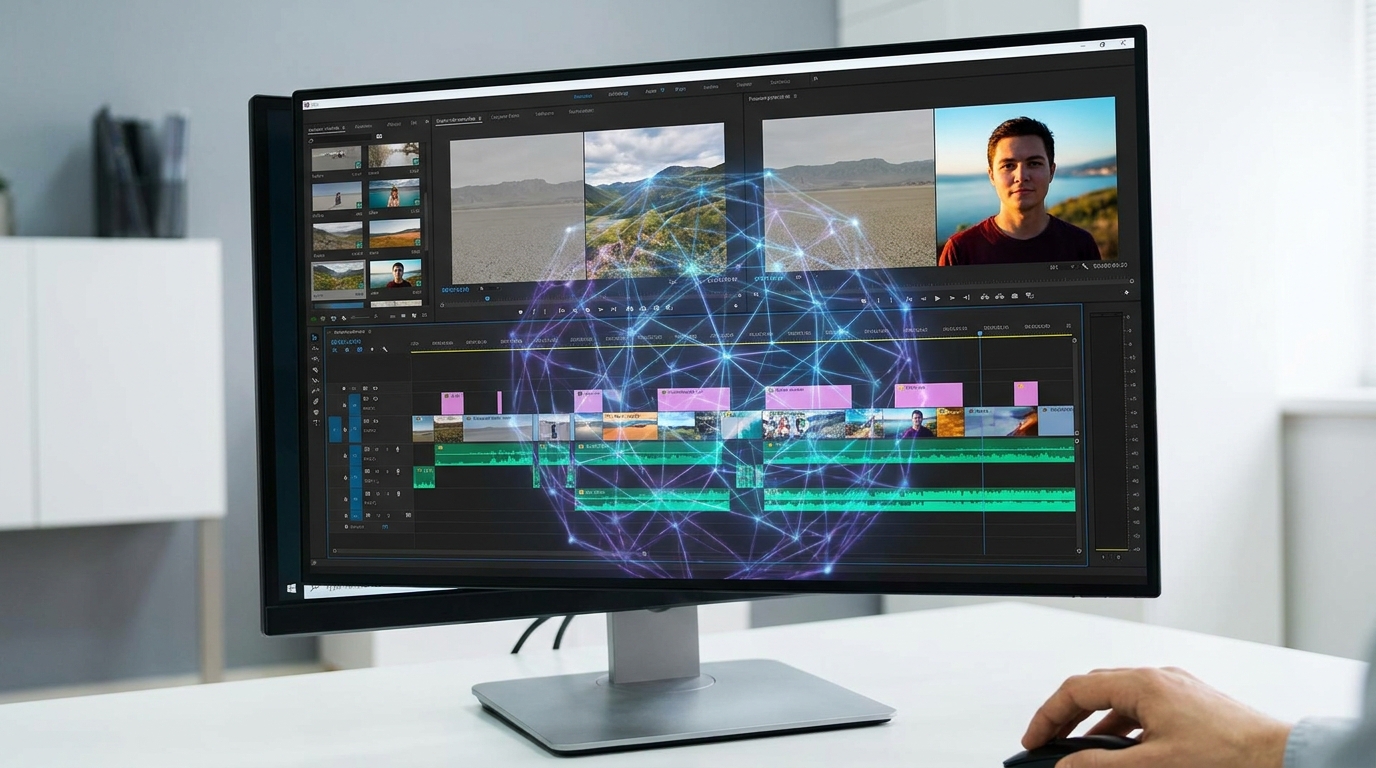
GPT-6 Astra helps transform raw footage into perfectly color-graded scenes, saving creators hours.
Generating Custom Effects on Demand 💥
Beyond color, GPT-6 Astra is also a wizard when it comes to visual effects. Ever needed a specific kind of glitch effect, a unique transition, or a stylized overlay but couldn't find the right preset? Now, you can simply describe what you want, or even provide visual references, and the AI can generate it for you. This opens up a whole new world of creative possibilities without needing to be an After Effects guru.
Imagine telling your editing software, 'Give me a subtle, ethereal glow around the character's hands as they cast a spell,' or 'Create a retro VHS distortion effect that kicks in during the chorus.' Platforms like invideo have used GPT-6 Astra to produce an astonishing 50 custom effects in a single day! This rapid generation capability means you can experiment with different looks and feels much faster than ever before, iterating on your creative vision with unprecedented speed.
Advertisement
The Training Behind the Magic: How Astra Learns 📚
You might be wondering how GPT-6 Astra got so smart about video. It's not magic, it's meticulous training! OpenAI has fed Astra a colossal amount of publicly available multi-domain audiovisual content. Think of it: countless hours of videos, images, and audio clips from all corners of the internet. This vast dataset allows the model to develop a deep, multimodal understanding of how visual and auditory elements interact and contribute to a narrative.
This extensive training is what enables Astra to recognize objects, understand actions, perceive emotions, and even grasp stylistic nuances in video. It's why it can differentiate between a 'warm' color grade for a cozy scene and a 'cool' one for a dramatic moment. The more diverse and comprehensive its training data, the better it becomes at interpreting your creative intent and executing complex tasks with precision. You can dive deeper into the public summary of GPT-6 Astra's training content for more technical details.
Empowering Creators: More Control, Less Grind 🚀
The real beauty of multimodal AI in video editing isn't just about automation; it's about empowerment. It means you, the creator, get to maintain creative control while offloading the tedious, repetitive tasks to AI. Instead of spending hours tweaking color curves or searching for the perfect effect, you can focus on storytelling, composition, and refining your message.
This technology significantly reduces the technical barriers to producing high-quality video content. Advanced post-production techniques that once required specialized skills and expensive software are now becoming accessible to a wider audience. Whether you're a student making a documentary, a small business owner creating marketing videos, or a hobbyist vlogger, GPT-6 Astra and similar models are putting professional-grade tools right at your fingertips. It's about democratizing high-quality video production.
The impact on efficiency is undeniable. Imagine cutting down your post-production time by half or even more. That's more time for shooting, more time for ideation, and more time for living! It's a shift from being a technical operator to a pure creative director, with AI handling the execution.
AI frees up creators to focus on their vision, not the technical grunt work.
What's Next for AI in Video Post-Production? 🔮
The advancements we're seeing with GPT-6 Astra are just the beginning. As multimodal AI models continue to evolve, we can expect even more sophisticated capabilities in video post-production. Think about AI that can automatically generate entire sequences based on a script, or intelligently adapt edits for different social media platforms with a single command.
We're moving towards a future where the line between AI assistance and creative partnership blurs. These tools won't replace human creativity; they'll augment it, pushing the boundaries of what's possible for individual creators and small teams. Keep an eye on new integrations and features from companies leveraging these powerful models, because the pace of innovation is only accelerating. The future of video editing is here, and it's smarter, faster, and more creative than ever before.
💡 Pro Tip: To get the most out of AI color grading, provide clear stylistic prompts (e.g., 'cinematic, warm, golden hour look') rather than just 'make it look good.'
Key Takeaways
- Multimodal AI, like GPT-6 Astra, understands multiple data types (text, image, video), making it ideal for complex video editing tasks.
- GPT-6 Astra significantly improves color grading success rates (up to 3x) and automates precise color correction, including subject isolation.
- AI can rapidly generate custom video effects from descriptions, allowing for faster creative iteration and experimentation.
- Extensive training on diverse audiovisual content enables Astra's deep understanding of video context and creative intent.
- This technology empowers creators by reducing technical barriers, speeding up workflows, and allowing more focus on creative storytelling.
Related on Tech4SSD 🔗
- Holo3.1: Building Powerful AI Agents for Desktop & Web Automation (2026)
- OpenAI GPT-6 Astra: Optimizing Deep Research Agent Speed and Cost (2026)
📩 Want the freshest AI trends every week?
Subscribe to Tech4SSD — practical AI tools and trends, explained for everyone. Free. Subscribe →
Advertisement
Frequently Asked Questions
What is GPT-6 Astra?
GPT-6 Astra is a multimodal AI model developed by OpenAI. Unlike previous models, it can understand and process various types of data simultaneously, including text, images, audio, and video, making it exceptionally powerful for complex tasks like video editing.
How does AI color grading work?
AI color grading uses multimodal AI models to analyze video content, understand its context, and then apply precise color corrections and stylistic grades. It can automatically adjust white balance, exposure, and color tones, and even isolate subjects for targeted adjustments, all based on your creative input or predefined styles.
Can AI generate custom video effects?
Yes! With models like GPT-6 Astra, you can describe the custom video effect you want, or provide visual references, and the AI can generate it for you. This allows for rapid prototyping of unique effects and significantly speeds up the creative process for visual storytelling.
Final Word
The integration of multimodal AI like GPT-6 Astra into video editing workflows isn't just an incremental update; it's a paradigm shift. It's about making advanced, professional-grade tools accessible to everyone, democratizing the power of high-quality video production. For creators, this means less time wrestling with technical complexities and more time bringing their unique visions to life.
So, whether you're a seasoned pro or just starting your video journey, get ready to embrace a future where AI is your most powerful creative ally. The era of effortless, high-quality video is here. Go forth and create something amazing! ✨
Sources & Further Reading
- How invideo improves color grading 3x with GPT‑6 Astra | OpenAI
- Higgsfield AI ships new video features in a day with GPT-6 Astra
- Color Grade AI Video Clips for Consistent Results
- Public Summary of Training Content for GPT-6 Astra
- GPT-6 Astra Model | OpenAI API
- AI Color Grading: How to Make AI Video Look Cinematic
- Color Grading Software for AI Video: What You Actually Need
- GPT-6 Astra: A new generation of intelligence
- AI Video Post-Production: Making AI Footage Look Like Real Film
- Cinematic Color Grading Styles for AI Video Prompts
AI tools and features change fast — verify current options before relying on them. — Tech4SSD Editorial
Discussion
Have a question or something to add?
Join the discussion on Blogger