robotics simulation: Ever wondered how those incredibly agile robots learn to do their thing? 🤖 It's often through countless hours of trial and error in a simulated world. But here's the kicker: traditional robotics simulation can be slow, really slow. Imagine waiting days for a robot to learn a simple task! That's where NVIDIA Warp and the new Newton Physics Engine come in, shaking up the game and making robot training lightning-fast, all from the comfort of your Python code.
This isn't just for the big labs anymore. If you're a creator, student, or small business owner dabbling in AI, robotics, or even just curious about what's next, you're in the right place. We're going to demystify how NVIDIA Warp, integrated with tools like MuJoCo Warp, lets you harness the raw power of GPUs to accelerate your robotics projects, turning days of waiting into minutes of learning. Get ready to feel capable. 💪
Advertisement
What's the Big Deal with NVIDIA Warp? 🚀
NVIDIA Warp is an open-source Python framework that's a game-changer for anyone working with simulation, AI, or robotics. Think of it as your secret weapon to make Python code run at warp speed on your GPU. Traditionally, getting Python to talk directly to a GPU for high-performance tasks meant diving into complex CUDA C++ code. Not anymore! Warp lets Python developers write GPU-accelerated programs with performance that's surprisingly close to native CUDA.
How does it do this magic? Warp performs just-in-time (JIT) runtime compilation. This means it takes your Python functions and, on the fly, turns them into highly optimized CUDA kernel-level code for NVIDIA GPUs or x86 code for CPUs. This gives you incredibly fine-grained control over your computations, and it natively supports all those tricky conditional logics you often find in complex simulations. It's like having a super-fast translator for your Python code, making it speak the GPU's language fluently.
Enter the Newton Physics Engine: Reality, Accelerated 🌍
At the heart of this robotics revolution is NVIDIA's new Newton Physics Engine, unveiled at NVIDIA GTC 2026. Built on NVIDIA Warp, Newton is designed from the ground up to provide an accelerated, production-ready foundation for the most demanding robotics tasks, especially those involving dexterous manipulation and complex locomotion. We're talking about robots picking up tiny objects or navigating uneven terrain with incredible precision.
Newton isn't just fast; it's also integrated seamlessly with NVIDIA's existing robotics platforms. It works natively with NVIDIA Isaac Sim 6.0 and Isaac Lab 3.0 (early access releases). This means if you're already using these tools for reinforcement or imitation learning, Newton slots right in, supercharging your workflows and letting your robots learn faster than ever before. It's all about reducing those long waiting times and speeding up your iteration cycles.
MuJoCo Warp: Turbocharging Your Simulations ⚡
One of the most exciting integrations is MuJoCo Warp (MjWarp), a solver within the Newton Physics Engine. If you've been in robotics simulation for a while, you've probably heard of MuJoCo – it's a popular physics engine known for its accuracy. MuJoCo Warp takes that accuracy and injects it with GPU acceleration, thanks to NVIDIA Warp.
The performance gains here are truly mind-blowing. For locomotion tasks, MuJoCo Warp can be up to 152 times faster than MJX (MuJoCo XLA) on a GeForce RTX 4090. And for complex manipulation tasks? We're talking an astonishing 313 times faster! Imagine training a robot to pick up a delicate object in minutes instead of days. This kind of speed-up isn't just convenient; it fundamentally changes what's possible in AI and robotics research and development.
This means you can run many more simulations in the same amount of time, explore a wider range of scenarios, and ultimately train more robust and intelligent robotic policies. It democratizes access to advanced robotics research, allowing even those with consumer-grade GPUs to achieve significant breakthroughs.
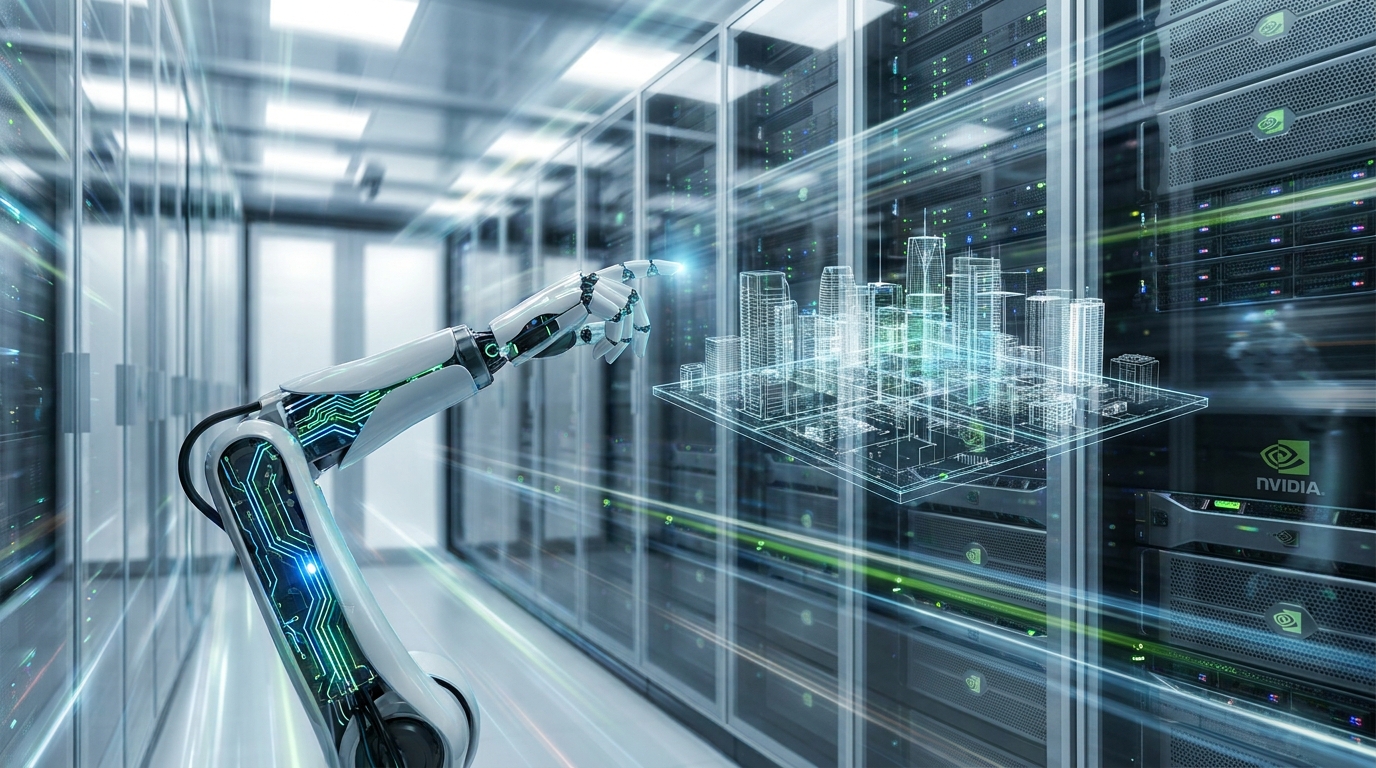
NVIDIA Warp and Newton are making complex robotics simulations faster and more accessible than ever.
Why GPU Acceleration is a Game-Changer for AI 🧠
At its core, AI, especially reinforcement learning, thrives on data and iteration. The more times an AI agent can try something, learn from its mistakes, and refine its behavior, the better it gets. In robotics, this means running countless simulations. Each simulation involves complex physics calculations, collision detection, and sensor data processing.
GPUs (Graphics Processing Units) are perfectly designed for these kinds of parallel computations. Unlike a CPU, which is great at handling a few complex tasks sequentially, a GPU can handle thousands of simpler calculations simultaneously. This is why they've become the backbone of modern AI training. By offloading physics simulations to the GPU with tools like Warp and Newton, you're not just speeding things up; you're enabling entirely new approaches to AI development that were previously too computationally expensive.
Advertisement
Getting Started: Your Python Gateway to Speed 🐍
The beauty of NVIDIA Warp is that it keeps you in your comfort zone: Python. You don't need to become a CUDA expert overnight. While a full setup guide is beyond a single blog post, here's the gist of how you might approach it:
First, you'll need a compatible NVIDIA GPU. While datacenter GPUs like A100s and H100s offer top-tier performance, even consumer-grade RTX 4090s show incredible speed-ups. Next, you'll install the NVIDIA Warp framework, typically via pip. Then, you'd integrate it with your chosen robotics simulation environment, like Isaac Lab, which now supports Newton.
The key is to identify the computationally intensive parts of your simulation – often the physics updates, collision detection, or sensor rendering – and rewrite them using Warp's Python functions. Warp provides a rich set of primitives for linear algebra, geometry, and other common operations that automatically compile for the GPU. This means you can define your simulation logic in Python, and Warp handles the heavy lifting on the GPU.
Real-World Impact: Smarter Robots, Faster Development 🛠️
What does all this mean for you, the builder, developer, or tech enthusiast? It means faster iteration, more complex simulations, and ultimately, more capable and intelligent robots. Imagine a small business developing an automated sorting system. With Warp and Newton, they can train their robotic arm in a fraction of the time, leading to quicker deployment and lower development costs.
For researchers, it means pushing the boundaries of what's possible in AI. Differentiable simulation, a key feature enabled by Warp, allows AI models to learn not just from the outcomes of a simulation, but also from how changes in their actions *affect* those outcomes. This leads to more efficient learning and more robust policies. It's a huge leap forward for fields like reinforcement learning and imitation learning.
Even for vision-based policies, Newton helps. A Warp-based tiled camera sensor supports high-throughput rendering, essential for training AI that relies on visual input. This enables end-to-end perceptive training pipelines, especially when combined with powerful NVIDIA DGX platforms. Your robots can literally 'see' and learn faster.
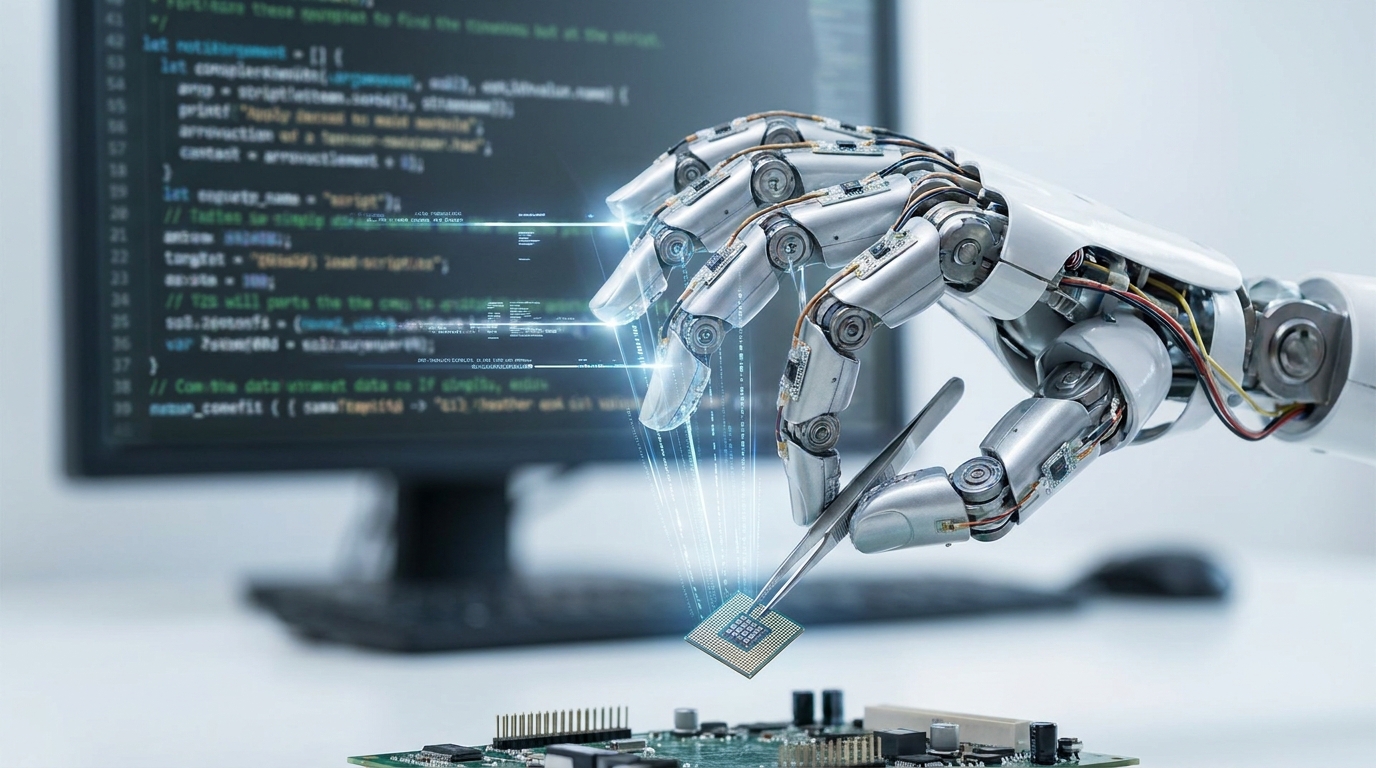
From delicate manipulation to complex locomotion, NVIDIA's tools are making robots smarter, faster.
Key Advantages of NVIDIA Warp & Newton 📊
- Unprecedented Speed Drastically reduces simulation times from days to minutes, enabling rapid iteration and experimentation in robotics development.
- Python-Friendly GPU Power Allows Python developers to write high-performance, GPU-accelerated code without needing deep CUDA expertise, lowering the barrier to entry.
- Differentiable Simulation Enables AI models to learn more efficiently by understanding how changes in actions impact simulation outcomes, crucial for advanced reinforcement learning.
- Production-Ready Physics The Newton Physics Engine provides a robust and accelerated foundation for complex industrial robotics tasks like dexterous manipulation and locomotion.
- Ecosystem Integration Natively integrates with NVIDIA Isaac Sim and Isaac Lab, streamlining workflows for robotics AI training and deployment.
💡 Pro Tip: When optimizing with Warp, start by identifying the most computationally intensive loops or array operations in your Python code. These are often the biggest bottlenecks and where Warp will deliver the most significant speed-ups.
Key Takeaways
- NVIDIA Warp allows Python developers to write GPU-accelerated code for robotics simulation, achieving near-CUDA performance.
- The Newton Physics Engine, powered by Warp, provides a high-performance, production-ready foundation for complex robotic tasks.
- MuJoCo Warp (MjWarp) demonstrates massive speed gains (up to 313x) for locomotion and manipulation compared to traditional methods.
- These tools drastically cut down AI training times for robots, enabling faster iteration and more capable AI models.
- The integration with Isaac Sim and Isaac Lab streamlines the entire robotics AI development workflow.
Related on Tech4SSD 🔗
- Custom AI Tools for Creative Workflows: Lessons from Google Flow (2026)
- AI Tools Accelerating Scientific Research Workflows (2026)
- Google DevFest 2026: Practical Tools and Workflows for Building Agentic AI
📩 Want the freshest AI trends every week?
Subscribe to Tech4SSD — practical AI tools and trends, explained for everyone. Free. Subscribe →
Advertisement
Frequently Asked Questions
Do I need to know CUDA to use NVIDIA Warp?
No! That's the beauty of Warp. It allows you to write GPU-accelerated code directly in Python. Warp handles the just-in-time compilation of your Python functions into optimized CUDA kernel-level code, so you don't need to write CUDA C++ yourself.
What kind of performance improvements can I expect with MuJoCo Warp?
The improvements are significant. For locomotion tasks, MuJoCo Warp can be up to 152x faster, and for manipulation tasks, it can be up to 313x faster compared to MJX on a GeForce RTX 4090. This drastically reduces training times from days to minutes.
Is NVIDIA Warp only for industrial robotics?
While the Newton Physics Engine, which uses Warp, is production-ready for industrial robotics, NVIDIA Warp itself is a general-purpose Python framework for GPU-accelerated computation. It can be used for various applications in AI, machine learning, and scientific simulation, not just robotics.
What hardware do I need to get started with NVIDIA Warp and Newton?
You'll need an NVIDIA GPU. While high-end datacenter GPUs like A100s and H100s offer the best performance, even consumer-grade GPUs like the GeForce RTX 4090 show impressive speed-ups, making these tools accessible to a wider range of developers and enthusiasts.
Final Word
The world of robotics and AI is moving at an incredible pace, and tools like NVIDIA Warp and the Newton Physics Engine are at the forefront of that acceleration. By making high-performance, GPU-accelerated simulation accessible directly from Python, NVIDIA is empowering a new generation of creators, students, and small businesses to innovate faster and build more intelligent robots.
This isn't just about speed; it's about unlocking new possibilities, democratizing advanced AI research, and ultimately, shaping a future where robots can learn, adapt, and perform complex tasks with unprecedented efficiency. So, dive in, experiment, and get ready to build the future. The robots are waiting! 🤖
Sources & Further Reading
- Warp Python | NVIDIA Developer
- Newton Physics Engine | NVIDIA Developer
- Isaac Lab | NVIDIA Developer
- Newton Adds Contact-Rich Manipulation and Locomotion Capabilities for Industrial Robotics | NVIDIA Technical Blog
- Train a Quadruped Locomotion Policy and Simulate Cloth Manipulation with NVIDIA Isaac Lab and Newton | NVIDIA Technical Blog
- Newton Physics Backend - Isaac Sim Documentation
- Creating Differentiable Graphics and Physics Simulation in Python with NVIDIA Warp | NVIDIA Technical Blog
- Announcing Mujoco-Warp and Newton: How Google DeepMind and ...
- Warp — Omniverse Extensions
- Build Accelerated, Differentiable Computational Physics Code for AI ...
- Playground
- MuJoCo Playground
- MuJoCo Playground Demo - RSS 2025
- MuJoCo — Advanced Physics Simulation
AI tools and features change fast — verify current options before relying on them. — Tech4SSD Editorial


Discussion
Have a question or something to add?
Join the discussion on Blogger