Ever wished online shopping could just *get* you? Like, really understand what you're looking for, even when you don't have the perfect keyword? Well, get ready, because Neurosymbolic AI is here to make that a reality, especially in the world of ecommerce. This isn't just a tweak; it's a fundamental shift in how AI understands your desires and helps you find exactly what you need, with a big emphasis on trust. 🤯
In this deep dive, we'll break down what Neurosymbolic AI is, why it's crushing traditional search engines in ecommerce, and how it's building a future where you can truly trust AI's recommendations. You'll learn how companies like Onton are leading the charge and what this means for your online shopping experience and small business strategy. Let's demystify this powerful tech!
Advertisement
What is Neurosymbolic AI Anyway? 🧠
Okay, let's start simple. You've probably heard of neural networks – that's the 'neuro' part. They're great at pattern recognition, like identifying a cat in a picture or understanding the nuance in your voice. But they're not always great at *explaining* why they made a decision, or following complex rules.
Then there's 'symbolic AI.' Think of it like a computer program that follows strict rules and logic. It's excellent for tasks where you can clearly define 'if X, then Y.' But it struggles with the messy, ambiguous real world. Neurosymbolic AI is the superhero combination of both! It merges the pattern-matching power of neural networks with the logical reasoning of symbolic AI. This means it can not only recognize a 'vintage leather jacket' but also understand that 'vintage' implies certain characteristics, materials, and even an aesthetic *feel*.
For you, this means an AI that's not just guessing based on keywords, but *understanding* your intent, context, and even the 'vibe' you're going for. It's a huge leap in AI's ability to truly comprehend complex requests.
The Problem with Old-School Search 🐢
Think about how you usually shop online. You type in 'running shoes,' maybe add 'men's' and 'size 10.' Then you use filters for brand, color, price. That's traditional keyword and filter-based search. It works, but it's… limited.
What if you're looking for 'a comfy sweater for a cozy night in, but not too bulky, maybe something in an earthy tone'? Good luck typing that into Amazon's search bar! Traditional systems struggle with these 'vibe-based' or ambiguous queries because they lack the ability to infer meaning beyond direct keywords. They can't handle the 'not too bulky' or 'earthy tone' part effectively.
This is where the old guard – like Google Shopping and even Amazon's internal search – starts to show its age. They're built on categories and filters, which are great for precise, known items, but fall short when you're exploring or have a complex, nuanced need. You end up sifting through pages of irrelevant results, wasting your time and energy. Sound familiar?
Onton's Ontology 1: A Game-Changer 🚀
Enter companies like Onton, and their groundbreaking Neurosymbolic AI model, Ontology 1. This isn't just an incremental update; it's a completely new architecture designed to tackle those complex, intent-heavy queries that stump traditional search. Instead of just matching keywords, Ontology 1 combines deep learning with symbolic reasoning to truly *understand* what you're looking for.
How does it do this? By building and leveraging what's called a 'knowledge graph.' Imagine a massive, interconnected web of information where products aren't just listed, but their attributes, relationships, and even their typical use cases are understood. This allows Ontology 1 to infer meaning, handle multimodal inputs (like a picture *and* a description), and deliver far more accurate results.
The results are impressive. Ontology 1 has demonstrated superior accuracy compared to Google Shopping and Amazon on those tricky, intent-heavy queries. It's like having a personal shopper who not only knows what you said but also what you *meant*.
- Deeper Understanding: Goes beyond keywords to grasp context, intent, and even subjective preferences like 'cozy' or 'sleek'.
- Multimodal Input: Can process information from text, images, and potentially even voice, creating a richer search experience.
- Knowledge Graphs: Uses structured knowledge to make logical connections and provide more relevant, nuanced results.
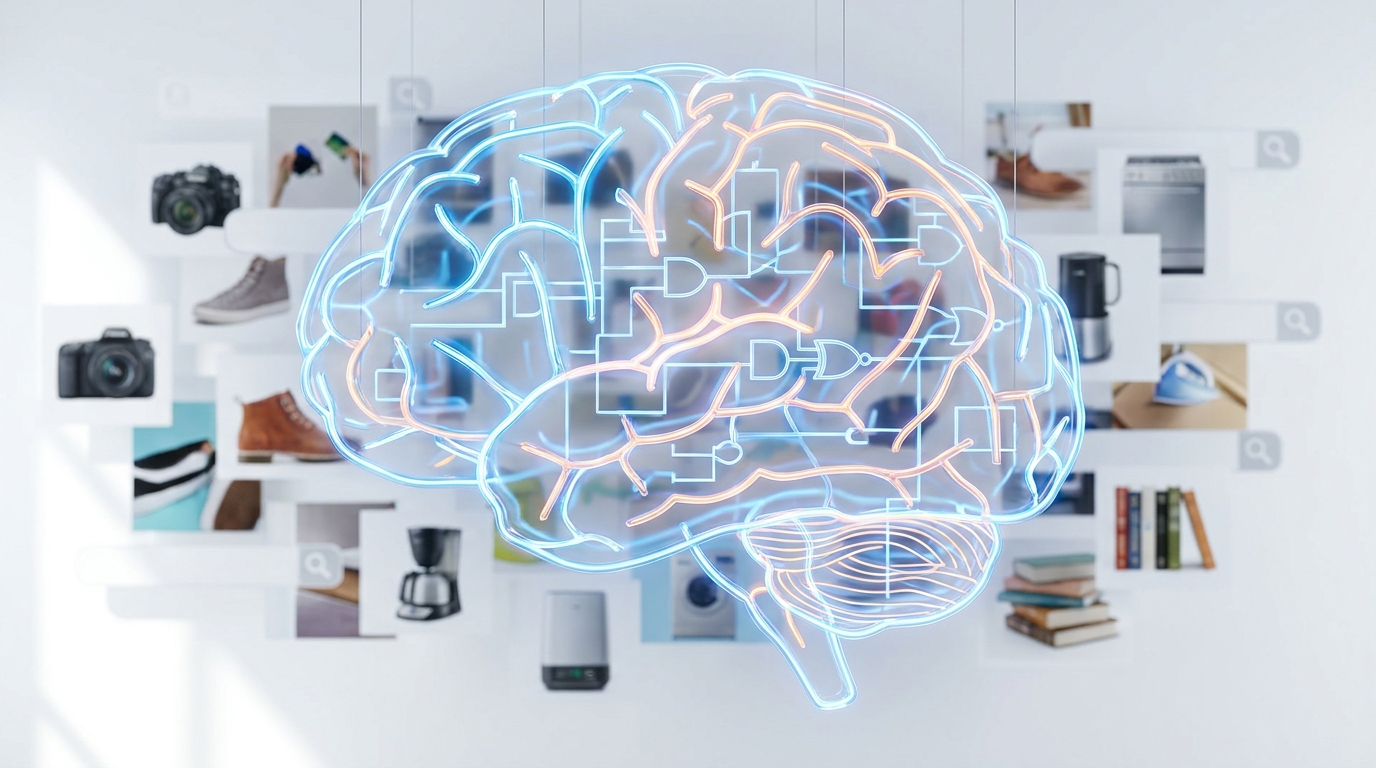
Neurosymbolic AI combines the best of neural networks and symbolic logic for powerful product discovery.
The Explosive Growth of AI-Referred Traffic 📈
This isn't just theoretical. AI is already massively influencing how people discover and buy products. Adobe Analytics reports a staggering 1,324% cumulative growth in AI-referred traffic to retail sites since October 2024! And it's not just volume; by May 2026, shoppers referred by AI were converting 54% better than traditional traffic. That's huge!
What does this mean for you, whether you're a creator selling merch or a small business owner? It means that your products need to be discoverable by AI agents. These aren't just search engines; they're increasingly sophisticated systems that can make purchasing decisions on behalf of consumers. If your product isn't understood and trusted by these AIs, you're missing out on a massive and rapidly growing customer base.
The shift is already happening. Consumers are relying more and more on AI to filter choices and present recommendations. Being visible and accurately represented within these AI-driven discovery channels is becoming paramount for online success. Learn more about how AI is reshaping e-commerce visibility here.
Advertisement
The Trust Factor: Why AI Needs to Be Honest 🛡️
With AI agents increasingly influencing purchasing decisions, a critical question emerges: can we trust them? The internet is awash with synthetic content, manipulated reviews, and biased information. Current AI agents often lack the human intuition to filter out what's genuine from what's not. This is a massive challenge for AI-driven commerce.
Imagine an AI agent recommending a product based on fake reviews or manipulated data. That erodes trust, not just in the product, but in the entire AI system. This is why models that can evaluate the *veracity* of product information are absolutely essential. It's not enough for AI to find; it must also verify.
Onton's Ontology 1 was specifically built from the ground up to address this problem of trust and authenticity in what they call the 'agentic web' – where AI systems are making decisions for us. It's about ensuring that when an AI recommends something, it's based on solid, truthful data, not just what's popular or promoted. This focus on verifiable information is a core differentiator and a huge win for consumers and ethical businesses alike.

Ensuring AI recommendations are trustworthy is crucial in the age of agentic commerce.
What This Means for You: Creator, Student, Small Business Owner 💡
So, how does all this Neurosymbolic AI magic impact *your* world? If you're a creator selling unique items, a student researching products for a project, or a small business owner trying to stand out, this shift is huge. It means moving beyond just basic SEO keywords and thinking about how your product's *attributes*, *context*, and *story* can be understood by advanced AI.
For creators, accurately describing your unique items, using high-quality images, and providing rich context will become even more important. For small businesses, optimizing your product data for these smarter AI models will be key to discoverability. It's about providing data that AI can truly *understand*, not just read. This includes detailed product descriptions, clear specifications, and even rich media.
The era of simple keyword stuffing is over. The future belongs to those who provide clear, comprehensive, and trustworthy information that Neurosymbolic AI can process and recommend with confidence. This is an opportunity to connect with customers who are actively seeking what you offer, but through a new, more intelligent AI lens. Check out how DTC brands are staying visible as AI rewrites ecommerce discovery here.
Beyond Search: The Agentic Web and Your Future 🤖
The implications of Neurosymbolic AI extend far beyond just a better search bar. We're moving towards an 'agentic web,' where AI systems act as personal agents, making decisions and purchases on your behalf. Imagine your AI assistant finding the best flight, booking a restaurant, or even managing your shopping list – all based on a deep understanding of your preferences and needs.
This future demands AI that isn't just smart, but also reliable and trustworthy. Neurosymbolic models are foundational to this. They provide the robustness and explainability needed for AI to operate in high-stakes environments like commerce, where accuracy and trust are non-negotiable.
Understanding this shift isn't just about keeping up with tech trends; it's about preparing for a future where AI plays an even more integrated role in our daily lives and economic transactions. This is why the advancements in Neurosymbolic AI are so incredibly important – they're building the infrastructure for a more intelligent, and hopefully, more trustworthy, digital world.
💡 Pro Tip: Start thinking about your product descriptions and content not just for human readers, but for AI 'understanding.' Use structured data, rich details, and clear language to help advanced AI models grasp the full context of what you offer.
Key Takeaways
- Neurosymbolic AI combines neural networks and symbolic logic for a deeper understanding of complex queries.
- It significantly outperforms traditional search engines (like Google Shopping/Amazon) in handling nuanced, 'vibe-based' product searches.
- AI-referred traffic to retail sites is growing exponentially and converting at much higher rates.
- Trust and authenticity are critical; Neurosymbolic AI models like Ontology 1 are built to verify product information and combat synthetic content.
- For creators and small businesses, optimizing product data for AI 'understanding' (beyond keywords) is crucial for future discoverability.
Related on Tech4SSD 🔗
- No-Code AI Agents: Build Powerful Digital Assistants for Free in 2026
- Navigating AI Bias: Challenges & Solutions for Creators in 2026
- Beyond Chatbots: Building Your Specialized AI Productivity Stack for 2026
📩 Want the freshest AI trends every week?
Subscribe to Tech4SSD — practical AI tools and trends, explained for everyone. Free. Subscribe →
Advertisement
Frequently Asked Questions
Is Neurosymbolic AI already being used in major e-commerce platforms?
While major platforms like Amazon and Google are constantly evolving their search, dedicated Neurosymbolic AI models like Onton's Ontology 1 are emerging as specialized solutions to address complex, intent-heavy queries and the critical issue of trust, often outperforming traditional systems in specific benchmarks.
How can a small business prepare for this shift?
Focus on rich, detailed product descriptions, high-quality images, and structured data. Think about not just keywords, but the *attributes*, *use cases*, and *emotions* your product evokes. The more context you provide, the better Neurosymbolic AI can understand and recommend your offerings.
Does Neurosymbolic AI help with combating fake reviews or synthetic content?
Absolutely! A core focus of models like Ontology 1 is to evaluate the veracity and authenticity of product information. By combining logical reasoning with pattern recognition, they can better identify manipulated content and provide more trustworthy recommendations, which is crucial for the 'agentic web'.
Final Word
The world of ecommerce is transforming, and Neurosymbolic AI is at the forefront of this change. It's not just about finding products; it's about understanding intent, building trust, and paving the way for a more intelligent, agent-driven shopping experience. This technology empowers both consumers to find exactly what they need and businesses to connect with their ideal customers more effectively.
As creators, students, and small business owners, embracing this evolution means unlocking new levels of discoverability and engagement. The future of online commerce is smart, nuanced, and trustworthy – and you're now equipped to be a part of it! ✨
AI tools and features change fast — verify current options before relying on them. — Tech4SSD Editorial