reproducible AI research workflow: here is what the official release means in practice. Ever felt like your AI research projects are a tangled mess of code, data, and half-remembered steps? You're not alone! Building a reproducible AI research workflow is crucial for any serious creator, student, or small business owner diving into AI for scientific discovery. It's about making sure your awesome results aren't just a one-time fluke, but something you (and others!) can consistently recreate and trust. 💡
This guide will walk you through the essentials of designing a robust, auditable AI research workflow, focusing on how tools like Anthropic's new Claude Science can be your secret weapon. We'll break down the core components, show you how to track everything from sources to artifacts, and empower you to build AI projects that stand the test of time and scrutiny. Ready to make your AI research bulletproof?
Advertisement
Why Reproducibility Matters in AI Research 🤔
Imagine you've just made a groundbreaking discovery using AI. You're thrilled! But then, your colleague asks, "How exactly did you get that result? Can you show me every step?" If you can't, your discovery, no matter how brilliant, loses credibility. That's where reproducibility comes in. In scientific AI, it means that if someone else (or even future you!) takes your data, code, and methodology, they should be able to arrive at the same conclusions.
Without reproducibility, AI research can become a black box. You can't debug effectively, you can't build upon previous work reliably, and you certainly can't convince others of your findings. For creators and small businesses, this translates to wasted time, unreliable models, and missed opportunities. It's not just a scientific ideal; it's a practical necessity for building trustworthy AI solutions.
The Pillars of a Reproducible Workflow 🏗️
A truly reproducible AI research workflow isn't just about saving your code. It's a holistic approach that touches every stage of your project. Think of it as building a house: you need a solid foundation, clear blueprints, and a detailed record of every material and step.
For AI, this means meticulous documentation, version control for everything (not just code!), and a clear understanding of your environment. It's about creating a "paper trail" for your digital work, making it easy to trace back decisions, data transformations, and model configurations.
- Data Integrity & Management: Your raw data, pre-processing steps, and any derived datasets must be versioned and accessible. Know exactly where your data came from and how it was transformed.
- Code Version Control: Every line of code, from data cleaning scripts to model training, needs to be tracked. Tools like Git are your best friend here.
- Environment Specification: What libraries, frameworks, and operating system did you use? Pinning down your exact computational environment is critical for recreating results.
- Experiment Tracking: Record every experiment, its parameters, metrics, and outputs. This includes model weights, evaluation results, and even visualizations.
- Clear Documentation: Write down your hypotheses, methodologies, assumptions, and interpretations. Explain *why* you made certain choices.
Enter Claude Science: Your AI Research Workbench 🧪
This is where tools like Anthropic's new Claude Science come into play. Traditionally, scientific research (AI included!) involves juggling a dozen different tools, scripts, and notebooks. It's fragmented, prone to errors, and a nightmare for reproducibility. Claude Science aims to fix this by bringing everything under one roof.
Think of it as an integrated development environment (IDE) specifically designed for scientific AI. It's not just a chatbot; it's an AI workbench that integrates common research tools, automates workflows, and, crucially, focuses on making your work auditable and reproducible from the ground up. This means less time wrestling with setup and more time doing actual science. It's currently in beta for Claude Pro, Max, Team, and Enterprise users, so if you're in that camp, you're in luck!

Claude Science streamlines complex scientific AI research by integrating tools and ensuring full traceability.
Building Your Auditable AI Research Workflow with Claude Science 📊
So, how do you actually use a tool like Claude Science to design a bulletproof, reproducible workflow? It starts with leveraging its core features designed for traceability and integration. No more scattered files or forgotten parameters!
Claude Science isn't just about making things easier; it's about embedding best practices directly into your process. This means every step you take, every decision you make, is automatically recorded and linked, creating a comprehensive audit trail.
🟦 Unified Environment & Tool Integration
Instead of jumping between Python, R, specialized scientific software, and your LLM, Claude Science brings them all together. It integrates common research packages and tools into a single environment. This reduces compatibility issues and ensures that all components of your workflow are operating within a consistent setup. This consistency is the first step towards reproducibility.
🟥 Automated Auditable Artifacts
This is a game-changer. Every output from Claude Science isn't just a result; it's an "auditable artifact." This means it comes packaged with a complete history: the exact code used, detailed environment specifications (library versions, OS, etc.), and even plain-language descriptions of the steps taken. This ensures that your results are not only traceable but also understandable and verifiable by anyone else. It's like having a meticulous lab notebook that writes itself.
🟪 Compute Resource Management
Large-scale AI research often requires significant computational power. Claude Science manages these resources for you, drafting plans for complex analyses and scaling compute on demand. This ensures that your experiments run efficiently and consistently, regardless of the underlying hardware, further contributing to reproducibility by standardizing the execution environment.
🟩 Generalist Coordinating Agent
At its heart, Claude Science features a generalist coordinating agent equipped with over 60 curated skills and connectors for various scientific fields. This agent can help you analyze literature, generate figures, execute multi-step research plans, and even draft initial analyses. It acts as an intelligent assistant, guiding you through complex workflows and ensuring that each step is documented and integrated into the overall auditable history.
Practical Steps for Reproducibility Checkpoints Checkpoint 1: Data Ingestion & Pre-processing 📥
Your journey to reproducibility starts the moment data enters your system. Don't just dump files into a folder! With Claude Science, you can ensure every data source is explicitly linked and any pre-processing steps are fully documented.
Action: Use Claude Science's integrated tools to import data. The platform will automatically record the source, timestamp, and any initial transformations. If you write custom scripts for cleaning or feature engineering, ensure they are executed within Claude Science, so their code and environment are captured as part of the auditable artifact.
Advertisement
Checkpoint 2: Model Training & Experiment Tracking 📈
This is often the messiest part of AI research. How many times have you tweaked a hyperparameter, run a model, and then forgotten the exact configuration? Claude Science makes this a thing of the past.
Action: Define your model architecture, hyperparameters, and training regimen within Claude Science. The coordinating agent can even help draft these plans. Every training run will generate an auditable artifact, including the exact code, library versions, dataset used, and all performance metrics. This means you can easily compare different experiments and pinpoint exactly what led to a particular result.
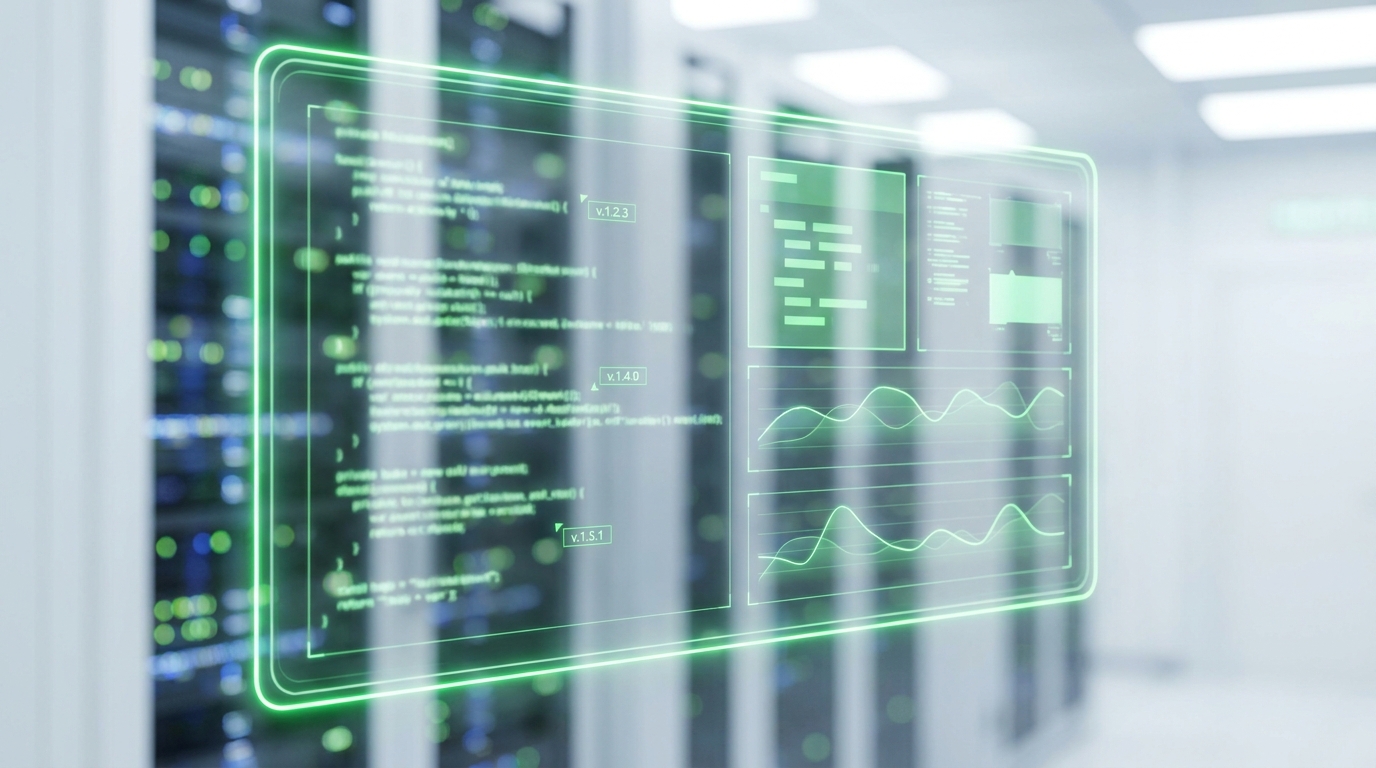
Every model training run in Claude Science creates an auditable artifact, ensuring full traceability.
Checkpoint 3: Analysis, Interpretation & Reporting 📝
Finally, when you're analyzing your results and preparing to share them, reproducibility is still key. Your conclusions should be directly supported by your auditable artifacts.
Action: Use Claude Science's capabilities to generate figures, tables, and narrative summaries directly from your experimental results. Since these outputs are linked to their underlying data and code, anyone reviewing your work can verify the analysis. The platform's ability to provide plain-language descriptions of complex steps also helps bridge the gap between technical details and clear scientific communication.
Beyond Claude Science: General Best Practices for Reproducibility ✨
While tools like Claude Science are powerful, a reproducible mindset is even more so. Even without such an integrated platform, you can adopt practices that significantly improve your workflow's reliability.
Remember, the goal is to make it easy for anyone (including future you!) to understand, verify, and build upon your work. It's about clarity, consistency, and meticulous record-keeping.
- Version Control Everything: Not just code! Version your data, configuration files, and even your research notes. Use Git for code, and consider data versioning tools for large datasets.
- Containerization: Tools like Docker or Singularity allow you to package your code, dependencies, and environment into a single, portable unit. This guarantees that your software environment is identical wherever it runs.
- Clear Naming Conventions: Be consistent with file names, variable names, and experiment IDs. "Final_model_v2_really_final.py" is a recipe for disaster.
- Modular Code: Break down your code into small, reusable functions. This makes it easier to test, debug, and understand.
- Automate, Automate, Automate: Manual steps are prone to human error. Automate data processing, model training, and evaluation pipelines as much as possible.
💡 Pro Tip: Always assume someone else (or your future self in 6 months) will need to reproduce your work. Document *everything* you think they'd need to know.
Key Takeaways
- A reproducible AI research workflow ensures your results are trustworthy and verifiable, crucial for scientific integrity and practical application.
- Claude Science offers an integrated AI workbench that automates the creation of auditable artifacts, including code, environment details, and plain-language descriptions.
- Leverage Claude Science's unified environment, automated tracking, and coordinating agent to streamline data ingestion, model training, and analysis.
- Beyond specific tools, embrace best practices like version control for all assets, containerization, and clear documentation to enhance reproducibility.
- Designing for reproducibility from the start saves immense time and effort in debugging, collaboration, and validating your AI-driven discoveries.
Related on Tech4SSD 🔗
- AI Research Assistants: From Idea to Insight in Minutes (2026)
- Beyond Chatbots: Building Your Specialized AI Productivity Stack for 2026
- Navigating AI Bias: Challenges & Solutions for Creators in 2026
📩 Want the freshest AI trends every week?
Subscribe to Tech4SSD — practical AI tools and trends, explained for everyone. Free. Subscribe →
Advertisement
Frequently Asked Questions
What does 'auditable artifact' mean in the context of Claude Science?
An auditable artifact is any output from Claude Science (e.g., a model, a data analysis, a figure) that comes bundled with a complete, traceable history. This includes the exact code, environmental details (like specific library versions), and plain-language descriptions of how it was generated. It's like a self-documenting result.
Is Claude Science only for academic researchers?
While it's designed for scientific research, its principles of reproducibility and integrated workflow are highly beneficial for anyone working with complex AI projects, including creators, students, and small business owners developing AI solutions. If your work requires reliability and verification, Claude Science can help.
How does Claude Science help with managing computational resources?
Claude Science can manage compute resources by drafting plans for large analyses and scaling on demand. This means you don't have to manually configure servers or worry about resource allocation; the platform handles it, ensuring consistent execution environments for your experiments.
Final Word
Building a reproducible AI research workflow might sound like extra work, but it's an investment that pays dividends. It transforms your projects from fragile, one-off experiments into robust, verifiable, and scalable solutions. Tools like Anthropic's Claude Science are paving the way, making these best practices more accessible and automated than ever before.
By adopting these strategies, you're not just making your own life easier; you're contributing to a more transparent, trustworthy, and efficient future for AI. Go forth and build with confidence! 🚀
Sources & Further Reading
- Claude Science, an AI workbench for scientists \ Anthropic
- Home \ Anthropic
- When AI builds itself \ Anthropic
- Claude for Life Sciences
- Making Claude a chemist \ Anthropic
- Research \ Anthropic
AI tools and features change fast — verify current options before relying on them. — Tech4SSD Editorial