AI cloud compute: here is what the official release means in practice. Feeling overwhelmed by all the choices for running your AI projects in the cloud? You're not alone! Picking the right AI cloud compute for your specific needs – whether it's crunching massive datasets, deploying smart AI agents, or handling lightning-fast inference – can feel like navigating a maze. But don't sweat it! Microsoft Azure is making some huge moves in 2026, teaming up with powerhouses like AMD and NVIDIA to give you more specialized, powerful, and efficient options than ever before. 🚀
This article will cut through the jargon and show you exactly how these new Azure advancements can help you choose the perfect compute resources for your data processing, AI inference, and agent-driven workloads. We'll break down the latest virtual machines (VMs) and accelerators, so you can build and deploy your AI creations with confidence, knowing you've got the right horsepower under the hood.
Advertisement
The AI Cloud Compute Landscape Just Got Bigger 🗺️
Microsoft Azure is seriously leveling up its game in 2026, expanding its AI and High-Performance Computing (HPC) infrastructure with some serious firepower from AMD and NVIDIA. Think of it as getting a whole new fleet of specialized vehicles for your AI journey. This isn't just about more power; it's about *smarter* power, designed for the unique demands of today's AI.
Why does this matter to you? Because the more diverse and specialized the options, the better you can match your project's needs with the right tools. This means better performance, lower costs, and more energy-efficient operations for your AI models and applications. It's all about giving you the flexibility to innovate without hitting technical roadblocks.
Purpose-Built VMs for Your Toughest Tasks 🛠️
Forget one-size-fits-all. Azure is rolling out new virtual machines specifically engineered for different types of demanding workloads. This is where you start to see how these partnerships with AMD and NVIDIA really pay off.
Whether you're wrestling with huge datasets, designing complex electronics, or running AI models in real-time, there's a new VM designed to make your life easier. Choosing the right VM means your projects run faster, more reliably, and often, more affordably.
Here’s a quick look at some of the new players:
- HDv2 VMs Perfect for heavy-duty data processing. If your AI project involves sifting through mountains of information, these VMs, powered by AMD's next-gen EPYC processors, are built to handle it. Think of them as your data workhorses. Learn more about AMD's role in Azure's expansion.
- HXv2 VMs Tailored for Electronic Design Automation (EDA). While this might sound niche, if you're in a field that requires intense simulation and design, these AMD-powered machines offer the precision and speed you need.
- ND MI455X v7 VMs Your go-to for serious AI inference workloads. These are packed with AMD's powerful accelerators, making them ideal for deploying trained AI models and getting quick, accurate results.
The Rise of Specialized Accelerators: Maia and NVIDIA 🚀
Beyond general-purpose GPUs, Microsoft is investing heavily in specialized hardware. This is where things get really exciting for inference and agent workloads. We're talking about hardware designed from the ground up to make your AI models scream.
Microsoft isn't just relying on partners; they're building their own tech too. This dual approach ensures you get a wide array of cutting-edge options.
The goal? To give you the best possible performance for the most demanding AI tasks, especially when your models need to make quick decisions or operate as intelligent agents.
🟦 Microsoft's Maia 200
Meet Microsoft's very own Maia 200 inference accelerator. This bad boy is designed specifically for compute-intensive AI inference. Imagine your AI models needing to respond instantly to user queries or process complex data streams in real-time – Maia 200 is built for that. It's seamlessly integrated into Azure, ready to power the next generation of AI applications globally. This is Microsoft ensuring its own cloud infrastructure is future-proofed for the AI revolution.
🟥 NVIDIA's Next-Gen Power
Azure isn't just stopping there. They're also the first hyperscale cloud to power on next-generation NVIDIA Vera Rubin NVL72 systems. What does that mean for you? Access to some of the most advanced GPU technology on the planet. These systems are optimized for inference-heavy, reasoning-based workloads, making them perfect for complex AI agents and large language models that need to 'think' fast. If you're building sophisticated AI, NVIDIA's latest in Azure is a game-changer.
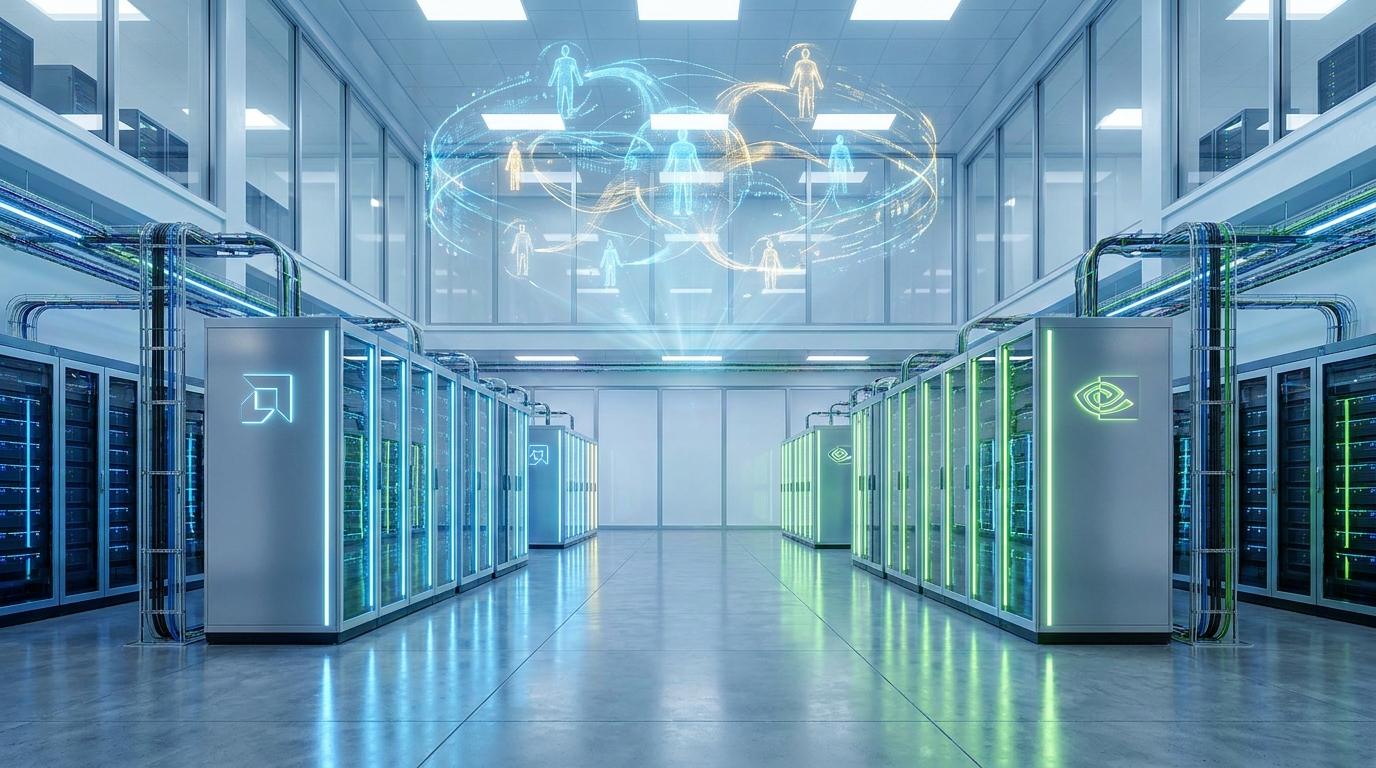
Azure's expanded infrastructure integrates AMD and NVIDIA tech, powering the next wave of AI.
Building Smarter AI Agents with Microsoft Foundry 🤖
AI agents are the future, and Microsoft Foundry is where you can bring them to life in Azure. Foundry is Microsoft's platform for building, deploying, and operating production-ready AI agents. With the latest updates, it's more powerful and flexible than ever.
Now, you can leverage NVIDIA accelerators and open NVIDIA Nemotron models within Foundry. This means you have access to cutting-edge hardware and flexible, open-source models to build your agents. Think of the possibilities for automating tasks, creating intelligent assistants, or developing complex decision-making systems!
Plus, Fireworks AI on Microsoft Foundry is now generally available for open-model inference through a single Azure endpoint. This simplifies the process of deploying and scaling your open-source AI models, making it easier for you to experiment and innovate with agents.
Advertisement
Choosing the Right Compute for Training vs. Inference 🧠
It's crucial to understand that the best compute for *training* an AI model isn't always the best for *running* it (inference). Training is like sending your model to a very intense school, requiring massive parallel processing. Inference is like putting that trained model to work, needing quick, efficient responses.
Azure offers specific VM SKUs optimized for each phase. Choosing correctly can dramatically impact your costs and performance. For example, some VMs are designed with high-bandwidth interconnects perfect for the communication-heavy demands of training, while others prioritize raw inference speed.
Here’s a simplified guide to help you pick:
| Workload Type | Recommended Azure VM SKUs | Key Consideration |
|---|---|---|
| Intensive AI Training | ND H200 v5, ND MI300X v5 series, ND H100 v5 series | Prioritize GPU interconnects (like NVLink) for fast communication between GPUs. |
| AI Inference (High Throughput) | NDm A100 v4-series, ND A100 v4-series, ND MI455X v7 | Focus on raw processing power and efficiency. Avoid InfiniBand, as it's typically overkill and adds cost for inference. |
| Data Processing (HPC) | HDv2 VMs | High core count and memory bandwidth for large datasets and complex simulations. |
| Electronic Design Automation (EDA) | HXv2 VMs | Optimized for specific software and simulation needs in chip design. |
Keeping Your AI Secure with Confidential Inferencing 🔒
Security is paramount, especially when dealing with sensitive data or proprietary AI models. Azure is stepping up its game here too, offering confidential inferencing. This means your AI models can process data without exposing it, even to the cloud provider.
How does it work? Azure Confidential GPU VMs combine cutting-edge security features from both AMD and NVIDIA. Specifically, they leverage SEV-SNP capabilities in 4th Generation AMD EPYC processors and confidential computing primitives in NVIDIA H100 Tensor Core GPUs.
The result is a unified Trusted Execution Environment (TEE). This creates a highly secure, isolated space where your AI inference runs, protecting your data and models from unauthorized access. If you're in a regulated industry or just value top-tier privacy, this is a huge win. Microsoft's Cloud Adoption Framework has more details on compute recommendations for AI.

Confidential computing in Azure protects your sensitive AI data and models.
💡 Pro Tip: When choosing your AI cloud compute, always consider the *lifecycle* of your AI model. Training needs different resources than inference, and agent orchestration has its own unique demands. Don't overpay for training-specific features if you're only doing inference!
Key Takeaways
- Azure is expanding its AI and HPC infrastructure with new AMD and NVIDIA-powered VMs for specialized workloads like data processing, EDA, and AI inference.
- Microsoft's own Maia 200 accelerator and NVIDIA's next-gen Vera Rubin systems are optimizing Azure for inference-heavy and agent-driven AI.
- Microsoft Foundry now supports NVIDIA accelerators and open Nemotron models, making it easier to build and deploy production-ready AI agents.
- Specific VM SKUs are recommended for AI training (e.g., ND H200 v5 with GPU interconnects) versus AI inference (e.g., NDm A100 v4-series for efficiency).
- Confidential inferencing in Azure uses AMD EPYC and NVIDIA H100 GPUs to create a secure Trusted Execution Environment (TEE) for sensitive AI workloads.
Related on Tech4SSD 🔗
- No-Code AI Agents: Build Powerful Digital Assistants for Free in 2026
- Open-Weight AI Models in 2026: Your Guide to Unlocked Power 🚀
- Beyond Chatbots: Building Your Specialized AI Productivity Stack for 2026
📩 Want the freshest AI trends every week?
Subscribe to Tech4SSD — practical AI tools and trends, explained for everyone. Free. Subscribe →
Advertisement
Frequently Asked Questions
What's the main difference between VMs for AI training and inference?
VMs for AI training often require high-bandwidth interconnects (like NVLink) between GPUs to facilitate rapid communication during the learning process. Inference VMs, on the other hand, prioritize raw processing power and efficiency for quick, real-time model execution, and typically don't need the same expensive interconnects.
How do AI agents benefit from these new Azure infrastructure upgrades?
AI agents, especially those performing complex reasoning tasks, benefit immensely from the optimized inference capabilities of new VMs like ND MI455X v7 and the NVIDIA Vera Rubin systems. Microsoft Foundry's expanded support for NVIDIA accelerators and open Nemotron models also makes it easier to develop, deploy, and scale these agents efficiently.
What is confidential inferencing and why is it important?
Confidential inferencing allows your AI models to process sensitive data within a highly secure, isolated environment (a Trusted Execution Environment or TEE) in the cloud. This protects your data and models from unauthorized access, even from the cloud provider, making it crucial for industries with strict privacy regulations or for handling proprietary information.
Can I mix and match AMD and NVIDIA hardware in Azure for my AI projects?
Absolutely! Azure's strategy is to provide a 'heterogeneous platform,' meaning you have access to a diverse range of hardware from both AMD and NVIDIA, as well as Microsoft's own accelerators like Maia 200. This allows you to choose the best-fit hardware for each specific part of your AI workflow, optimizing for performance, cost, and energy efficiency.
Final Word
The world of AI is moving fast, and having the right infrastructure is no longer a luxury – it's a necessity. Microsoft Azure's strategic expansions with AMD and NVIDIA, coupled with their own innovations like Maia 200 and Microsoft Foundry, are creating an incredibly rich and powerful environment for creators, students, and small-business owners like you. You now have more specialized tools than ever to tackle data processing, deploy intelligent agents, and run inference at scale.
Don't let the complexity intimidate you. By understanding these key advancements and aligning them with your specific project needs, you're not just choosing a cloud service; you're empowering your AI ambitions. Go forth and build something amazing! ✨
Sources & Further Reading
- Microsoft expands Azure AI and HPC infrastructure with AMD - The Official Microsoft Blog
- Compute recommendations for AI on Azure infrastructure - Cloud Adoption Framework | Microsoft Learn
- What's new in Microsoft Foundry | Build Edition | Microsoft Foundry Blog
- AI on Azure Infrastructure - Executive Overview - Cloud Adoption Framework | Microsoft Learn
- Azure Storage 2026: Built for Agentic Scale and Cloud‑Native Apps
- Cloud Computing Services | Microsoft Azure
AI tools and features change fast — verify current options before relying on them. — Tech4SSD Editorial
Discussion
Have a question or something to add?
Join the discussion on Blogger