Ever wondered how to make your AI tools work together like a perfectly synced team? You're not alone! The latest buzz in the AI world is all about AI Agent Orchestration. We're talking about systems where multiple AI agents don't just exist side-by-side, but actively collaborate, passing tasks off to each other with precision and adaptability. Think less rigid robot, more agile, problem-solving squad! 🤖
This isn't just theory; it's the future of how we'll build powerful, autonomous AI. In this post, we'll break down how dynamic handoffs, test-driven development, and smart orchestration patterns are changing the game. Get ready to understand how to make your AI workflows smarter, more efficient, and incredibly capable.
Advertisement
What's the Big Deal with Multi-Agent Workflows? 🚀
Traditional automation often follows a fixed script: do A, then B, then C. But real-world problems are rarely that neat. This is where multi-agent workflows shine. Instead of one AI trying to do everything, you have specialized agents, each a master of its own domain. They work together, making decisions on the fly and adapting to new information.
Imagine a "fire-and-forget" system. You kick off a complex task, and your AI agents take over. They plan, they test, they implement, and they report back when the job's done or if they hit a snag that needs your human touch. It's about building systems that are robust enough to handle complexity without constant supervision.
- Autonomous Execution Agents can independently plan, test, and implement tasks based on an initial prompt.
- Dynamic Adaptability Unlike rigid automation, these systems can change course and make decisions as the task evolves.
The Art of the Handoff: Clear is King 🤝
In any team, communication is key, right? The same goes for AI agents. For a multi-agent system to work, the handoffs between agents must be crystal clear. An 'orchestrator' acts like a project manager, making sure each agent gets exactly what it needs to do its part and knows exactly what to produce for the next agent.
Think of it like an assembly line, but one where each station is an expert AI. The 'planning' agent hands off a detailed plan to the 'coding' agent, which then passes the code to the 'testing' agent. Each agent knows its role, its input, and its expected output. This reduces errors and keeps the workflow humming along smoothly. This concept is crucial for building reliable AI agent workflows.
Test-Driven Development (TDD) for AI? You Bet! ✅
This might sound like a developer's dream, but TDD isn't just for human coders anymore. In advanced multi-agent workflows, TDD is being integrated to ensure quality and validate specifications. Here's how it works:
An "@test" agent first writes failing tests based on the task requirements. These tests are essentially executable assertions of what the final solution should achieve. Only once these tests are in place does an "@make" or "@implement" agent step in to write the actual code or generate the content. The goal? To make those failing tests pass! This approach builds confidence and ensures the output meets the exact specifications.

TDD for AI: The @test agent sets the bar, the @make agent rises to the challenge.
Orchestration Patterns: Your AI's Blueprint 🗺️
How do you tell your agents how to work together? That's where orchestration patterns come in. These are like predefined strategies for managing complex interactions. Choosing the right pattern depends on the task at hand. Here are a few common ones:
From sequential pipelines for simple linear tasks to more complex dynamic handoffs, these patterns provide a framework for efficient collaboration. Understanding them is key to designing robust multi-agent systems.
🟦 Sequential Pipelines
For tasks with fixed, linear steps. Agent A finishes, then Agent B starts, then Agent C. Simple and predictable.
🟥 Fan-Out/Fan-In
Need to do several independent things at once? An orchestrator dispatches tasks to multiple agents (fan-out), they work in parallel, and then their results are collected (fan-in).
🟪 Multi-Agent Debate
For critical tasks where quality is paramount. Think of it as a "maker-checker" loop. One agent creates, another reviews and critiques. This iterative feedback improves the final output, like a built-in quality control system.
🟩 Dynamic Handoffs
The most flexible! Here, the orchestrator decides the next agent based on the current context and results. This is perfect for unpredictable workflows where the path isn't clear from the start.
Advertisement
Practical Tools for Managing Multi-Agent Work 🛠️
This isn't just theoretical! Tools are emerging to help you manage these complex workflows. For example, Claude Code's Agent View lets you manage multiple background sessions. You can dispatch independent tasks to different agents and interact with them only when they need your input. This keeps each agent focused on its task, preventing 'context bleed' and ensuring fresh perspectives.
Imagine having an agent drafting marketing copy, another researching SEO keywords, and a third generating image concepts, all running simultaneously but independently. You only jump in when a draft is ready for review or a question pops up. This approach helps you maintain focus and boosts overall productivity.
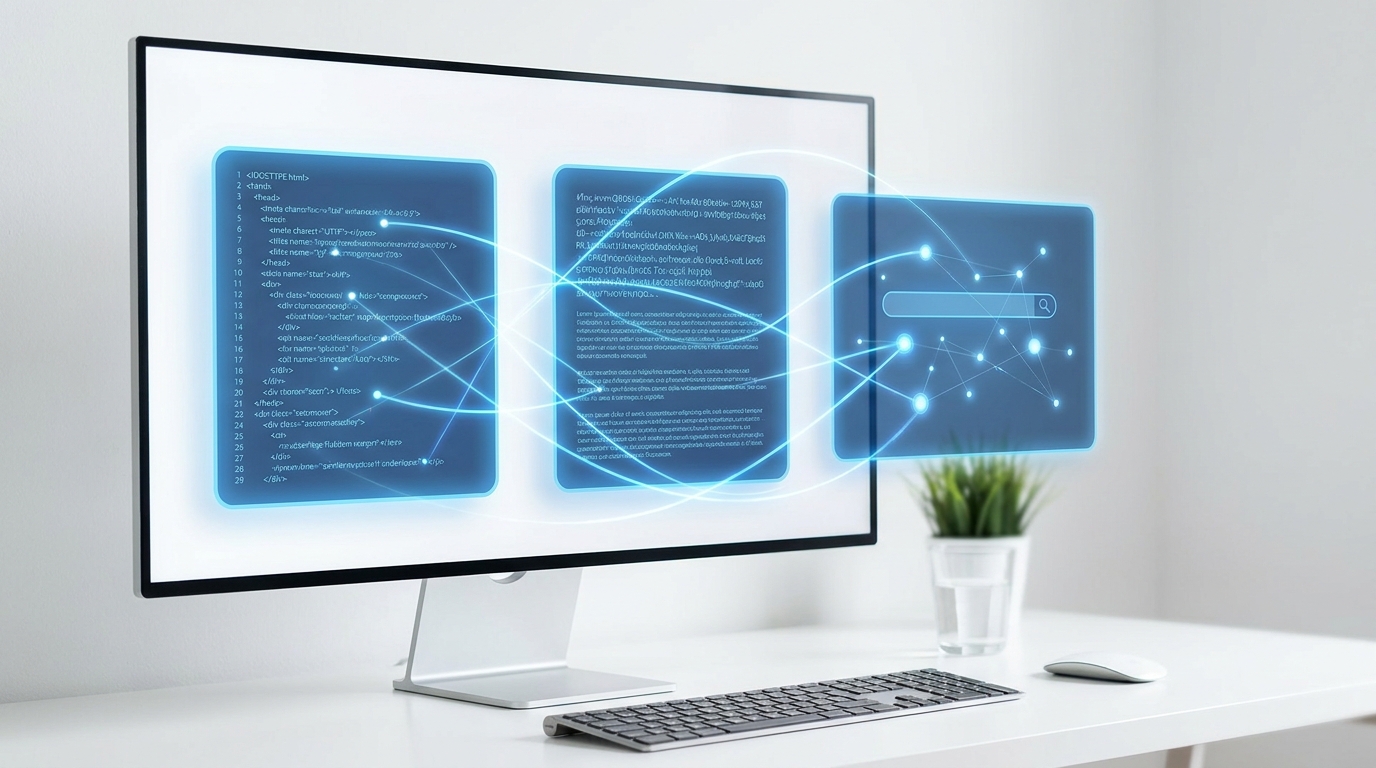
Manage diverse AI tasks with tools that give each agent its own focused workspace.
Beyond Fixed Rules: The Power of Dynamic Decision-Making 🧠
The biggest differentiator for these new AI agent workflows is their ability to make dynamic decisions. Unlike older automation systems that follow rigid, pre-programmed rules, modern AI agents can choose their next action based on the current context. They can:
This adaptive nature makes them incredibly powerful for complex, evolving tasks that would overwhelm traditional automation. It's about letting the AI figure out the best path forward, rather than you having to define every single step.
- Contextual Choices Agents adapt their actions based on real-time information and task progress.
- Tool Use They can decide to use external tools (like search engines, code interpreters, or APIs) when needed.
- Self-Correction Agents can check their own results, identify errors, and adjust their plan accordingly.
💡 Pro Tip: When designing your multi-agent workflow, always start by clearly defining the input and expected output for each agent. This makes handoffs smooth and debugging much easier!
Key Takeaways
- Multi-agent workflows are evolving towards autonomous 'fire-and-forget' systems.
- Clear, well-defined handoffs between agents are critical for efficiency and accuracy.
- Test-Driven Development (TDD) is being adopted in AI, with '@test' agents validating '@make' agent outputs.
- Orchestration patterns like sequential, fan-out/fan-in, debate, and dynamic handoffs guide agent collaboration.
- Dynamic decision-making allows agents to adapt, use tools, and self-correct, unlike rigid automation.
Related on Tech4SSD 🔗
- No-Code AI Agents: Build Powerful Digital Assistants for Free in 2026
- Claude Sonnet 5: Your AI Agent for Complex Tasks (2026)
- Beyond Chatbots: Building Your Specialized AI Productivity Stack for 2026
📩 Want the freshest AI trends every week?
Subscribe to Tech4SSD — practical AI tools and trends, explained for everyone. Free. Subscribe →
Advertisement
Frequently Asked Questions
What's the main difference between traditional automation and multi-agent AI workflows?
Traditional automation follows strict, predefined rules. Multi-agent AI workflows, however, allow agents to make dynamic decisions, adapt to context, and even self-correct, making them much more flexible for complex and unpredictable tasks.
How does Test-Driven Development (TDD) apply to AI agents?
In AI TDD, a dedicated '@test' agent first creates tests that define the desired output. Then, an '@make' agent works to produce a solution that passes these tests, ensuring the AI's output meets specific, verifiable criteria.
Can small businesses or individual creators use AI agent orchestration?
Absolutely! As tools become more accessible (like no-code AI agents), the principles of AI agent orchestration can be applied to automate complex tasks in content creation, marketing, customer service, and more, freeing up valuable time for strategic work.
What does a 'dynamic handoff' mean in practice?
A dynamic handoff means that instead of a fixed sequence, the orchestrator decides which agent gets the task next based on the current results or specific conditions. For example, if an 'idea generation' agent produces three ideas, a 'critique' agent might review them all, and then only the best idea is passed to a 'development' agent.
Final Word
The future of AI isn't just about powerful individual models; it's about how these models collaborate. By understanding and implementing principles like dynamic handoffs, test-driven development, and smart orchestration, you're not just using AI—you're building intelligent, adaptive systems that can tackle truly complex problems.
These advancements mean less manual oversight, more robust solutions, and the ability to innovate faster than ever before. Get ready to orchestrate your own AI symphony! 🎶
AI tools and features change fast — verify current options before relying on them. — Tech4SSD Editorial
Discussion
Have a question or something to add?
Join the discussion on Blogger