Ever wondered how to get super-fast, super-accurate text from your audio? In 2026, the answer isn't choosing between AI or humans. It's about combining them! We're talking about hybrid AI-human transcription, and it’s quickly becoming the gold standard for anyone needing reliable text from spoken words. Forget the old debate; the smart money is on blending the best of both worlds. 💡
This deep dive will break down why this hybrid approach is so powerful. We'll explore the strengths and weaknesses of pure AI and pure human transcription, then show you exactly how combining them creates a workflow that's faster, more accurate, and often more cost-effective. You'll walk away knowing how to get the best transcription results for your creative projects, business needs, or academic work.
Advertisement
The Need for Speed: AI Transcription in 2026 🚀
Let's face it, time is money, especially for creators and small business owners. AI transcription tools are speed demons. They can churn out text from hours of audio or video in minutes, not days. This instant gratification is a huge win for routine tasks, like transcribing meeting notes, initial podcast drafts, or quick content summaries.
Plus, AI is often the budget-friendly choice. If you're working with a tight budget and the content isn't super sensitive or complex, AI offers an amazing bang for your buck. It’s perfect for getting a rough draft quickly, allowing you to move faster on your projects without breaking the bank.
The Accuracy Question: How Good is AI Today? 🤔
So, how accurate is AI transcription in 2026? It's good, but it's not perfect. Depending on the engine, the audio quality, and especially the content, you're looking at an accuracy range of 82-96%. That's pretty impressive for a machine!
However, nuance is where AI still struggles. Think about different accents, specialized jargon (like medical terms or legal statutes), or multiple speakers talking over each other. These are tough nuts for AI to crack perfectly. While AI has come a long way (check out how voice assistants are evolving!), it can still miss critical details or misinterpret context, leading to errors that could be costly in high-stakes situations.
The Human Touch: Unmatched Precision 🧑⚖️
When accuracy is absolutely, positively non-negotiable, humans are still the champions. For things like legal depositions, medical reports, or sensitive interviews, a human transcriber delivers a precision rate of 98-99%. Why? Because they understand context, differentiate speakers, and know how to research specialized terminology.
Imagine needing a perfectly accurate transcript for a legal case. A misplaced comma or a misunderstood word could change everything. Or a medical diagnosis depending on precise terminology. This is where human expertise shines, providing the quality assurance that AI, for all its brilliance, can't quite match yet. Especially in healthcare, human oversight is critical.
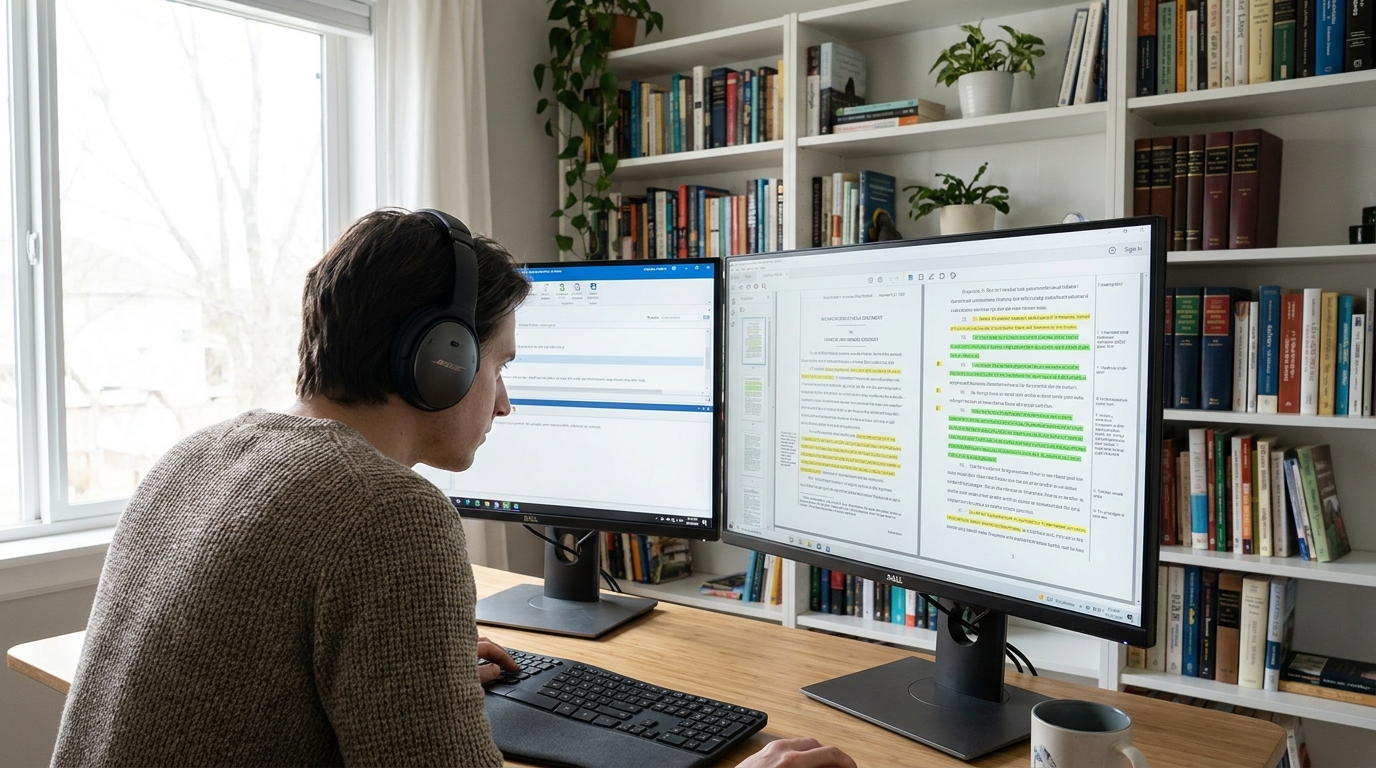
When every word matters, human transcribers provide unmatched accuracy and context.
Why Hybrid AI-Human Transcription is Your 2026 Secret Weapon 🤝
So, what if you could have the speed of AI AND the accuracy of a human? That's the magic of hybrid models. This approach uses AI for the heavy lifting – getting that first draft done super fast. Then, a human expert steps in to review, correct, and refine the AI's output. Think of it as AI doing the grunt work, and a human adding the polish.
This blend gives you the best of both worlds: incredible turnaround times at a more manageable cost than pure human transcription, with accuracy levels approaching human perfection. It’s becoming the go-to strategy for industries where both speed and precision are paramount, like healthcare and B2B translation workflows. It's about enhancing, not replacing, human expertise.
- Faster Turnaround AI handles the initial transcription almost instantly, drastically cutting down overall delivery times.
- Higher Accuracy Human reviewers catch AI errors, ensuring critical details and nuances are perfectly captured.
- Cost-Effective Paying for human review is typically less expensive than full human transcription from scratch.
- Scalable Easily handle large volumes of audio by leveraging AI's capacity, with human oversight guaranteeing quality.
Advertisement
Choosing Your Transcription Path: AI vs. Human vs. Hybrid 🗺️
How do you decide what's right for you? It really depends on your needs – specifically, your budget, your timeline, and how critical accuracy is. Here's a quick breakdown to help you navigate your options in 2026:
| Feature | Pure AI Transcription | Pure Human Transcription | Hybrid AI-Human Transcription |
|---|---|---|---|
| Speed | Extremely Fast (minutes) | Slower (hours to days) | Fast (hours) |
| Accuracy | 82-96% (varies greatly) | 98-99% | 97-99% (with good human review) |
| Cost | Lowest | Highest | Medium |
| Best For | Rough drafts, internal notes, budget-conscious projects | Legal, medical, sensitive interviews, high-stakes content | Any critical application needing speed & high accuracy (e.g., healthcare, B2B, detailed reports) |
| Complexity Handling | Struggles with jargon, accents, multiple speakers | Excels with all complexities, nuanced language | Handles complexities well with human refinement |
The Power of Many: Consensus-Based AI & Data Readiness 📊
Not all AI is created equal. In 2026, some advanced AI models are using a 'consensus-based' approach. This means they run your audio through *multiple* AI engines – sometimes 22 or more! – and then compare the results to find the most likely correct transcription. This method can slash critical errors by up to 90% compared to using just one engine. Pretty neat, right?
For creators and businesses, this means focusing on 'data readiness.' The cleaner your audio, the better your AI transcription will be. Think about reducing background noise, using good microphones (we talked about AI voice generators recently, and good audio input is key there too!). This preparation makes the AI's job easier, and your human reviewer's job faster, leading to a smoother, more accurate hybrid workflow. It's about setting your AI up for success!
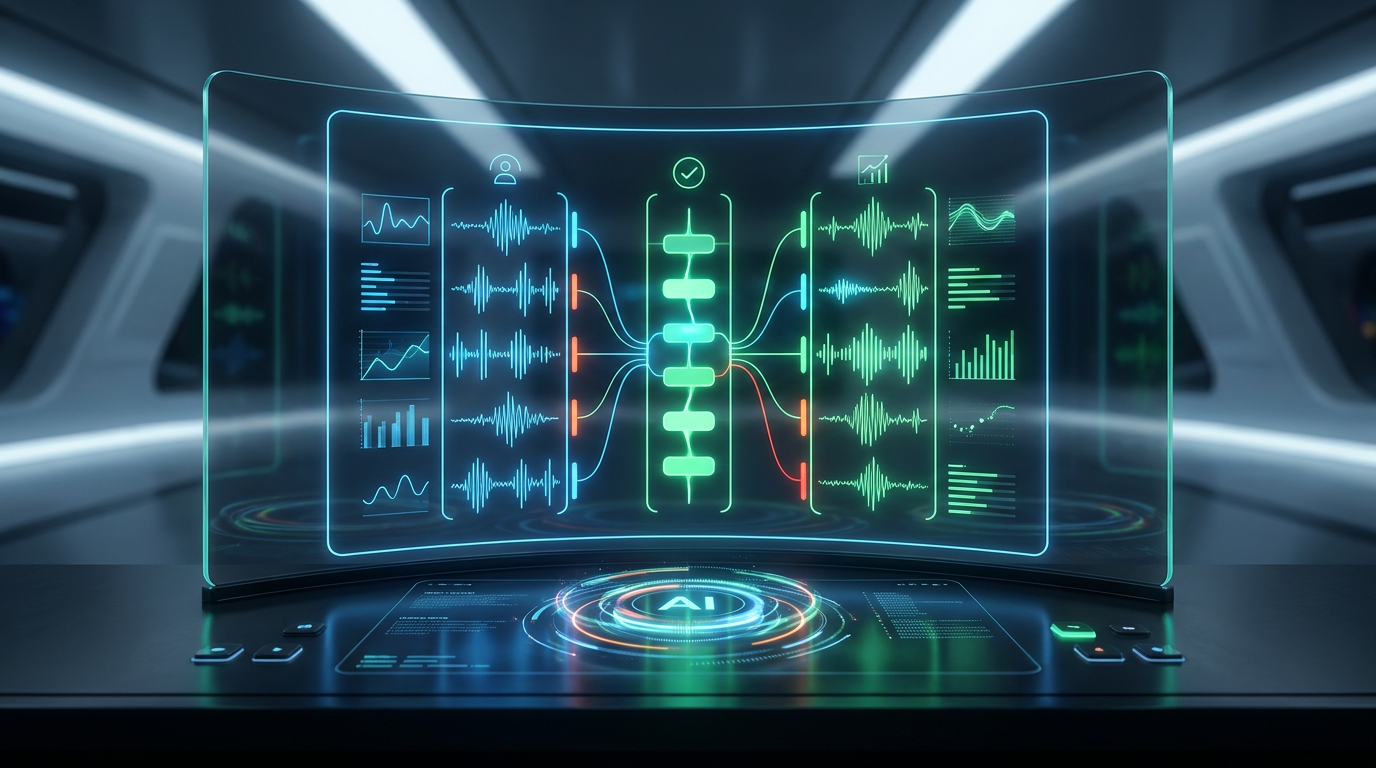
Consensus-based AI models use multiple engines to dramatically reduce errors, making AI even smarter.
Seamless Integration: Your Workflow, Supercharged ⚡
The beauty of hybrid AI-human transcription isn't just about accuracy; it's about making your workflow smoother. Imagine recording a podcast interview, uploading it to a platform, and getting an AI draft back in minutes. You can then quickly mark sections for human review – maybe just the complex technical parts or the emotional moments that need perfect phrasing. This saves you tons of time and effort.
Many transcription services now offer these tiered options. You can choose a 'pure AI' speed-run for internal notes, or a 'hybrid' model for client deliverables or important presentations. Understanding these options empowers you to pick the right tool for the right job, optimizing both your time and your budget. It’s all about working smarter, not harder!
💡 Pro Tip: For crucial projects, always opt for a hybrid model. Use AI for the first pass, then have a human expert review and refine. This guarantees both speed and the highest possible accuracy.
Key Takeaways
- AI transcription offers rapid, cost-effective drafts (82-96% accuracy) for routine tasks.
- Human transcription remains vital for high-stakes content, delivering 98-99% accuracy and nuance.
- Hybrid AI-human models are the 2026 gold standard, balancing speed, cost, and nearly perfect accuracy.
- Advanced 'consensus-based' AI, using multiple engines, significantly boosts AI accuracy.
- Optimizing your audio input ('data readiness') dramatically improves AI transcription quality.
Related on Tech4SSD 🔗
- AI Note-Taking Apps 2026: From Transcription to Intelligence
- Small Businesses Crushing It with AI in 2026: Tools & Strategies
- AI Voice Generators in 2026: Human-Like Speech for Every Creator
📩 Want the freshest AI trends every week?
Subscribe to Tech4SSD — practical AI tools and trends, explained for everyone. Free. Subscribe →
Advertisement
Frequently Asked Questions
What's the main difference between AI and human transcription?
AI transcription is super fast and budget-friendly but less accurate (82-96%), especially with complex audio. Human transcription is slower and more expensive but offers near-perfect accuracy (98-99%) and understands nuance.
When should I choose a hybrid AI-human transcription service?
You should choose hybrid for any project where both speed and high accuracy are important. This includes professional documents, client deliverables, and content where errors could have significant consequences.
Can I improve AI transcription accuracy myself?
Absolutely! Focus on 'data readiness.' Use clear audio, minimize background noise, and ensure speakers are close to the microphone. The better the input, the better the AI output.
Final Word
So there you have it. The world of transcription in 2026 isn't about an 'either/or' choice. It's about smart integration. By understanding the strengths of AI for speed and humans for precision, you can leverage the best transcription services out there to create powerful, efficient workflows.
Hybrid AI-human transcription isn't just a trend; it's a strategic advantage. It empowers you to produce high-quality content faster, more reliably, and more affordably. Go forth and transcribe smarter! 💪
AI tools and features change fast — verify current options before relying on them. — Tech4SSD Editorial