Alright, creators, students, and small-biz owners! Ever feel like the AI world moves at warp speed? You're not wrong! But something pretty wild just happened: the biggest, baddest AI models out there are now *so close* in raw smarts, it's almost impossible to tell them apart. We're talking fractions of a percentage point. This isn't just a tweak; it's a seismic shift in how you'll choose your AI co-pilot. 🤯
No more chasing the 'smartest' model. Now, it's all about what fits you best. In this post, we're breaking down the 2026 landscape of OpenAI's GPT-5.5, Anthropic's Claude Opus 4.8, and Google's Gemini 3.1 Pro. We'll show you why cost, integration, and specialization are your new superpowers for picking the perfect AI. Ready to get smart about AI choices?
The Great Convergence: AI's New Reality 📊
Picture this: three super-geniuses, all acing the same tough exam. That's pretty much where we are with AI in June 2026. The gap between the top models—Claude Opus 4.8, GPT-5.5, and Gemini 3.1 Pro—is the *smallest it has ever been*. We're talking single percentage points on major benchmarks.
On the LMArena leaderboard, the entire top tier is clustered within roughly 55 Elo points. That's like saying they all finished a race within a few seconds of each other. This convergence means that for most of your daily tasks, you won't notice a huge difference in raw intelligence. Your focus shifts, big time, to other factors.
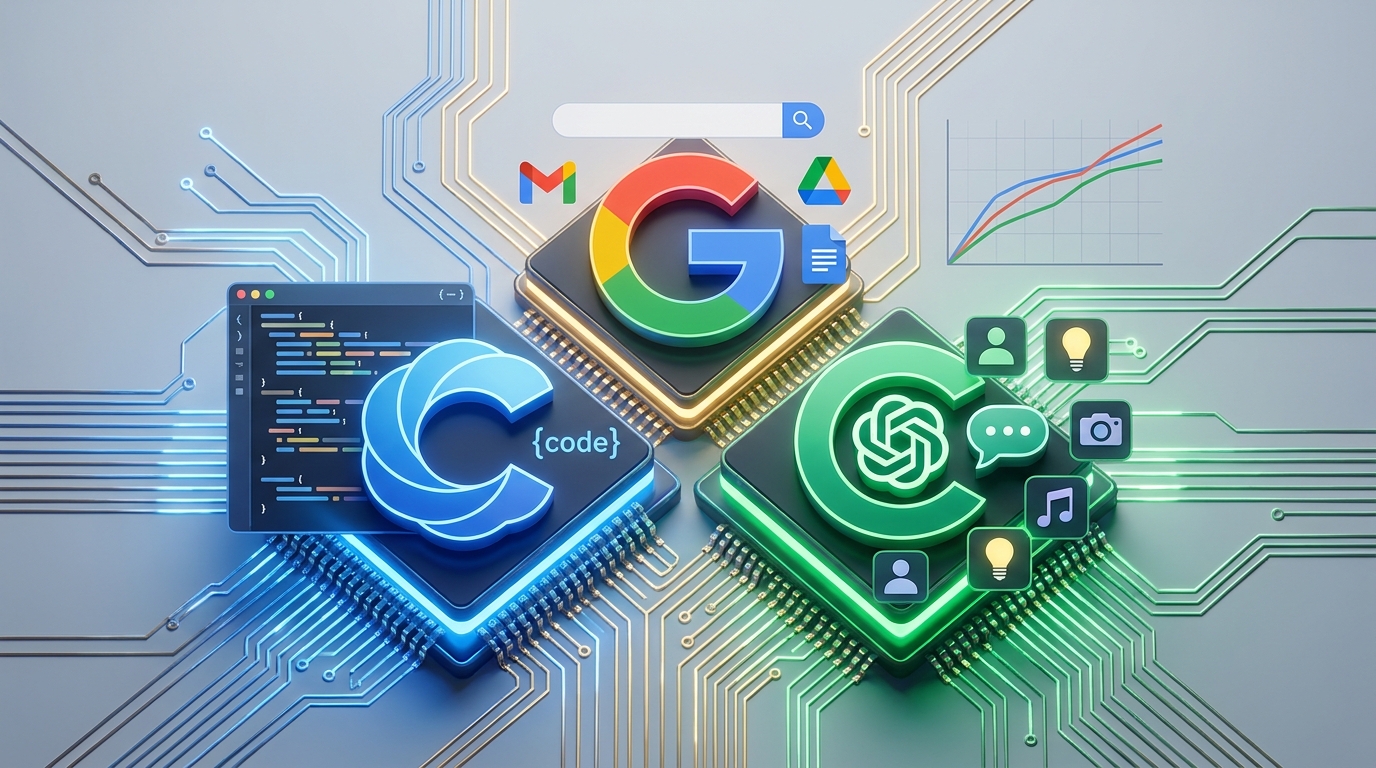
The top AI models are now so close in performance, their strengths lie in their unique features and integrations.
GPT-5.5: The Ultimate Generalist 💬
OpenAI's GPT-5.5, released on April 23, 2026, is your go-to AI if you need a versatile all-rounder. It quickly became the default ChatGPT model on May 5, 2026, and for good reason. It's an omnimodal generalist, meaning it's great at a huge range of tasks.
Think of it as the Swiss Army knife of AI. Need help writing an email? Draft a blog post? Brainstorm ideas? GPT-5.5 handles it all with ease. It's particularly noted for its strong computer use capabilities and hit an impressive 88.6% on SWE-bench Verified, a tough coding benchmark. For everyday tasks, ChatGPT with GPT-5.5 is still considered the safe, smart default.
You can find more on its versatility here: AI Models in 2026: Which One Should You Actually Use?
Claude Opus 4.8: The Code Whisperer 💻
If you're a developer, a data analyst, or anyone who dabbles in code, you'll want to pay attention to Anthropic's Claude Opus 4.8. Released on May 28, 2026, this model is a true coding and reasoning specialist.
It doesn't just do well on coding tests; it *dominates* them, winning the hardest coding challenges out there. Plus, it consistently tops human-preference rankings for its natural, nuanced prose generation. If you need AI to write elegant code or generate sophisticated text, Opus 4.8 is your best friend.
Here's a neat trick: Claude Sonnet 4.6 offers about 98% of Opus's quality but at a lower cost. So, if you're budget-conscious but still need that coding power, Sonnet 4.6 is a fantastic option. Check out a detailed coding comparison: ChatGPT vs Claude vs Gemini for Coding (Honest 2026 Comparison)
Gemini 3.1 Pro: Value & Integration King 👑
Google's Gemini 3.1 Pro, launched on February 19, 2026, is making waves as the 'value champion' of the AI world. It's not just about raw power; it's about accessibility, cost, and seamless integration into your existing digital life. It offers the widest free tier, making it super accessible for students and small businesses.
But where Gemini truly shines is its cost-effectiveness for API users: it's the cheapest for output at just $12 per 1 million tokens (and $2 per 1 million input tokens)! Plus, it's deeply integrated with the entire Google ecosystem—think Search, YouTube, Workspace, and Android. If you live in the Google world, Gemini will feel like an extension of yourself.
It also leads in multimodal capabilities, offering native video and audio processing. This means it can understand and interact with more than just text. For broad reach and deep integration, Gemini 3.1 Pro is a serious contender. You can compare pricing here: AI Price Compare — ChatGPT vs Claude vs Gemini & 4 More (2026)
Breaking It Down: Which AI For What? 🤔
Okay, so now you know the players. But which one should *you* actually use? It's not about which is 'best' anymore; it's about finding the perfect fit for your specific needs. Here's a quick guide to help you decide.
Think about your daily workflows. Are you constantly jumping between tasks? Do you need deep dives into code? Or is cost and integration with your existing tools your top priority? Your answers will point you in the right direction.
- General Tasks: For a broad set of everyday tasks, from drafting emails to brainstorming, ChatGPT (GPT-5.5) is your reliable, versatile default. It's like the comfortable, all-purpose shoes in your closet.
- Coding & Complex Reasoning: If you're a coder, developer, or need an AI for intricate logic and natural prose, Claude Opus 4.8 (or Sonnet 4.6 for budget) is your champion. It's the specialized tool for precision work.
- Value & Google Ecosystem: For the best bang for your buck, deep integration with Google services, and multimodal capabilities (video/audio processing), Gemini 3.1 Pro is the clear winner. It's designed to live where you already work.
The New Decision Factors: Beyond Raw Smarts 💰
Since raw performance is so close, your decision-making framework needs an upgrade. No more just looking at benchmark scores! Now, you're weighing things like cost, how much 'memory' (context window) the AI has, and how well it plays with your other tools.
For developers and tech enthusiasts, this near-parity is a game-changer. It means you can optimize for *efficiency* and *cost-effectiveness* without sacrificing much in terms of capability. This impacts your toolchain choices and how you budget for AI services.
Here's a quick look at some key deciding factors that matter more than ever:
| Factor | Why it matters | Who excels (generally) |
|---|---|---|
| API Pricing | Direct impact on your budget, especially for high-volume use. | Gemini 3.1 Pro |
| Context Window | How much info the AI can 'remember' in one go. | All top models are competitive here |
| Ecosystem Integration | How well it connects with your existing apps/services. | Gemini 3.1 Pro (Google), ChatGPT (broader apps) |
| Specific Task Specialization | Is it built for coding, creative writing, data analysis, etc.? | Claude Opus 4.8 (coding), ChatGPT (generalist), Gemini (multimodal) |

The true cost of AI now extends beyond simple subscription fees.
💡 Pro Tip: Don't just pick one AI! Many creators use a blend: ChatGPT for daily tasks, Claude for coding, and Gemini for multimodal projects or when budget is tight.
Key Takeaways
- Top AI models (GPT-5.5, Claude Opus 4.8, Gemini 3.1 Pro) are now nearly identical in raw performance (June 2026).
- Your choice should now prioritize cost, ecosystem integration, context window, and specific task specialization.
- ChatGPT with GPT-5.5 is the versatile generalist, great for broad everyday tasks.
- Claude Opus 4.8 is the coding and reasoning powerhouse, ideal for developers and complex prose.
- Gemini 3.1 Pro is the value champion, offering deep Google integration and strong multimodal capabilities at a low API cost.
📩 Want the freshest AI trends every week?
Subscribe to Tech4SSD — practical AI tools and trends, explained for everyone. Free. Subscribe →
Frequently Asked Questions
Should I switch from ChatGPT if I've been happy with it?
Not necessarily! If ChatGPT meets your needs, stick with it. But if you have specific coding tasks, budget concerns, or use many Google tools, exploring Claude or Gemini could offer big benefits.
Is the 'free tier' for Gemini 3.1 Pro any good?
Yes! Gemini 3.1 Pro offers one of the most generous free tiers, making it an excellent starting point for new users or those with lighter AI needs. It's a great way to experience powerful AI without commitment.
What does 'omnimodal' mean for GPT-5.5?
Omnimodal means it can understand and generate content across various types, like text, images, and potentially other data forms, making it incredibly versatile for different kinds of prompts and tasks.
Final Word
So there you have it! The AI landscape in 2026 isn't about finding the 'smartest' model anymore; it's about finding the *smartest fit* for your unique creative flow, your business needs, and your budget. This shift empowers you to make more informed, strategic choices, ensuring you get the most out of your AI tools.
No more FOMO about missing out on the 'best' AI. Now, you're in the driver's seat, picking the perfect co-pilot for your journey. Go forth and create amazing things! ✨
AI tools and features change fast — verify current options before relying on them. — Tech4SSD Editorial