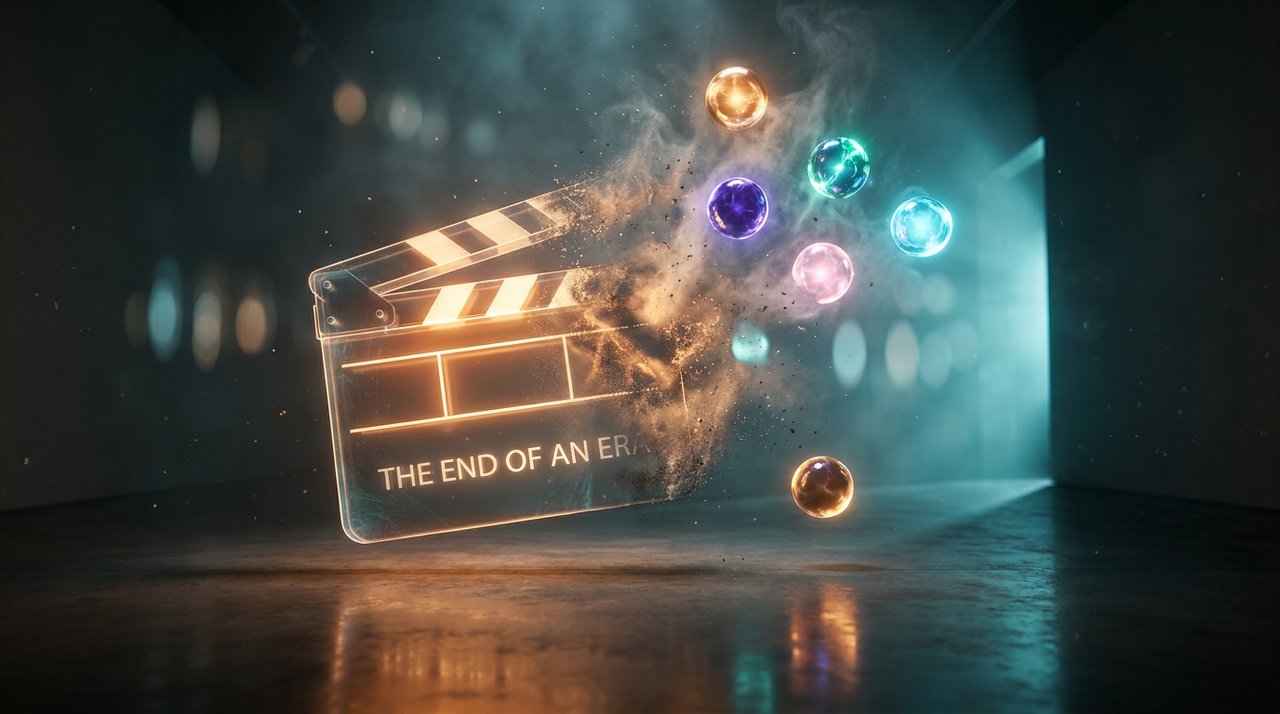
The dream that promised to revolutionize filmmaking is officially dying. OpenAI is killing Sora on April 26, 2026 — just days from today — after the model reportedly hemorrhaged staggering compute costs against minimal revenue. Here are the 5 AI video tools that ate its lunch, with pricing tiers, sample prompts, and a step-by-step migration plan you can run this week.
Sora is shutting down April 26, 2026 (web/app) and September 24, 2026 (API). The five tools that won the AI video war: Google Veo 3.1 (best overall), Kling 3.0 (best value + storyboards), Runway Gen-4.5 (best for control), Seedance 2.0 (best for narrative), and Pika 2.0 (best for fast social). Below: full pricing, sample prompts, migration plan, and how to export your Sora generations before shutdown.
What Just Happened: The Fall of Sora
In March 2026, OpenAI announced what insiders had whispered for months: Sora’s web and app experiences shut down on April 26, 2026. The API limps along until September 24, 2026, then goes dark. OpenAI’s help center summary is blunt: “What to know about the Sora discontinuation.”
The cause? An economic catastrophe most never saw coming. Per Bloomberg reporting from April 2026, Sora was burning compute at roughly $15 million per day in inference against only $2.1M in total lifetime revenue. That’s not a sustainability problem — that’s free-fall. Meanwhile, competitors quietly shipped better models for a fraction of the cost.

OpenAI Sora
discontinued Apr 26

Google Veo 3.1
the new leader
Logos: Wikimedia Commons — used for editorial commentary. Trademarks belong to respective owners.
The 5 AI Video Tools That Killed Sora
1. Google Veo 3.1 — The New King
For filmmakers and motion designers, Veo 3.1 leads on prompt adherence, native audio sync, and 4K output in landscape and portrait. It’s the strongest all-rounder for narrative scenes, establishing shots, and full cinematic sequences.
Standout features:
- Native synchronized audio (dialogue, foley, music)
- True 4K landscape AND portrait output
- Best-in-class prompt adherence among 2026 models
- Available via Google Vids (free tier!) and Vertex AI
Pricing tiers:
- Free — via Google Vids, limited monthly generations, watermarked
- Google AI Pro ($19.99/mo) — ~3 Veo 3.1 Fast generations per day
- Google AI Ultra ($249.99/mo) — high quotas, 4K, longer durations
- Vertex AI (pay-as-you-go) — roughly $0.40/second for production workloads
Sample prompt: “Slow dolly-in on a barista in a Tokyo specialty cafe at golden hour, steam rising from an espresso machine, soft jazz playing faintly, shallow depth of field, 35mm lens, natural light, 4K.”
Pick Veo 3.1 if: you ship narrative content, ads, or YouTube videos and want one tool that does everything well.
2. Kling 3.0 — Best Value + Storyboard Mode
Kling 3.0 matches Veo on cinematic lighting and complex motion (hair, liquids, fabric) and adds something no one else has: multi-shot storyboard mode with native audio sync across cuts. That means you can prompt a full 60-second sequence with multiple camera angles, and Kling stitches it together coherently.
Standout features:
- Multi-shot storyboard mode (multiple cuts in one render)
- Audio sync across cuts
- Excellent physics: hair, water, cloth
- Aggressive pricing — significantly cheaper than Veo
Pricing tiers:
- Free — 66 daily credits, standard mode only
- Standard ($6.99/mo) — 660 monthly credits, pro mode access
- Pro ($26.99/mo) — 3,000 credits, longer clips, priority queue
- Premier ($64.99/mo) — 8,000 credits, commercial license
Sample prompt: “Storyboard: SHOT 1 wide of a runner cresting a hill at dawn / SHOT 2 close-up of laced sneakers hitting trail / SHOT 3 POV pushing through wet ferns, breath audio, ambient forest sound.”
Pick Kling 3.0 if: you need full sequences or you’re cost-conscious.
3. Runway Gen-4.5 — Best for Creative Control
Runway’s Gen-4 and Gen-4.5 remain the pro favorite when you need granular creative control: camera moves, motion brush, reference-driven character consistency. Filmmakers don’t pick Runway because it’s the cheapest — they pick it because it bends to their vision.
Standout features:
- Motion brush for hand-directed movement
- Reference-driven character + style consistency
- Mature timeline editor
- Director’s Lab tools for advanced workflows
Pricing tiers:
- Free — 125 one-time credits, watermarked
- Standard ($15/mo) — 625 credits/mo, no watermark, 720p
- Pro ($35/mo) — 2,250 credits, Director Mode, upscale to 4K
- Unlimited ($95/mo) — unlimited Explore-mode renders
- Enterprise — custom quotas, SSO, indemnification
Sample prompt: “Reference image: portrait of subject. Generate a slow push-in with motion brush on the eyes only, cinematic moody lighting, 24fps, 5-second clip, keep clothing and hair locked to reference.”
Pick Runway Gen-4.5 if: you’re a filmmaker or director who needs frame-level control.
4. Seedance 2.0 — Best for Narrative Sequences
Seedance 2.0 emerged from ByteDance’s research arm and quickly became the model creators reach for when they need 15-second cinematic narrative clips with strong emotional beats. Its strength is shot composition and character expression.
Standout features:
- Cinematic 8K-grade output at 15s clips
- Strong character emotion + expression
- Great with detailed meta-prompts
- Works beautifully with structured prompt frameworks
Pricing tiers:
- Free trial — limited test renders via partner platforms
- Replicate / fal.ai (pay-as-you-go) — roughly $0.50–$1.20 per 5s clip
- ByteDance Volcano Engine — enterprise API, volume discounts
Sample prompt: “15-second cinematic clip, 8K photorealistic. A grandmother in a sunlit kitchen kneads bread, smiles when her grandchild runs in, hugs them. Slow handheld camera, 50mm lens, warm tungsten light.”
Pick Seedance 2.0 if: you write detailed prompts and want cinematic narrative shots.
5. Pika 2.0 — Best for Fast Social Content
Pika’s superpower is speed. Generate, iterate, and post in minutes. Not the highest fidelity in the field, but for TikTok, Reels, and Shorts where pace beats perfection, Pika is unbeatable.
Standout features:
- Fastest generation times in the field
- Built-in social aspect ratios
- Discord-native, mobile-friendly
- Affordable subscription tiers
Pricing tiers:
- Basic (free) — 80 credits/mo, watermarked, slow queue
- Standard ($10/mo) — 700 credits, no watermark
- Pro ($35/mo) — 2,300 credits, priority queue, longer clips
- Fancy ($95/mo) — 6,000 credits, commercial use
Sample prompt: “9:16 vertical TikTok clip: skateboarder kickflip in slow-motion over neon Tokyo street puddle reflection, synth-wave music vibe, fast cuts, 4 seconds.”
Pick Pika 2.0 if: you ship short-form social content daily.
Side-by-Side: Picking Your Sora Replacement
| Tool | Best For | Quality | Audio | Speed | Entry Price |
|---|---|---|---|---|---|
| Veo 3.1 | All-around / narrative | ★★★★★ | Native | Medium | $19.99/mo |
| Kling 3.0 | Storyboards / value | ★★★★★ | Native | Medium | $6.99/mo |
| Runway Gen-4.5 | Creative control | ★★★★ | Add-on | Medium | $15/mo |
| Seedance 2.0 | Narrative shots | ★★★★★ | Limited | Slow | ~$1/clip |
| Pika 2.0 | Social / speed | ★★★ | Limited | Fast | $10/mo |
Catch AI shifts before headlines
Daily AI updates from Tech4SSD. Free.
The 2026 Audio Revolution Sora Missed
The most important shift Sora missed: as of February 2026, 4 of 6 major AI video models generate synchronized audio natively. In early 2025, zero did. That’s audio-video joint generation going from research paper to production feature in under 12 months.
This is a much bigger deal than people realize. Audio is half of any video. When competitors started shipping dialogue, foley, and music inside the same generation, Sora’s silent-video limitation became a death sentence. Veo 3.1 generates lip-synced dialogue from a script line. Kling 3.0 layers ambient sound and sound effects per shot. Runway recently rolled audio into Director Mode. Pika added voice generation via partner integrations. Seedance is the late mover here, but its narrative clips are so strong that creators add audio in post and still ship faster than they could on Sora.
For a deeper comparison of the top three audio-capable models, see our Veo 3.1 vs Kling 3.0 vs Runway Gen-4.5 head-to-head.
How to Export Your Sora Generations Before Shutdown
If you have generations sitting in your Sora library, do not wait. Once the web app closes April 26, the in-app download UI disappears. Here’s the fastest workflow:
- Open
sora.comon desktop and sign in. - Open your Library — you’ll see every generation tied to your account.
- Hover any clip and click the three-dot menu → Download. Save the MP4 to a clearly named folder.
- For bulk export, OpenAI’s account export tool (Settings → Data Controls → Export Data) emails you a ZIP containing all of your Sora outputs and prompts.
- Back up off-cloud. Copy the ZIP to a local drive or a non-OpenAI cloud (Google Drive, iCloud, S3) — OpenAI is not guaranteeing long-term storage after September 24.
- Save your best prompts as a plain-text file. They’re your real asset — you’ll re-run them in Veo, Kling, or Runway.
Migration Plan: From Sora to Your New Workflow (This Week)
If you’ve been Sora-first for months, here’s the cleanest 5-day migration:
- Day 1 — Audit: List every active workflow that touches Sora (API calls, scheduled jobs, automation, manual generation). Tag each by use case (narrative, social, B-roll, ads).
- Day 2 — Map: Match each use case to a replacement using the table above. Most people end up with 2 tools (e.g. Veo + Pika), not 5.
- Day 3 — Test: Pick your 3 most-used Sora prompts. Run them in your new tool. Note what changes (aspect ratio, length, prompt syntax, audio).
- Day 4 — Rebuild: Migrate any code or no-code automations. Veo (Vertex AI) and Runway have stable APIs. Kling and Pika are partner-API. Pika is partner-API. Seedance is Replicate/fal.ai.
- Day 5 — Cancel: Cancel your Sora subscription (OpenAI auto-refunds remaining time, but confirm it). Archive your exported library. Update your team’s docs.
FAQ
When exactly is Sora shutting down?
The web and app experiences shut down April 26, 2026. The API continues until September 24, 2026, then goes dark. After that, no Sora endpoint remains active.
Why is OpenAI killing Sora?
OpenAI’s shutdown notice did not give a specific reason. Per Bloomberg, the economics didn’t work: Sora was reportedly losing $15M/day in compute against $2.1M lifetime revenue while competitors shipped better models for less.
Which Sora replacement is best for YouTube videos?
Google Veo 3.1. Native audio, 4K output, best prompt adherence — and you can use it free in Google Vids.
Which is the cheapest Sora alternative?
Kling 3.0 offers the best value for the quality, with aggressive pricing (Standard tier is $6.99/mo) and unique storyboard mode.
Can I still use Sora’s API until September?
Yes, the API operates until September 24, 2026. But we’d recommend migrating now — the rush in August will be brutal.
How do I export my Sora videos before April 26?
Open sora.com, go to Library, hover a clip and click Download. For bulk, use Settings → Data Controls → Export Data to get a ZIP of all generations and prompts.
Will OpenAI release a Sora 2?
No public roadmap confirms a Sora 2. OpenAI appears to be redirecting video research into multimodal capabilities inside GPT-class models. For context on their newest flagship, see our GPT-5.5 review.
Final Take
Sora’s death is a parable for AI in 2026: being first means nothing if you can’t ship economics that work. OpenAI invented the category. Google, Kling, Runway, and Seedance shipped better tools for less money, and the market voted.
If you were waiting for Sora 2 to “fix everything,” stop waiting. Pick one of the five tools above today. You won’t miss what’s leaving.
Stay ahead of the AI shifts before they hit the news.
Subscribe to the Tech4SSD newsletter — daily AI breakdowns, tool reviews, and workflow hacks for creators who ship.
Subscribe Free →Related reading:
Discussion
Have a question or something to add?
Join the discussion on Blogger