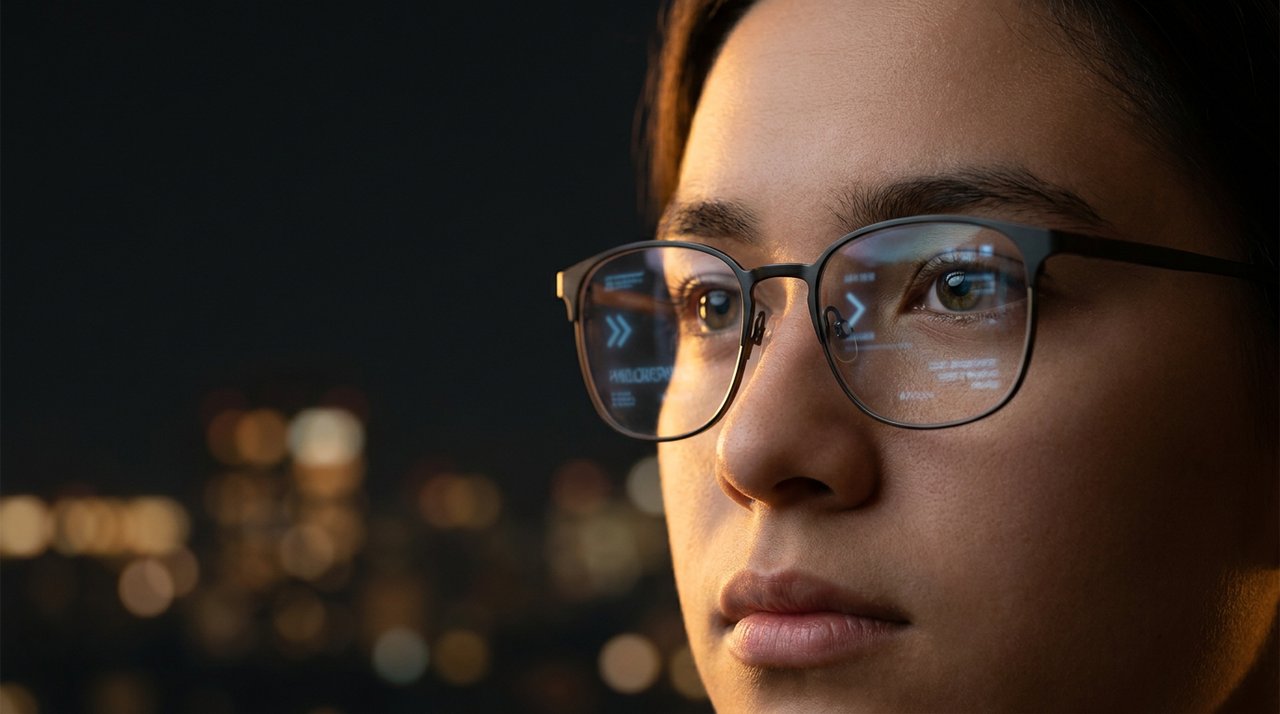
Twelve years after Google Glass crashed and burned in a fog of bro-jokes and bar-fights, Google is officially back in the smart glasses business. At Google I/O 2026, the company unveiled its first AI-powered intelligent eyewear since the original Google Glass — and the launch playbook has been completely rewritten.
This time, Google didn't try to be a fashion company. It partnered with two of them: Warby Parker and Gentle Monster. It didn't build standalone hardware. It teamed up with Samsung and Qualcomm on a shared Android XR platform. And — most surprising — the glasses will work with iPhones.
Here's what was announced, what's actually new, how it stacks against Meta's Ray-Ban AI glasses, and whether you should care.
What Google Actually Announced
At I/O 2026, Google revealed two product tiers, both shipping in fall 2026:
- Audio-only AI glasses. No display — speakers + mics + cameras + Gemini. Co-designed with Warby Parker and Gentle Monster for normal-glasses styling. The first product to ship.
- Display "intelligent eyewear." Adds a translucent in-lens display for navigation overlays, real-time translation captions, and incoming-message readouts. The flagship.
- Android XR platform. Same OS family powering the Samsung XR headset announced last year. Apps written once run across glasses, headsets, and "everything in between," per Google's blog.
- Cross-platform. Confirmed iPhone support at launch — a sharp break from Google's history of locking wearables to Android.
- Powered by Gemini. The full Gemini 3.5 model family, including the new 3.5 Flash model optimized for fast, on-device tasks.
TechCrunch reporters who got hands-on time at I/O described prototypes that "overlay Gemini-powered translation, navigation, and other information directly into your field of view." The translation demo, in particular, has been widely cited as the killer feature.
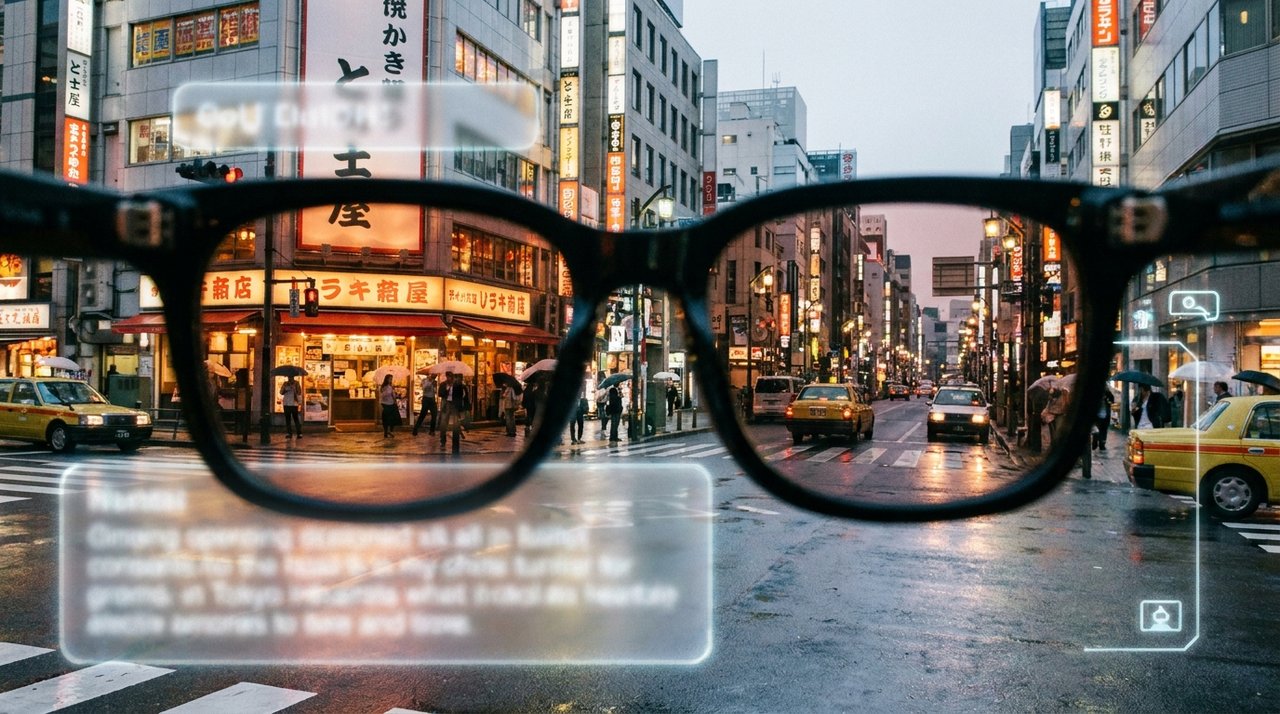
First-person view through the display glasses: real-time translation overlays on foreign-language signs.
Why This Time Is Different From Google Glass
The original Google Glass died for three specific reasons: it looked weird, it always had a camera pointed at strangers, and it had nothing useful to do once you put it on. Google's 2026 reboot directly addresses each:
- Style first. Warby Parker and Gentle Monster were brought in specifically to keep the form factor indistinguishable from regular glasses. Compare that to the 2013 Google Glass cyborg prism.
- Cameras with clear LED indicators. A privacy-light mirrors what Meta did with Ray-Ban — a tiny LED that's always on while recording. Not perfect, but it's the social-norm answer that Google Glass refused to make.
- An actual reason to wear them. Gemini 3.5 + real-time translation + navigation + visual lookups + ambient note-taking gives the glasses jobs to do throughout the day. Google Glass had none of these in 2013 — the AI tech literally didn't exist yet.
The BBC's headline summed it up bluntly: "Google to release first smart glasses since Google Glass flop." The framing is everywhere. But unlike 2013, the response from tech reviewers has been cautiously enthusiastic. TechCrunch's hands-on said the glasses are "almost there." Translation: not perfect, but real this time.
Google vs Meta: The Battle of the AI Glasses
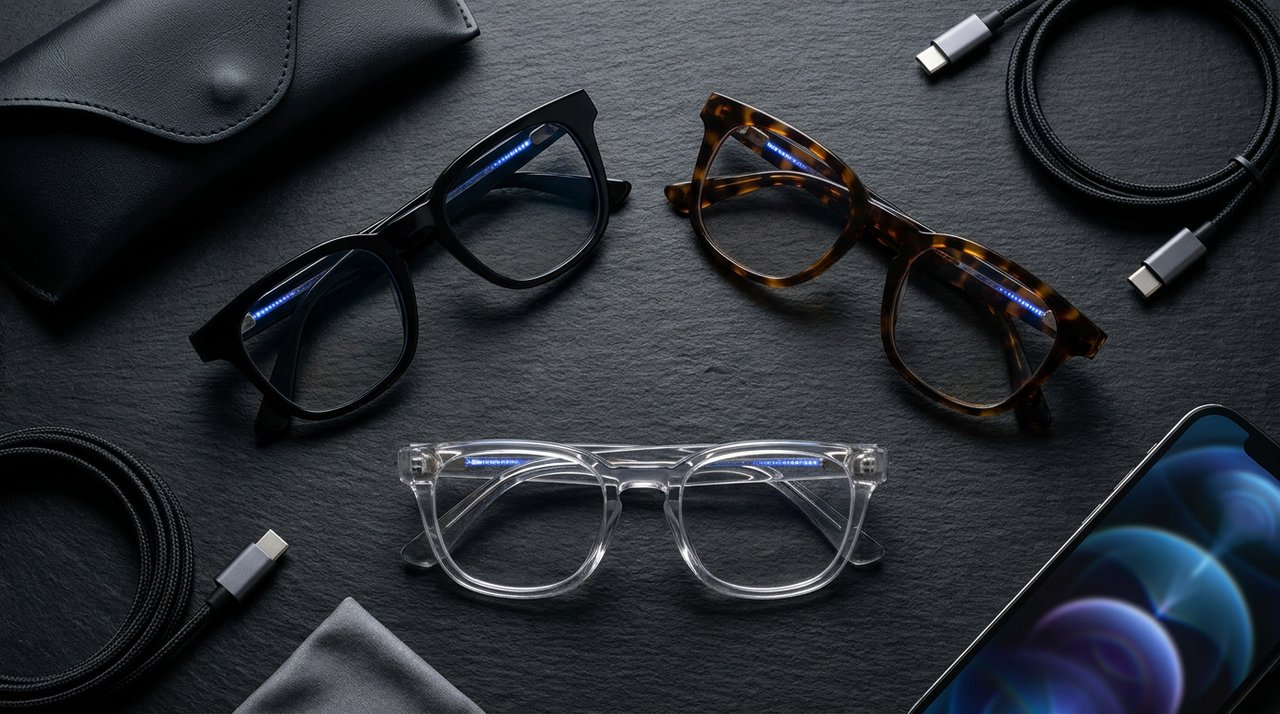
Three frame styles co-designed with Warby Parker and Gentle Monster, shipping fall 2026.
Meta has been the only player who has actually shipped consumer AI glasses at scale. Ray-Ban Meta AI Glasses launched in 2023 and have sold over 2 million pairs as of Q1 2026. The 2026 generation added live translation, real-time image search, and Llama-powered assistant capabilities.
Here's how Google's announcement stacks against Meta's shipping product:
| Feature | Google AI Glasses | Meta Ray-Ban (2026) |
|---|---|---|
| AI model | Gemini 3.5 (Pro / Flash) | Llama 4 + Meta AI |
| In-lens display | Yes (display tier) | No display (audio + camera only) |
| iPhone support | Yes | Yes |
| Frame partners | Warby Parker, Gentle Monster | Ray-Ban (EssilorLuxottica) |
| Launch | Fall 2026 | Shipping now |
| Real-time translation | Yes (display overlay) | Yes (audio output) |
The headline difference is the in-lens display. Meta has refused to ship one for two product generations, citing battery and weight concerns. Google's display tier represents a bet that 2026 micro-display + LLM combo has finally crossed the "useful enough" threshold. The reviewers will let us know.
The iPhone Support Detail Matters More Than You Think
For years, Google's wearable strategy was Android-only. Pixel Watch, Fitbit, Pixel Buds — all locked to Android. The decision to support iPhone with these glasses is a strategic pivot.
Why does it matter? Because Apple has not yet shipped its rumored "Apple Glasses" product. The iPhone install base — over 1.3 billion active devices — currently has no first-party answer to Meta Ray-Ban or these new Google glasses. Google sees the gap and is grabbing it.
If Apple ships its glasses in 2027 (per the most credible leak timelines), Google will have had a full year of iPhone users wearing Gemini-powered eyewear. That's a serious competitive moat in a product category where lock-in compounds over time.
Who Should Actually Buy These
- → Travelers + international workers: The real-time translation overlay is probably the most universally useful feature. If you travel 4+ trips a year, these justify themselves.
- → Content creators: POV-style hands-free capture rivals Ray-Ban Meta's. If you film walking-tour or "day-in-the-life" content, this is your tool.
- → Productivity nerds + biohackers: Ambient note-taking + visual lookups + Gemini Spark integration (Google's new agent) makes these the closest thing to a wearable AI assistant.
- → NOT for: Casual users. The starting price has not been confirmed but expectations are $700–$1,200 for the display tier. You should not buy these to "try them out."
FAQ
When do Google AI Smart Glasses launch?
Fall 2026, per Google's official blog and confirmed by CNBC, MacRumors, and BBC. No exact date yet. Pre-orders likely open mid-Q3.
Will Google AI Glasses work with iPhone?
Yes — confirmed at I/O 2026 and corroborated by MacRumors. This is a notable break from Google's usual Android-only wearable policy.
Who is making the frames?
Warby Parker and Gentle Monster are the announced frame partners. Both are premium-but-mainstream eyewear brands, suggesting Google is targeting fashion-aware buyers, not techies only.
How much will Google AI Glasses cost?
Pricing has not been confirmed. Industry analysts at CNBC and MacRumors speculate the audio-only tier will be $399–$499 (Ray-Ban Meta range) and the display tier $799–$1,199. Official pricing expected closer to launch.
Is this just Google Glass again?
No. Google Glass (2013) was a single bulky device with no design partners, no useful AI, and no privacy story. The 2026 product is a software platform (Android XR) with multiple fashion partners, full Gemini 3.5 AI, and consumer-friendly form factors.
Final Word
Google's bet is that 2026 is finally the year AI smart glasses transition from "tech demo" to actual mainstream product. The combination of mature AI (Gemini 3.5), high-fashion frame partners, and iPhone compatibility addresses every reason the 2013 Google Glass failed.
Whether it succeeds depends on three things we won't know until launch: actual battery life, actual price, and whether wearing a camera on your face has gone from "creepy" to "normal" over twelve years. Meta's success suggests it has. Google is about to find out for sure.
📩 Every major AI hardware launch, reviewed within 48 hours.
Tech4SSD covers what shipped, what it costs, what it's worth. Free. No fluff. Subscribe →
Sources: Google I/O 2026 keynote (blog.google), TechCrunch hands-on, MacRumors, CNBC, BBC, Memeburn. Reporting accurate as of May 22, 2026.